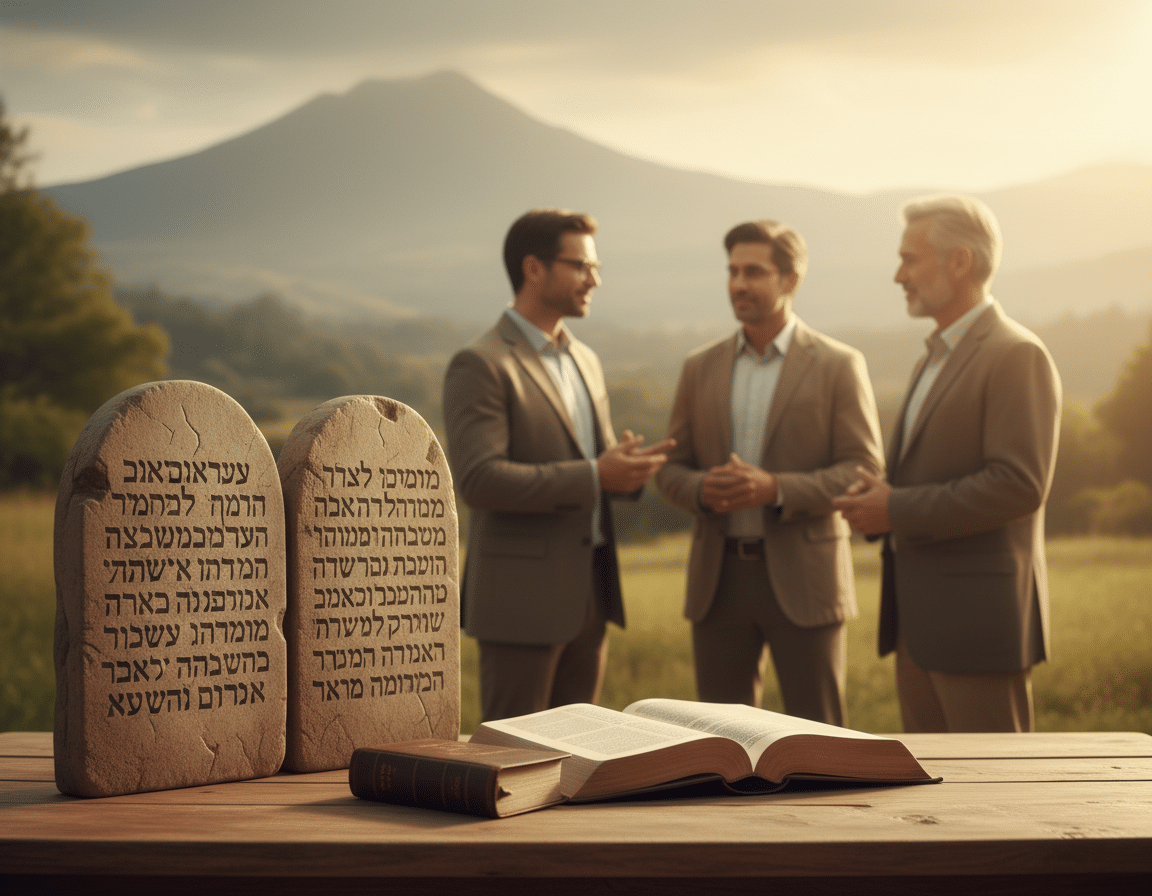
I ask a direct question: can pictures and statues ever show the true character of God?
I write as a guide who values Scripture, faith, truth, hope, and the clear teaching of God’s word. I will state the purpose of this guide and tell you what the second commandment teaches in plain language.
This command appears in Exodus 20:1-17 and Deuteronomy 5:6-21, where God forbids making carved images for worship and serving them. I will explain why Scripture treats worship as a life-shaping issue and how that links to daily faith and choices.
I will answer three simple questions: what the command says, what it forbids, and what it requires. I will move from Bible text to meaning to modern application so the steps feel clear and practical.
Key problem in one sentence: an image-based approach to worship gives a false picture of the Lord.
Key Takeaways
- I state the guide’s purpose and plain-language summary of the commandment.
- The text appears in Exodus and Deuteronomy for you to verify in Scripture.
- Worship shapes daily choices and reflects our faith.
- The article moves from text to meaning to modern application.
- An image-based approach to worship misrepresents God’s true character.
Where the Second Commandment appears in the Bible
The Bible records this command in two clear places so readers can compare and confirm the instruction. Find it in Exodus 20:4-6 and in Deuteronomy 5:8-10. Both passages repeat the rule within the larger list of the ten commandments.
What the text says: it forbids making a carved image or any likeness of anything in creation and forbids bowing down to or serving such things.
Key phrases that shape meaning:
- heaven above — includes sun, moon, stars, angels, and birds.
- earth beneath — covers people, animals, and objects shaped by human hands.
- water under the earth — covers fish, sea creatures, and water-related likenesses.
In one clear line: God bans making and using images for worship. Use Exodus 20 and Deuteronomy 5 as reference points. They keep later application tied to Scripture rather than opinion.
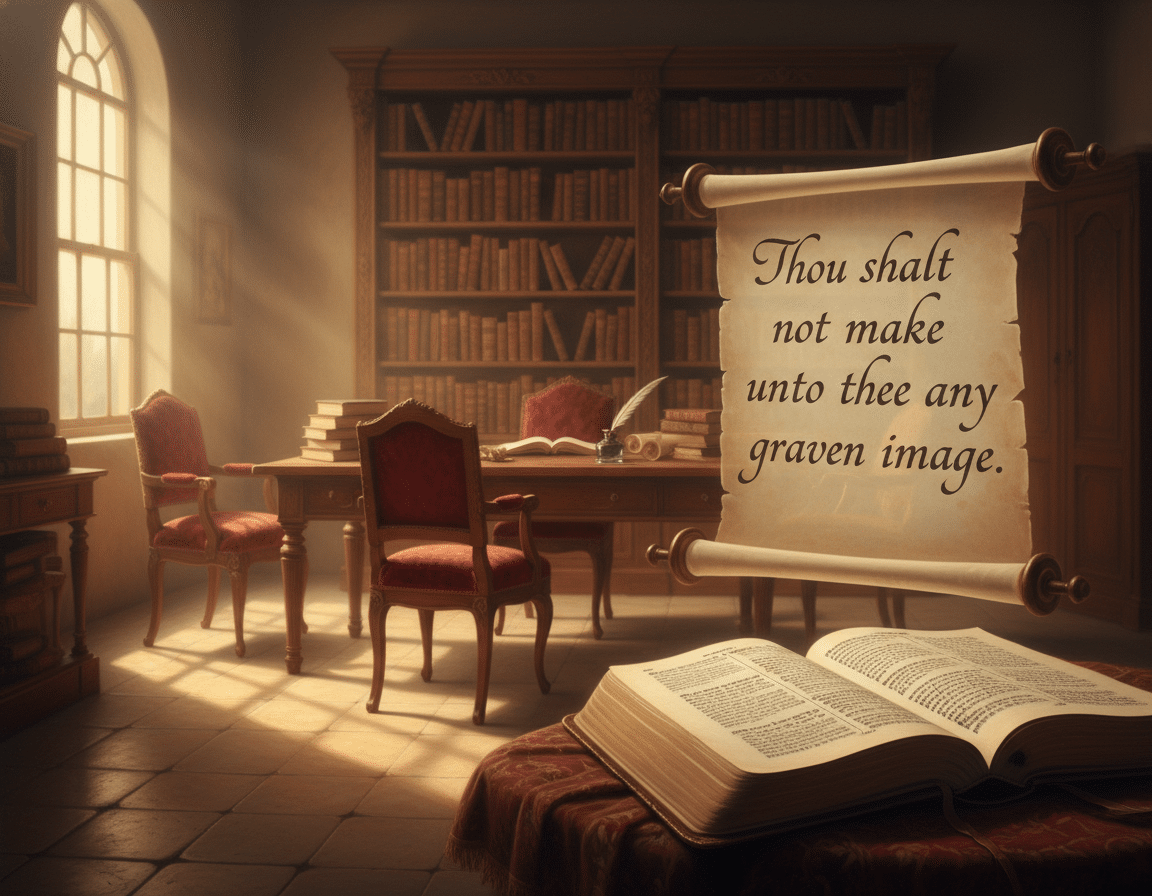
Second commandment explained in plain words
Let me put this command into everyday language for clear use and choice.
What it forbids: God forbids a carved image or any likeness when a person uses it for worship. The law bans those objects when they take a place in worship.
What actions it forbids: God forbids bowing down to images and serving them. Bowing and serving show loyalty. They signal that an object is treated as an idol or a god.
What it requires: God calls for right worship of the Lord God. He wants loyalty shown to the Lord, not through a manmade image.
How this links to the first law
The first law names the true Lord. The second law protects the way we worship that Lord. Both guard covenant faith and true worship.

- Ask: does this object take God’s place in my worship?
- If yes, avoid using it as a worship aid.
- If no, keep worship focused on God’s word and the Lord God alone.
| Focus | Prohibits | Requires |
|---|---|---|
| Worship objects | Make carved image; images used as gods | Worship the Lord God without manmade idols |
| Actions | Bowing down; serving images | Honor and serve the Lord through Scripture-led worship |
| Test | Does the object replace God? | Keep God’s word and place central in worship |
What counts as an image, idol, or likeness
We must name the words the Bible uses so we know what it means by images and idols. I will give clear, short definitions and practical checks you can use.
What “carved image” and “graven image” mean in Bible wording
Carved image and graven image refer to manmade objects used for worship. The KJV uses “graven image.” Modern versions use “carved image” or “idol.” The Hebrew pecel means a carved image or idol. The related term maccekah names a molded metal image.
Why a manmade image gives a false picture of God
Any crafted object limits God to what human hands can shape. That makes an inaccurate likeness of the Lord. Statues, paintings, or jewelry can replace trust in God’s word.
“Do not bow to what hands have made; worship the Lord as he reveals himself in Scripture.”
How people treat objects as worship aids
Objects begin as reminders. Over time they can demand loyalty. A cross, painting, or display can move from help to requirement in some churches. Then the object defines worship instead of God’s word.
| Item | Risk | Boundary |
|---|---|---|
| Statue or painting | May become an idol | Do not let it control worship |
| Jewelry or token | Can replace trust in God’s word | Keep faith centered on Scripture |
| Molded metal image | Historic term maccekah fits this | Never treat it as the Lord |
For further study see what Exodus teaches about God’s law.
Why God calls Himself a jealous God
Scripture names God’s jealousy to explain why worship belongs to him alone.
Jealousy describes God’s claim on worship and loyalty
Jealous god here means covenant concern. God claims our loyalty because he is Creator and Redeemer.
When people turn to idols, they redirect honor and love that belong to the Lord God. Idolatry replaces faithful worship with false trust.
Idolatry redirects honor and love that belong to the Lord
Exodus warns about visiting iniquity to the third fourth generation. That phrase shows how sin spreads from fathers to children by learned habit.
Patterns of wrong teaching pass from fathers to children. Children third and children third fourth describe that family impact.
At the same time Exodus promises steadfast love to thousands for those who love keep and keep commandments. The warning and the promise work together.
- Name the idol in your life.
- Remove it before it shapes your family.
- Teach God’s word so obedience protects future generations.
| Issue | Warning | Hope |
|---|---|---|
| Idolatry | Visiting iniquity to fathers and children | Steadfast love to thousands who love keep and keep commandments |
| Family pattern | Sin spreads to third fourth generations | Repentance and faithful teaching break the cycle |
| Action | Allow idol to shape worship | Remove idols; teach Scripture |
How people broke the second commandment in the Bible
Two key stories in Scripture show how people fell into image worship and the cost of that choice.
The golden calf at Sinai (Exodus 32)
When Moses delayed on the mountain, the people grew fearful and impatient.
They asked Aaron to make a god to lead them. Aaron made a golden calf as an image for worship.
The people bowed down, danced, and sacrificed around that idol. Scripture records severe judgment: about 3,000 died and later a plague came.
Jehu and the golden calves (2 Kings 10)
Jehu drove out Baal worship but kept the golden calves at Bethel and Dan.
He removed one sin while leaving another. That partial reform kept idols in place and kept wrong worship alive.
Why these stories matter: both accounts show that making a visible god replaces true worship. Even when people claim faith, images and idols change the heart and bring sin.
| Event | Action | Result |
|---|---|---|
| Exodus 32 | Made a golden calf; bowing, dancing, sacrifices | About 3,000 killed; plague followed |
| 2 Kings 10 | Removed Baal but kept golden calves | Partial obedience; continued image worship |
| Lesson for children | Worship habit passed to next generation | Remove idols; teach God’s word to prevent sin |
How to apply the Second Commandment in life today
I offer a hands-on plan to test your heart and restore worship to God. Follow these steps daily. Use Scripture as your guide.
Spot heart idolatry
Definition: an idol is anything you depend on for security, worth, or identity. It starts in the heart before it shows in actions. Ask: what do I trust most when I worry?
Test common modern idols
Name likely idols: money, relationships, entertainment, substances, and success. Watch how they shape your time and decisions. If they demand your first loyalty, they function as idolatry.
Check good things that can replace God
Family, ministry, hobbies, and charity work can all become places that take God’s role. Enjoy these gifts. Do not let them become your ultimate trust.
Adopt a Bible-first mindset
Think “God in the Bible is” rather than “God to me is.” Let Scripture shape your view. This keeps worship tied to truth, not feeling.
Practice true worship
Follow Jesus’ standard in John 4:23-24. Worship in spirit and truth. Let God’s word lead your praise and service.
Watch for covetousness
See Ephesians 5:5 and Colossians 3:5. Covetous desire is idolatry. Name the craving, and bring it under Christ’s authority.
- Name the idol in one sentence.
- Remove easy access or visibility.
- Replace the habit with Scripture reading or prayer.
- Teach your family to choose God’s word over things.
| Step | Action | Scripture Cue |
|---|---|---|
| Spot | Ask what you depend on for worth | Ezekiel 14:3 (idols in the heart) |
| Test | List common idols like money or success | Colossians 3:5 (covetousness) |
| Replace | Swap habits for worship and Scripture | John 4:23-24 (worship in spirit and truth) |
| Restore | Teach and model God’s word for family | Ephesians 5:5 (warning against idolatry) |
Hope: Christ can reset the heart when we submit to Scripture and obey in faith. Start small and keep returning worship to God’s word.
Conclusion
Here I close by naming the core teaching and a single call to act.
The second commandment means God forbids making and using any carved image for worship. This commandment protects true praise of the Lord and keeps people from false devotion.
An idol or collection of idols changes who we think God is and what we think he wants. It can shape family life and teach our children wrong habits. Obedience to God’s word brings his steadfast love to thousands and breaks a cycle that spreads across the earth.
Measure practice by Scripture. Remove any object or habit that takes God’s place in your heart. Teach your children by example. Pray with me: Lord, help me choose faithful worship and guide my children to love and obey your truth.