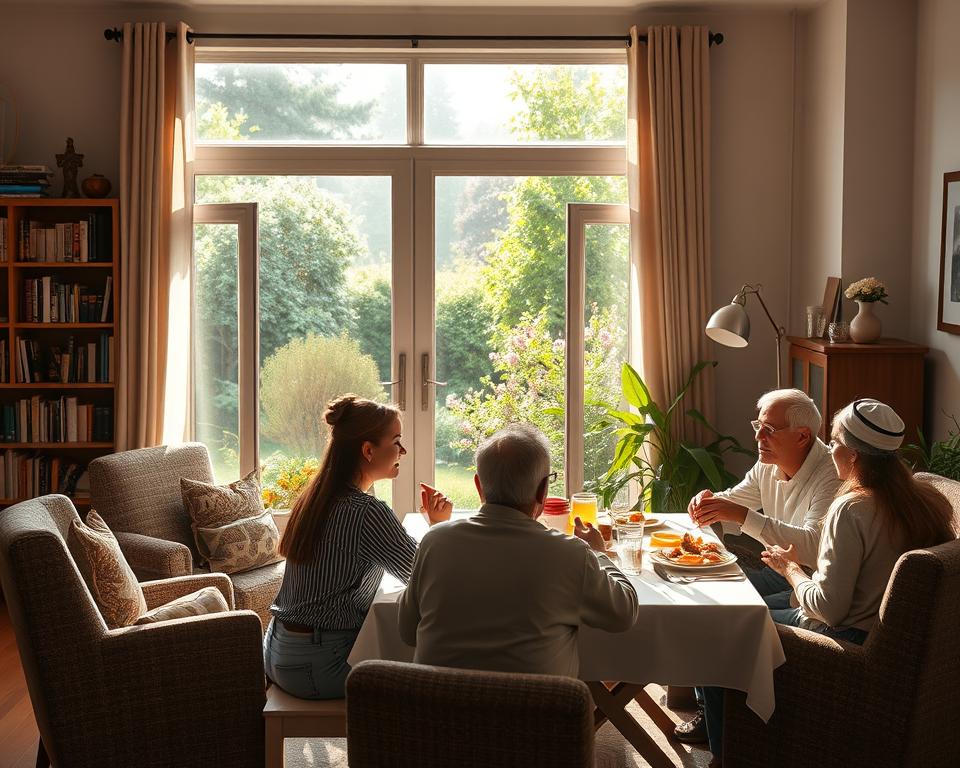
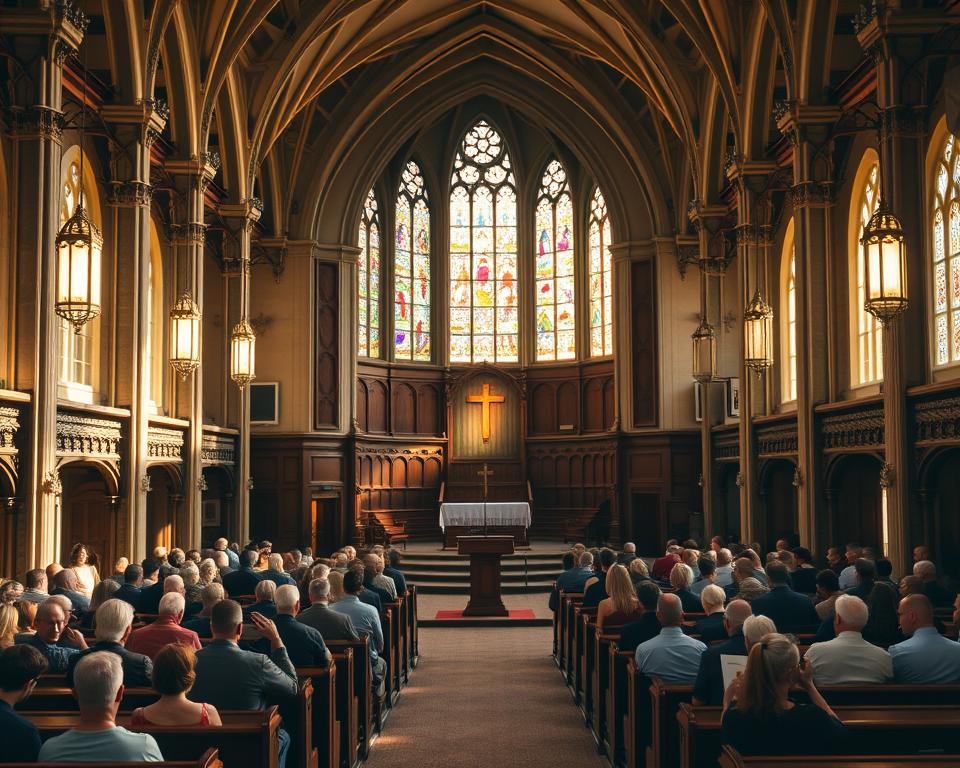
The Adventist church service structure greets visitors with clear order and a focus on God’s Word. You will notice a calm sanctuary, warm greeters, and a pattern that places Scripture and the sermon first, followed by songs and prayer.
The congregation meets on Saturday in unity with believers around the world. The denomination began in the 1800s in upstate New York and now includes millions of members who value reverence, clear teaching, and balanced worship.
Local leaders serve under the General Conference and connect the local meeting to a global mission. Expect a welcome, Scripture readings, a Bible-based message about Jesus, guided response, and a chance to ask questions.
Key Takeaways
- Worship centers on Scripture and a Bible-based message.
- Saturday gatherings unite believers around the world.
- Services follow a clear order from welcome to response.
- Leaders link the local congregation to the General Conference.
- Visitors will find a respectful sanctuary and friendly help.
Beginner overview of a Seventh-day Adventist church service
A typical Sabbath morning begins with small-group study before the main worship hour. Guests arrive, greet volunteers, and find a class for Sabbath School, a guided bible study using an official weekly lesson.
After about 45 minutes, the main gathering starts. Expect Scripture reading, congregational singing, prayer, an offering, and a sermon. Children may hear a short story. Families can sit together at any time.
Common roles include greeters at the door, deacons who help with seating and offering, elders who pray, and pastors who preach. Members and visitors are free to observe the offering as a voluntary act of faith.
| Segment | Typical length | Who leads |
|---|---|---|
| Sabbath School (group study) | 40–50 min | Teachers / lay leaders |
| Main gathering (worship) | 60–75 min | Pastors / elders |
| Announcements & fellowship | 10–20 min | Local leaders |
Simple definitions: “Sabbath School” = class Bible study. “Vespers” = evening worship. “Benediction” = closing blessing.
See the next sections for deeper details on music, preaching, prayer, and communion.
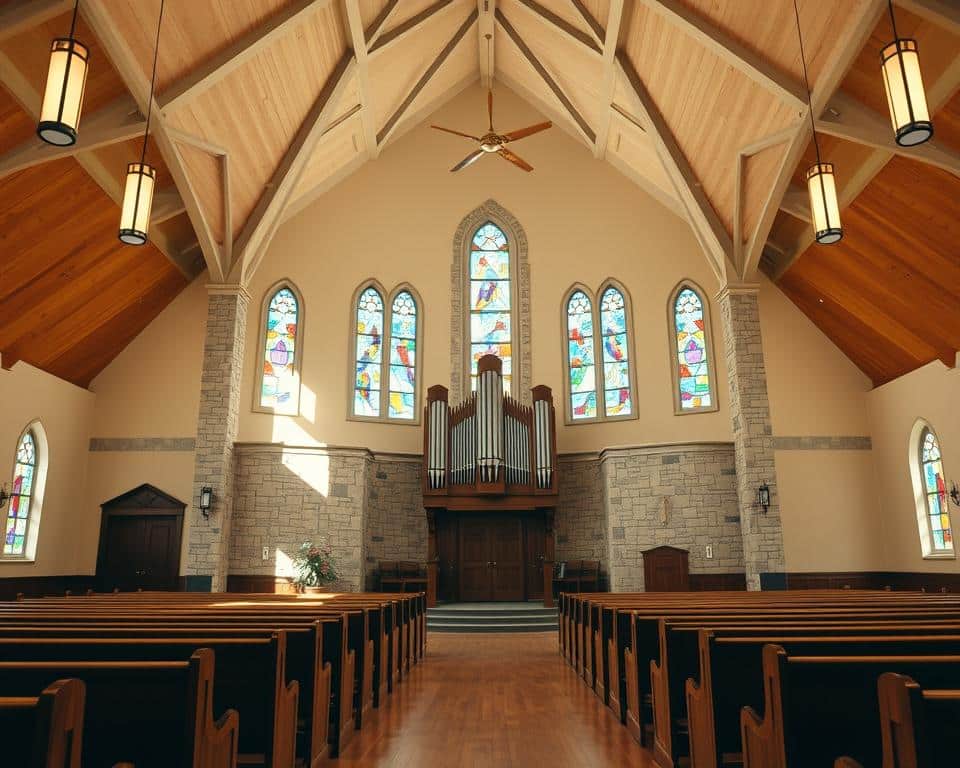
Why services meet on Saturday, the Sabbath
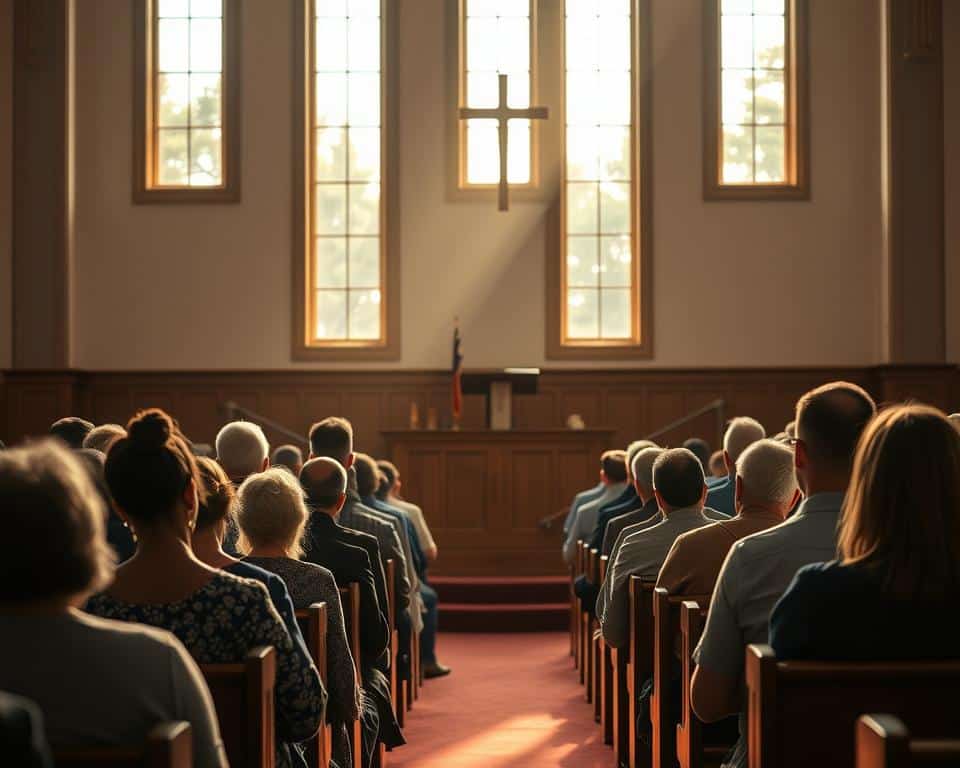
Seventh-day observance follows the biblical claim that God made the world in six days and rested on the seventh. This pattern appears in the creation account and in the fourth commandment, which the community reads and respects.
The group notes that Jesus Christ honored the Sabbath, and the weekly Saturday gathering follows His example. Worship is theocentric and centers on the reading and preaching of the word God.
Sabbath time is set apart for rest, worship, fellowship, and acts of service. The sanctuary provides a calm place where people hear truth and respond in praise and obedience.
The denomination began in the United States after the Millerite movement of the 1840s and formally organized in 1863. For many years the practice of Saturday worship has shaped family life and weekly rhythms.
| Reason | What it shows | Practical result |
|---|---|---|
| Creation pattern | Six days work, seventh day rest | Weekly Sabbath observance on Saturday |
| Jesus’ example | Honored Sabbath in Scripture | Worship and study focused on the Bible |
| Community practice | Historical roots since 1840s | Regular rhythms for families and congregations |
If you have questions about why Saturday rather than Sunday, leaders invite you to study relevant Bible passages and ask after the gathering.
Sabbath School explained
Groups meet by age to read Scripture, discuss the quarterly lesson, and pray together prior to the worship hour.
Adult classes
Adult classes follow the official quarterly lesson. Leaders read passages, ask questions, and guide practical application.
Members bring a Bible and the lesson guide. Classes end in time for the main gathering.
Youth and teen groups
Youth classes cover faith, service, and life issues at an age-appropriate level. Discussion and group projects help apply truth to daily choices.
Children’s divisions
Children sing, learn memory verses, hear Bible stories, and enjoy simple activities. Check-in and pickup follow local safety steps.
Classes typically run 40–50 minutes so families can arrive early and find the right room. Visitors may join any class and greeters will help.
Sabbath School builds community through prayer, planning for outreach, and small offerings that support mission projects and local needs.
Adventist church service structure
Worship gatherings move in a clear, predictable order so attendees can follow each part with ease. The flow highlights Scripture, praise, and plain Bible teaching. Times listed help visitors know what to expect.
Welcome, announcements, and call to worship
Greeters welcome people and offer brief announcements about ministry and events. Leaders state the call to worship and set the theme. (5–7 minutes)
Congregational singing and Scripture reading
The congregation sings hymns and songs to prepare hearts to hear the word God. A Scripture reading then sets the sermon theme. (10–15 minutes)
Prayer, offering, and special music
The pastoral prayer invites unity; members may bow heads or kneel. Deacons collect tithes and offerings with a short prayer. Special music delivers a focused message in song. (10–12 minutes)
Sermon and response
The sermon centers on clear Bible exposition and a call to respond in faith. The preacher applies truth for daily life. (25–30 minutes)
Benediction and fellowship time
The benediction closes with a blessing. Afterward, people greet one another and meet small groups or sabbath school leaders. Visitors can ask questions and meet members. (10–20 minutes)
Music in worship: hymns, songs, and purpose
Music frames each part of the worship hour and guides the congregation into a focused response to Scripture. Purpose comes before method: songs should support the sermon and point people to God’s truth.
Hymns that teach faith and doctrine
Hymns carry clear Bible truth and anchor belief in sound doctrine. They often use historic language and trusted theology to teach theology by repetition.
- Choose hymns with biblically accurate lyrics.
- Keep keys and tempos congregational so people can sing together.
- Include a mix of hymnals and projected words depending on the congregation’s needs.
Praise songs used with reverence and balance
Praise songs can bless the assembly when leaders vet lyrics by the word God. Avoid an entertainment feel; music should serve proclamation, not replace it.
- Match songs to the Scripture reading and the sermon theme.
- Use instrumentation and volume that support singing, not overpower it.
Simple pattern: Scripture reading → hymn or song → prayer. This way music follows the reading and helps the congregation respond in faith.
The sermon: Word-centered preaching and response
Expository preaching opens Scripture, explains meaning, and calls for a choice. Proclamation is clear Bible teaching that presents Jesus Christ and invites a decision. The sermon aims to show the text, state the truth, and apply it to daily life.
Proclamation from the Bible
Proclamation means faithful reading and explanation of the passage. Preachers unpack context, define terms, and point to the gospel. The goal is plain truth, not clever rhetoric.
Acclamation as a response to God’s Word
Acclamation is the congregation’s reply. People respond with praise, confession, testimony, and obedience. Short moments of reflection, singing, or prayer let truth become action.
Balance that avoids emotionalism and formalism
Authentic worship keeps order and dignity. Leaders plan music, prayer, and message so all parts form one unified word-led worship.
- Put the sermon before extended praise so feeling follows truth.
- Encourage attendees to bring Bibles and take notes.
- Use simple cues—stand, sing, or pray—to unite people in reverence.
Leaders: plan the hour. Keep music and testimony tied to the message. Allow a short response time after the sermon for quiet prayer or commitment.
For a practical study on Sabbath practice and why the weekly pattern matters, see why Sabbath keeping matters.
Prayer moments you may experience
Expect several focused prayer moments that prepare hearts before Scripture reading and the sermon.
Pastoral prayer is often a corporate time when the congregation will bow heads, kneel, or stand to pray for people and local needs. Leaders name illnesses, losses, and urgent requests and ask God for comfort and guidance.
Short prayers appear before the offering, before Scripture, and just prior to the sermon. These help keep worship centered on God’s word and the message to follow.
There is usually a moment for silent prayer. Attendees may confess, thank, or seek direction in private. Children join a brief prayer during the children’s story.
- Elders or deacons may lead prayer for illness or grief.
- Prayers for mission, leaders, and community come during crises or service projects.
- Visitors may sit or kneel as they are able and follow the order.
Many congregations offer a midweek prayer meeting for those who want more time in united prayer. Writing a request on a card or sharing it with an elder after the gathering is welcomed.
Note: Seventh-day adventists value prayer as a practical support for preaching and daily life.
Offering, tithes, and mission focus
Giving time connects weekly worship to real work that meets needs both locally and across the world. The offering segment explains how money supports ministry, education, and relief work. It is a practical expression of faith and gratitude.
Tithe is typically ten percent of income that members return to God to support pastoral work through the conference. Tithe funds pastoral salaries, administration, and conference-level ministries.
Offerings are freewill gifts that fund the local church budget, school aid, community outreach, and world mission projects. Leaders often read a short mission story or news item to show how gifts bless others.
- Deacons collect gifts during worship using plates or envelopes.
- Many congregations offer digital giving and online options for convenience.
- Some Sabbaths spotlight global mission, education, or community-service emphases.
Visitors should not feel pressure. Giving is voluntary and thoughtful. The local church board sets budgets to meet facility and ministry needs. The treasurer can explain receipts, planned giving, and transparent reports.
Regular, cheerful giving is presented as an act of faith that advances mission and school support. Clear reporting helps members see how funds work to meet needs and carry the gospel to the world.
Communion and foot washing
The ordinance of humility and the Lord’s Supper follow a deliberate order that emphasizes repentance and grace. In this way, the congregation pauses for quiet reflection before sharing the emblems of Christ’s sacrifice.
Open communion is held about four times a year in many local settings. The pattern begins with foot washing, often called the Ordinance of Humility, modeled on John 13.
Participants commonly separate by gender or family groups to wash feet in simple basins in nearby rooms. After this act of mutual service, people return to the sanctuary for the Lord’s Supper.
The elements are plain: unleavened bread and unfermented grape juice. Deacons and elders distribute the emblems with prayerful reverence while reflective music supports quiet meditation on Christ’s love.
- Who may join: The table is open to believers who trust in Jesus and wish to partake.
- Preparation: Scripture readings from the word god invite self-examination and reconciliation before partaking.
- Practical note: Ushers and leaders explain the sequence and answer questions.
Communion times are announced in advance so people may prepare their hearts and practice forgiveness as Scripture teaches. This way honors the way of Christ and deepens faith.
Children and family participation
Children take an active part in worship through a short story, songs, and age-based classes that match their stage of learning.
Sabbath School offers divided classrooms where kids sing, do crafts, learn memory verses, and discuss simple Bible truths. Many services include a children’s story that invites kids forward for a brief, clear lesson.
Parents will find nursery or a mother’s room in many locations for infants and restless toddlers. Volunteers and members staff check-in, safety, and teaching roles so families feel secure.
- Simple cues help families sit together and follow the order of worship.
- Pathfinders and Adventurers are year-round clubs for growth, skills, and service.
- Afternoon family activities often include nature walks, community visits, or fellowship meals to build life and faith habits.
Local schools and churches partner to support study habits, faith formation, and practical life skills. Grandparents and mentors are invited to pray, model faith, and nurture the next generation.
Children are a blessing, and the community makes room for them so people of all ages can worship, learn, and serve together.
Dress, conduct, and reverence in the sanctuary
Simple, respectful dress and calm behavior make the sanctuary a place of focused prayer. Modest, neat attire helps people notice Scripture and worship rather than clothing. This principle values dignity over fashion.
Arrive a few minutes early, silence phones, and keep conversations low. Families with young children may step out briefly and return when ready. Standing when asked, singing with the congregation, and listening with care show reverence.
Remember: worship is a way to meet God, not a form of entertainment. Avoid applause or displays that shift focus away from the message. Offer seats, share materials, and guide visitors kindly when needs arise.
- Be courteous to newcomers and patient with those learning local customs.
- Meet practical needs by helping with seating and class directions.
- Ask leaders if you are unsure about expectations in a particular gathering.
| Behavior | Why it matters | Practical tip |
|---|---|---|
| Modest dress | Keeps focus on God’s word | Choose neat, simple clothing |
| Quiet conversation | Allows people to hear and pray | Step outside for talk |
| Kind hospitality | Builds unity among diverse people | Offer a seat or a welcome note |
Health emphasis and fellowship meals
Local groups commonly pair faith with practical health teaching and shared vegetarian lunches. Many seventh-day adventists follow a plant-forward diet and avoid alcohol and tobacco as part of a clear health message.
The Adventist Health Studies show measurable benefits. Research reports that members in California live several years longer on average. Experts link this to diet, weekly rest, and strong social support networks.
In North America, Loma Linda is noted as a Blue Zone where healthy habits and community care support longer life. News accounts and the peer-reviewed study findings highlight lower rates of chronic illness among participants.
Many congregations offer vegetarian fellowship meals after worship. These potlucks welcome visitors and model simple, nourishing recipes.
- Label common allergens and offer balanced plate options.
- Invite guests and introduce them to regulars.
- Host cooking classes, walking groups, and health fairs with local school partners.
| Focus | Outcome | Practical tip |
|---|---|---|
| Plant-forward eating | Lower chronic disease risk | Offer vegetables, grains, and legumes |
| Weekly rest | Improved mental health | Encourage unplugged time on the Sabbath |
| Supportive networks | Longer average lifespan (several years) | Organize small groups and meals |
| Community outreach | Health screenings and education | Partner with schools for fairs |
Health programs aim to care for life as a gift and to serve neighbors with compassion. Visitors often find a warm welcome, a shared meal, and practical resources to support well-being around the world.
Who leads the service: pastors, elders, and local church teams
Local leadership shapes each gathering by assigning roles, guiding music, and planning the agenda.
Pastors preach, teach, visit, and lead worship in partnership with elders. Pastors are placed and employed by the conference and help train volunteers. Elders support preaching, visitation, and pastoral care.
Members elect deacons, deaconesses, clerks, treasurers, and ministry leaders by majority vote. The local church board meets regularly to plan worship, budget, and the annual calendar.
Major decisions occur at a duly called business meeting or a conference session. Constituency sessions elect officers at conference and union levels, while committees exercise executive authority between sessions.
Worship teams include musicians, readers, deacons, and tech volunteers. Training helps these teams keep the hour ordered and clear. Members with gifts for music, teaching, or hospitality are encouraged to speak with leaders about serving.
| Role | Main tasks | How chosen |
|---|---|---|
| Pastors | Preach, teach, visit, coordinate ministry | Placed by the conference |
| Elders | Support preaching, lead prayer, visit members | Selected locally by vote |
| Deacons / Volunteers | Collect offerings, usher, run tech and music | Elected or appointed by the local church |
Every role exists to serve the congregation and lift up Christ. Local leaders connect to broader governance at the next level, which the following section will describe.
How the local church connects to conferences and the General Conference
Local congregations send elected delegates upward to form a clear ladder of governance. Delegates meet in a conference session to elect officers, approve budgets, and report on pastoral placement and property oversight.
Conferences hire pastors, hold property, and coordinate local mission and school support. Several conferences join a union that pools resources for education, evangelism, and shared ministries.
Unions report to a division, which provides regional administration while remaining part of the global body. The General Conference sits at the top and sets worldwide policy.
- Delegates vote at each level in constituency or conference sessions.
- Executive committees carry out budgets and mission work between sessions.
- World mission coordination places workers and shares resources across regions.
| Level | Main tasks | How chosen |
|---|---|---|
| Local | Worship planning, local outreach, elect delegates | Members vote |
| Conference / Mission | Hire pastors, hold property, hold conference session | Delegates from local |
| Union / Division & General Conference | Regional support, policy, world mission, global leadership | Delegates at sessions, including the General Conference Session |
The General Conference Session, held in set years (usually every five years), gathers representatives from around the world to elect world leaders and vote Working Policy changes. This system creates accountability for doctrine, finance, and mission unity.
United States context: North American Division and local practices today
Headquartered in Columbia, Maryland, the North American Division serves the United States, Bermuda, Canada, and Guam/Micronesia under the General Conference umbrella.
Formed in 1985, the division adapts global mission to local needs. It links policy and resources from the General Conference through conferences to local congregations.
Today many congregations keep the same core order while adding regional music, multiple languages, livestreams, and digital bulletins. Local practices like the children’s story, fellowship meals, and community outreach are common today.
| Topic | Fact | Practical note |
|---|---|---|
| Territory | United States, Canada, Bermuda, Guam/Micronesia | Regional conferences manage local work |
| Headquarters | Columbia, Maryland (since division formation) | Coordinates resources and policy |
| Worship formats | In-person, livestream, digital bulletins | Check local websites for times and parking |
| Roots and growth | Begun in new york and expanded across the nation | History informs mission and present practice |
News updates and the Review & Herald reports often highlight training, health work, and disaster response from north america. Visitors should check local websites for service times, children’s programs, and parking details.
The message and mission stay the same while formats change to serve communities. For practical tips on visiting, see the next section.
Visitor tips for your first Sabbath service
Plan your visit with a few simple steps so you can focus on Scripture and meeting people. Arrive 10–15 minutes early to find seating, locate restrooms, and check children’s classes.
Ask a greeter or pastors about Sabbath School options and where your age group meets. Bring a Bible or use one provided. Follow the bulletin or screen to know the next step.
Expect a welcome, Scripture reading, singing, prayer, an offering, a sermon about Jesus Christ, and a closing blessing. If you have questions, speak with an elder, deacon, or the welcome desk.
Join the fellowship meal if offered. Dress modestly and silence your phone. The local church and community will be glad you came from around the world to worship in this way.