Have you ever felt the dry soil crumble in your hands, praying for rain? Agriculture in the Bible reveals a profound truth. Working the land was always about more than food.
It was a daily exercise in trust. You plant a seed. You care for your livestock. Then, you wait. So much of what happens next lies completely outside your control.
For God’s people, this wasn’t just a job. It was how they lived out their faith. Their whole life was tied to the rhythms of planting and harvest. They understood their survival depended on God’s provision of rain and protection.
This guide explores those ancient rhythms. We’ll see how farming shaped daily existence in the Promised Land. More importantly, we’ll discover the timeless lessons about patience, obedience, and hope that this way of life teaches us.
Key Takeaways
- Biblical farming was a foundational act of faith and dependence on God.
- Daily life and community survival were directly tied to agricultural cycles.
- Scripture uses farming imagery to teach core lessons about trust and obedience.
- Understanding this context brings deeper meaning to many stories in God’s word.
- These ancient practices offer practical wisdom for our own lives today.
- God designed the harvest as a sign of His faithfulness and provision.
- True success in farming, then and now, requires patience and hope.
Introduction to Biblical Agriculture
Tilling the ground was not just a task; it was a divinely appointed way of life. From Genesis forward, working the soil and raising livestock defined daily existence. This cultivation provided food and formed society’s economic backbone.
Purpose of the Guide
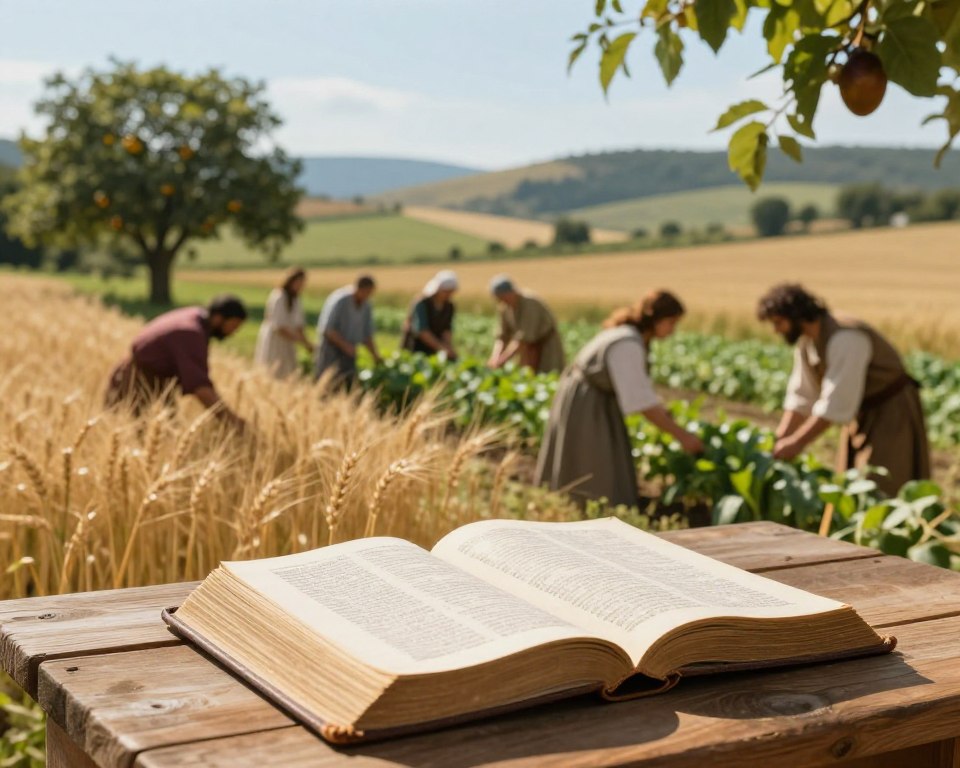
I want to show you how this ancient farming shaped entire communities. It was the primary occupation for most people during that time. Their survival depended directly on successful harvests.
This guide helps you understand that connection. We will explore specific practices, tools, and seasonal cycles together. You will see how deeply faith was woven into each planting.
Overview of Agricultural Themes
The Bible reveals farming themes from Eden to Jesus’ parables. Agriculture connected man to the land God provided. This created a steady rhythm of work, trust, and dependence.
After entering the Promised Land, Israel’s circumstances allowed remarkable development. Cultivation became the foundation of their Mosaic commonwealth. Entire families relied on healthy crops for stability.
These themes prepare us to explore deeper lessons. We will discover how working the ground taught profound truths about God’s faithful provision.
Biblical Foundations and Teachings on Farming
Foundational texts reveal farming as an act of faith, not merely labor. From the start, God connected human purpose with caring for the earth. I see this truth woven into Scripture’s earliest stories.
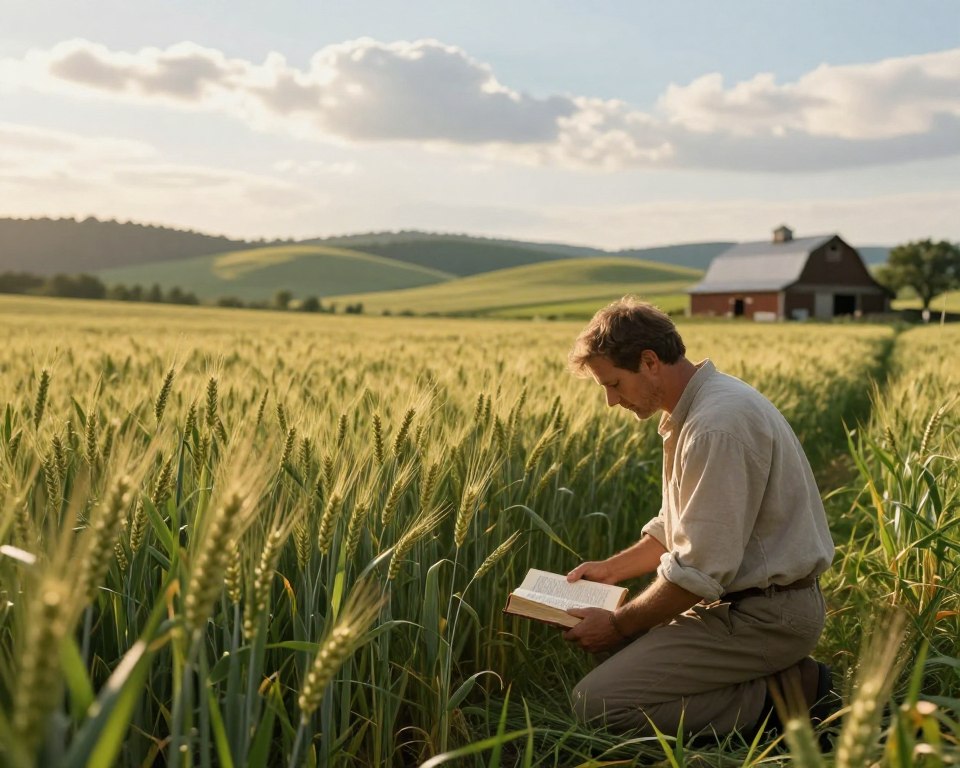
These passages show us that tending the ground was part of God’s good design. Every seed planted was an act of trust in His faithfulness.
Key Scripture Verses on Farming Faith
Genesis 2:15 shows God placed man in the garden to work and keep it. This was before sin entered the world. Work itself is a holy calling.
Genesis 4:2-3 records that Cain tilled the ground. His brother Abel kept sheep. Both agriculture and animal husbandry began early in human history.
| Scripture Reference | Key Promise/Lesson | Application |
|---|---|---|
| Genesis 2:15 | God placed man to work and keep the garden. | Work is part of God’s original design for man. |
| Genesis 4:2-3 | Cain tilled the ground as a farmer. | Cultivation was an early human occupation. |
| Deuteronomy 28:8 | God blesses barns and work when people obey. | Obedience brings agricultural blessing. |
| Jeremiah 17:7-8 | Trust in God makes one like a fruitful tree. | Faith provides stability and fruitfulness. |
Lessons from Deuteronomy and Jeremiah
Deuteronomy 28:8 gives a powerful promise. It states, “The Lord will send a blessing on your barns and on everything you put your hand to. The Lord your God will bless you in the land.” Blessing follows obedience.
Jeremiah 17:7-8 paints a vivid picture. The person who trusts God is like a tree planted by water. Its leaves stay green. It bears fruit even without rain.
These lessons are clear. Man plants the seed, but God provides the growth. True success requires complete trust in His timing. Our faith and our work on the land are inseparable.
Key Agricultural Seasons in Biblical Times
The rhythm of the ancient farmer’s year was set by two essential rains and six distinct seasons. Their entire calendar revolved around this cycle. Missing a window for planting or gathering could mean hardship for a family.
Planting and Sowing Periods
The year began with the early rain in late autumn. This rain softened the dry ground for plowing. Farmers sowed their grain seed during this critical time.
They worked from the latter half of Tisri through Marchesvan and into Kisleu. Sowing had to be complete before the colder months arrived. This period was dedicated entirely to establishing next year’s food supply.
Harvest and Threshing Phases
Harvest was a joyous and busy season. It started with barley ripening around Passover in Nisan. Wheat harvest followed at the festival of Pentecost.
These were days of intense labor in the fields. Everyone worked to gather the grain before summer heat arrived. Threshing and winnowing happened immediately after cutting.
| Seasonal Period | Months (Approx.) | Primary Tasks |
|---|---|---|
| Sowing Time | Tisri (late), Marchesvan, Kisleu (early) | Plowing and sowing grain after early rains. |
| Cold Season | Sebat (late), Adar, Nisan (early) | Crops mature with latter rain. |
| Harvest Time | Nisan (late), Ijar, Sivan (early) | Barley and wheat harvest, threshing. |
| Summer | Sivan (late), Tammuz, Ab (early) | No rain; tending vines, gathering fruit. |
I see how this calendar, like the Gezer inscription confirms, taught deep lessons. It showed God’s faithful rhythms in creation. Working in sync with these seasons was an act of trust.
Ancient Farming Tools and Practical Methods
The success of a harvest began with the right tools in a farmer’s hands. Simple implements made daily work possible. Each tool had a specific purpose in the cycle from planting to storage.
Plowing, Seeding, and Harrowing Techniques
Plowing required a simple wooden tool with a metal point. A man guided it while animals pulled it forward. Oxen were common, but cows and asses also worked.
God’s law taught wisdom here. It prohibited yoking an ox and a donkey together. These animals have different strengths.
The plow needed constant attention from the man. Jesus referenced this when teaching about commitment. After plowing, seed was sown by hand across the field.
Farmers broadcast it widely. In irrigated spots, cattle trampled the seed into the ground. This method ensured good contact with soil.
Threshing, Winnowing, and Storage Processes
Harvest involved cutting grain with a sickle. Workers bound it into sheaves. They transported these to a threshing floor.
Threshing separated grain from stalks. Oxen and cattle walked over the sheaves. A threshing sledge called a moreg was also used.
God commanded farmers not to muzzle oxen during this work. The animals could eat as they labored.
Winnowing removed chaff after threshing. Workers threw grain into the air. Wind carried away light chaff while heavier grain fell back.
Finally, clean grain was stored in granaries. These barns held the food supply until the next harvest.
Crop Distribution and Harvest Methods in Scriptures
Four key plants formed the foundation of daily life in ancient Israel: wheat, barley, olives, and grapes. Scripture summarizes these staple crops in 2 Chronicles 2:15.
Wheat, Barley, Olives, and Grapes
Each crop grew where conditions were best. Rich northern valleys in Galilee produced abundant wheat. Limestone hills in Ephraim supported olive groves.
Sunny terraces in Judah were perfect for grapes. Drier southern areas near the Negev favored hardy barley. These regions provided grain, oil, and wine for everyone.
| Primary Crop | Key Region | Main Product |
|---|---|---|
| Wheat | Galilee | Grain for bread |
| Barley | Negev/Philistia | Grain for bread & feed |
| Olives | Ephraim (Samaria) | Oil for cooking & lamps |
| Grapes | Judah | Fresh fruit & wine |
Methods for Gleaning and Field Management
God’s law shaped the harvest. Farmers left the corners of their fields unharvested. They also did not gather every grape or olive.
This allowed poor people, widows, and orphans to glean food. Ruth’s story shows this system in action. She gathered leftover barley in Boaz’s field.
Other rules taught order and generosity. Farmers could not plant two kinds of seed together. A traveler could eat fruit from a field but not take any away.
I see God’s compassion and wisdom here. These methods provided for the needy. They also taught respect for the land and its owner.
Environmental Influences on Biblical Agriculture
Without large-scale irrigation systems, farmers in ancient times relied completely on natural rainfall and the inherent quality of their soil. I see how these environmental factors shaped every decision they made. Their success depended on understanding local climate patterns and earth composition.
Impact of Climate and Rain Cycles
Rain was the most critical factor for cultivation. Northern regions received about thirty inches each year. Southern areas near Beersheba got only half that amount with unpredictable patterns.
God sent two specific rain seasons. Early rains in October softened the ground for planting. Latter rains in March and April helped grain mature before harvest.
Farmers depended completely on this cycle. Their prayers for water reflected deep trust in God’s provision. Western slopes facing the Mediterranean received abundant rain, while eastern slopes remained dry.
Soil and Topographical Effects
Soil types varied greatly across the Promised Land. Valley floors had deep, fertile earth formed from alluvium. Hillside fields were thin, stony, and required terracing.
The limestone soils of Judah and Ephraim were rocky but productive. Northern regions like Galilee had rich basalt-based soils. These different earth conditions taught farmers to adapt their methods.
Temperature changed with elevation too. Highlands experienced frost that could damage sensitive plants. Farmers learned to plant according to local growing conditions.
Cultural and Historical Perspectives on Farming Practices
The Hebrew people did not develop their farming in isolation. Their methods reflected a rich history of observation and adaptation throughout biblical times.
Interaction with Ancient Near Eastern Techniques
Ancient farming methods in the Near East varied greatly between Egypt and Mesopotamia. The Hebrew people observed Egyptian agriculture during their years there.
Egypt’s system relied on predictable Nile flooding. This deposited fresh soil annually. Farmers there did not depend on rain.
Mesopotamian practices were different. Flooding from the Tigris and Euphrates was erratic. Men built extensive canal systems for irrigation control.
Both civilizations grew similar crops like wheat and barley. When Israel entered the Promised Land, the people recognized these plants. However, they could not use the same irrigation techniques in the hilly terrain.
They adopted Canaanite farming practices instead. This required dry farming that depended entirely on seasonal rain. I see how God led His people to a land where provision came directly from His hand.
This shift taught complete dependence on God’s faithfulness. It remains a powerful lesson for our faith today.
Agriculture in the Bible: Faith and Community Impact
Every harvest celebrated not just full barns, but God’s faithful promise to His people. This joy shows how deeply faith was tied to daily work. For families in the Promised Land, farming shaped their entire existence.
Spiritual Significance in Daily Farming
Planting a seed required complete trust. A farmer’s work was an act of faith because outcomes depended on rain and growth he could not control. God promised to bless the work of obedient hands.
Jeremiah 17:7-8 compares a person who trusts God to a tree by water. This tree stays green and bears fruit without worry. I see this as a picture of faithful dependence.
Community Values and Rural Life
Biblical laws built compassion into daily practice. Farmers left field corners and dropped grain for the poor. One forgotten sheaf could mean food for a widow.
Families worked together caring for sheep and other animals. This taught children responsibility and trust in God’s provision. Community festivals thanked God for food and celebrated His faithfulness.
These principles for healthy living show how God designed community care. Life centered on faithful work and generous sharing.
Conclusion
Ancient farming practices offer profound insights for our modern walk of faith. Genesis 8:22 states God’s promise: “As long as the earth endures, seedtime and harvest will never cease.” This shows His faithfulness to sustain creation and His people.
Every seed planted was an act of trust. Biblical agriculture required hard work and complete dependence on God. These lessons teach us about patience and hope.
They apply to our life today. Scripture uses farming images to reveal God’s character. Laws about gleaning show His compassion built for daily living.
I hope this guide deepens your understanding of God’s Word. May it strengthen your trust on His faithful provision for every area of your life.