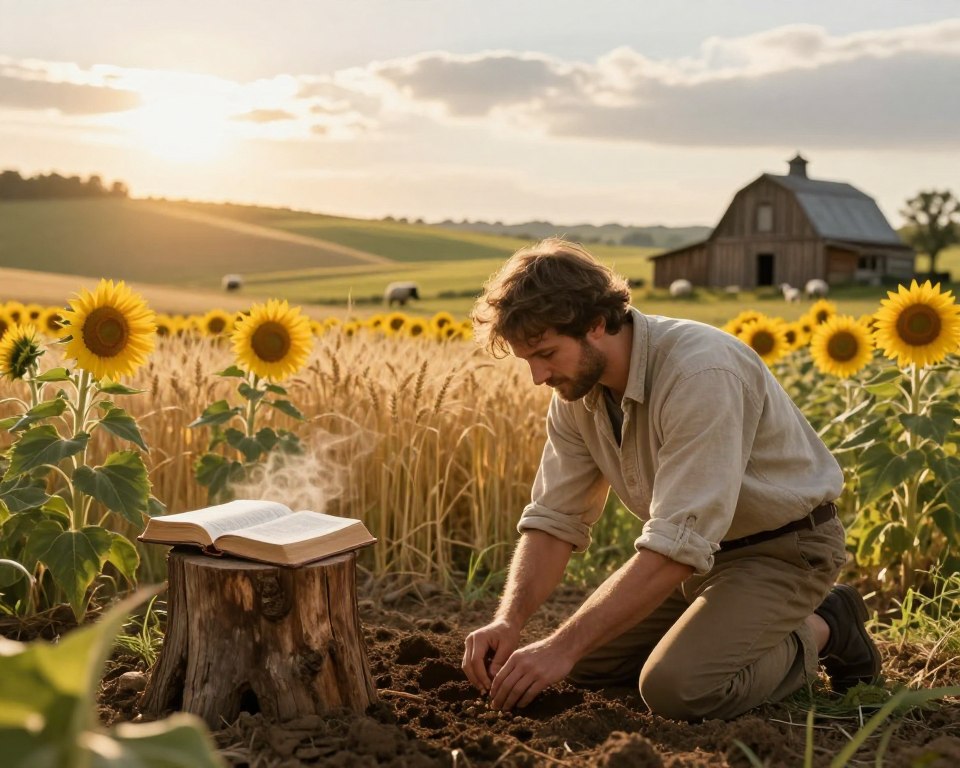

Have you ever noticed how often Scripture uses images from the world around us? Nature metaphors in the Bible aren’t just poetic flourishes. They are divine tools that make profound truth feel tangible and close to our hearts.
God’s word is filled with references to His creation. From the steadfast mountains to the flowing rivers, these pictures help us grasp His character and promises. I’ve always found that these connections make faith more relatable.
Scripture uses elements like trees, water, and animals to illustrate life lessons. This method appears hundreds of times across both testaments. It shows God speaking a language we can all understand.
My hope is that exploring these images will renew your wonder for God’s word. We can see how He uses the beauty of the physical world to point us toward eternal hope. Let’s look at some powerful examples together.
Key Takeaways
- God frequently uses creation as a teaching tool in Scripture.
- These metaphors span six main categories, including heavens, mountains, and water.
- They appear throughout both the Old and New Testaments.
- This imagery makes deep truths about faith accessible and memorable.
- Studying these connections can deepen your understanding of God’s character.
- It bridges our experience of the physical world with spiritual truth.
- This approach helps God’s word come alive in fresh, meaningful ways.
Introduction to Biblical Nature Imagery
Scripture’s use of creation as a teaching tool spans from Genesis to Revelation. My purpose here is to help you recognize how God communicates His truth through the physical world.
Purpose and Scope
This study explores major categories like heavens, mountains, and trees. These pictures make abstract faith concepts concrete. They connect daily experience to divine promise.

Overview of Key Bible Verses
Hundreds of Bible verses reference elements like water, flowers, and animals. Both the Old Testament and New Testament contain this rich imagery.
In the Old Testament, it often relates to God’s covenant and provision. People in biblical times had a close connection to the land. This made the imagery powerful and immediate.
The scope of this guide provides a framework. You will see patterns in how Scripture uses natural elements. For example, water symbolizes life and renewal. This overview helps you understand how creation itself declares God’s glory.
Biblical Foundations of Nature Metaphors
The foundation for these powerful images is deeply rooted in the agricultural life of ancient Israel. Biblical authors lived close to the land. They used objects and events familiar to their audience.
From everyday experiences like sowing, plowing, and reaping, they crafted pictures to explain unseen realities. This made faith principles tangible. God’s word connected divine truth to common life.

Scripture establishes this method from the very first chapter of Genesis. Verses from the Bible show God intentionally designed creation to reflect His character. The natural world creates order and understanding for His people.
Scriptural References from the Old and New Testaments
This imagery maintains consistency from the Law through the Prophets to the Gospels. The agricultural foundation made it the most effective way to communicate. These pictures work because they connect to observable reality.
The order of creation itself becomes a teaching tool. It speaks of God’s sovereignty and purposeful design. I find that understanding this cultural context helps us grasp why these images carried such power.
Nature as a Reflection of God’s Glory
We don’t need words to understand God’s majesty; the earth and heavens proclaim it daily. I often stand amazed at how the physical world points us toward divine truth.
Creation and Divine Majesty
Psalm 19:1 says, “The heavens declare the glory of God, and the sky proclaims the work of His hands.” Creation worships through its vastness, complexity, and order. It fulfills its purpose by being what God made it to be.
When God created the heavens and the earth, He embedded His character into the fabric of all that exists. The universe itself is a testimony to His creative majesty and wisdom.
This glory shines from the grand cosmos down to the smallest details on earth. Mountains stand firm. Waters flow. Living things flourish according to His design.
I see God’s fingerprints everywhere. The precise order of seasons and the intricate design of a flower speak directly to our hearts. They show He cares about beauty, not just utility.
This reflection through creation invites us to worship. It helps us recognize His authority over all things.
The Heavens: Celestial Imagery in Scripture
Look up at the sky on a clear day, and you’re witnessing a silent sermon written across the expanse. Many bible verses direct our attention upward. They show us how the sun, moon, and stars declare God’s glory.
This celestial imagery makes vast truths about God’s character feel close and personal. I often find peace in remembering that the same God who hung the stars knows my name.
Psalms and the Declaration of God’s Work
The Psalms are filled with this awe. Psalm 19:1 gives us a powerful picture: “The heavens declare the glory of God, and the sky proclaims the work of His hands.” Creation itself worships through its daily function.
Other Psalms expand on this theme. Psalm 108:4 tells us God’s faithful love reaches higher than the heavens. Psalm 147:4 reveals He counts and names every star.
This detail shows His intimate care for His creation. It reminds me that His knowledge of us is just as precise.
New Testament Affirmations
The New Testament echoes this foundational truth. Hebrews 1:10 reaffirms God’s creative act. It states the Lord’s hands established the earth, and the heavens are the work of His hands.
This consistent message across Scripture invites a response. When I consider this magnificent creative work, it makes me want to shout for joy.
We serve a God whose faithfulness is as constant as the rising sun. His power is displayed in the cosmos, yet His care is personal.
Mountains: Symbols of Stability and Power
When we think of unshakeable strength, our minds often turn to the massive peaks that define a landscape. Scripture uses these giants of the earth to show us two profound truths.
They represent both divine stability and God’s supreme authority. Even the most solid formations respond to His presence.
These images teach us about God’s character in ways we can see and feel. Let’s explore what mountains reveal about His protection and power.
Protection and Divine Authority
Psalm 125:2 gives us a beautiful picture. It says Jerusalem is surrounded by mountains, and the Lord surrounds His people the same way.
This protection offers true peace. It comes from being in the place God prepares for those who trust Him.
Yet mountains also demonstrate God’s absolute authority. Nahum 1:5 describes them quaking before Him. Hills melt at His presence.
Micah 4:1 prophesies the mountain of God’s house established above all others. All nations will stream to it.
1 Corinthians 13:2 adds crucial perspective. Even faith to move mountains means nothing without love. Power finds its purpose in love.
I find great comfort here. The God who commands mountains also surrounds me with His care. True strength comes from resting in Him.
Nature metaphors in the Bible
God consistently chooses the familiar to explain the eternal. He uses our everyday surroundings as His classroom.
These pictures make deep truth about His character clear. They show us His provision, faithfulness, and what He expects from His people.
Direct Examples from Scripture
We see this method everywhere in God’s word. Specific bible verses point to trees, water, and farming.
Animals and celestial bodies also serve as powerful illustrations. Each one connects a physical reality to a faith principle.
This was the natural way for biblical authors to teach. Their audience lived close to the land and understood these cycles.
Lessons Learned from Nature
I find this approach makes Scripture wonderfully accessible. You don’t need special training to grasp how a seed grows.
The lessons learned from creation remain vital today. God’s truth is unchanging, and the natural world still reflects His glory.
These direct examples help us apply biblical truth. They show us God’s way in practical, observable terms for our daily lives.
Trees: Living Testimonies of Faith and Growth
Consider the humble tree—its growth, strength, and fruit offer profound lessons for our journey. Earth hosts over 64,000 species. Each unique kind displays God’s creative detail.
Psalm 96:12 says all trees of the forest shout for joy. They worship simply by being what they were made to be.
The Tree of Life and Good Fruit
Jeremiah 17:8 paints a powerful picture. A person trusting in the Lord is like a tree planted by water. It doesn’t fear heat and produces fruit even in drought.
Our connection to God’s living water enables fruitfulness in hard times. Matthew 7:18 states a good tree cannot produce bad fruit.
Our character determines what our life produces over time. Visible fruit reveals invisible roots.
Revelation 22:2 describes the Tree of Life bearing twelve kinds of fruit monthly. Its leaves bring healing. This symbolizes ultimate restoration for God’s people.
Timeless Lessons in Growth
Trees grow strong over time through consistent processes. I find encouragement here. God designed them to deepen roots and reach upward.
He grows our faith through steady trust. The tree life metaphor teaches us to stay connected to God as our source.
Our lives will then bear fruit that honors Him. This timeless lesson remains clear and practical.
| Tree Growth Stage | Scripture Reference | Faith Lesson |
|---|---|---|
| Seedling (New Plant) | Psalm 1:3 | Early faith needs nourishment from God’s Word. |
| Mature Tree (Deep Roots) | Jeremiah 17:8 | Stability comes from deep trust in God’s promises. |
| Fruitful Tree (Bearing) | Matthew 7:18 | A life rooted in Christ naturally produces good works. |
Water: Source of Life and Renewal
Jesus offered living water, a promise that quenches a deeper thirst than we know. This imagery connects our physical need to a profound faith truth.
Rivers, Streams, and Living Water
Scripture shows this element as essential for all life on earth. It represents God’s provision and cleansing power. His word brings renewal to our hearts.
Ezekiel 47:9 describes a river where every living creature thrives. Where God’s flow goes, life flourishes abundantly.
Isaiah 41:18 promises rivers on barren heights. God turns desert into pools. He provides for His people in dry places.
Song of Songs 8:7 says mighty waters cannot extinguish love. This shows the enduring strength of God’s covenant.
John 7:38 records Jesus’ words. Believers will have streams of living water flow from within. This satisfies our souls completely.
I am amazed that the same God who designed water for earth’s survival offers Himself as living water. We need His presence daily to thrive in faith.
Flowers and Fruit: Emblems of Beauty and Abundance
Isaiah 40:8 draws a clear line between fading flowers and God’s enduring word. This guides our focus to heavenly things. Flowers show us vibrant, temporary beauty. Fruit represents lasting growth and abundance.
Isaiah 35:1-2 describes the wilderness blossoming with joy. This picture points to God’s power to bring life to dry places. Yet the beauty of a flower is brief.
Transient Beauty versus Eternal Word
Isaiah 40:8 states, “The grass withers, the flower fades, but the word of our God will stand forever.” This contrast is stark. It teaches us to invest in eternal realities, not temporary ones on earth.
Fruit in Scripture always shows outward evidence of inward faith. Matthew 3:8 calls for fruit consistent with repentance. Our changed life proves genuine turning to God.
The fruit of the Spirit listed in Galatians 5:22-23 reveals God’s character growing in us. Love, joy, and peace develop over time. I see this as God’s work within our hearts.
Just as fruit takes seasons to mature, these qualities need God’s patient cultivation. While flowers fade, the word planted in us yields lasting fruit.
| Fruit of the Spirit | Scripture Reference | Key Trait |
|---|---|---|
| Love | Galatians 5:22 | Selfless care for others |
| Joy | Galatians 5:22 | Deep gladness in God |
| Peace | Galatians 5:22 | Inner calm and wholeness |
| Patience | Galatians 5:22 | Steadfast endurance |
| Kindness | Galatians 5:22 | Compassionate action |
| Goodness | Galatians 5:22 | Moral excellence |
| Faith | Galatians 5:22 | Trust in God’s promises |
| Gentleness | Galatians 5:22 | Strength under control |
| Self-control | Galatians 5:23 | Mastery over desires |
Animals: Illustrations of Courage and Provision
Animals in Scripture are not just background details. They are vivid illustrations of courage, provision, and humility.
Wild Creatures in Scripture
Psalm 148 calls all creatures to praise the Lord. Wild animals, cattle, and flying birds honor God simply by being what He made them to be.
These living examples point us back to our Creator. I see that God uses them to teach about His character and our relationship with Him.
Proverbs 28:1 says the righteous are as bold as a lion. Courage comes to people who walk rightly with God.
Fish and birds appear as examples of His provision. They show His care for all creation.
Proverbs 21:31 teaches about preparation and trust. A horse is readied for battle, but victory belongs to the Lord.
Our strength or resources cannot secure triumph. Ultimate success comes from God alone.
Job 39:27 asks if the eagle soars at your command. This question reminded Job of his place.
We learn humility when we remember that animals answer to God. He alone directs their paths.
These lessons remain clear for us today. Wild animals and domestic creatures serve as living reminders of divine truth.
Agricultural Metaphors: Sowing, Reaping, and Harvest
Farmers in biblical times understood a simple truth. What you plant today shapes your harvest tomorrow. Their entire life on the land revolved around this cycle.
Scripture uses this familiar reality to teach deep faith principles. Sowing, tending, and reaping make abstract concepts feel concrete.
Farming as a Spiritual Lesson
Galatians 6:7-8 lays out a clear principle. We reap what we sow. This isn’t just about crops in fields.
It’s a law of moral cause-and-effect. Our daily actions are like seeds. They produce a future harvest.
Farmers work the land and plant seed. Yet God alone brings the increase. This truth applies directly to our faith journey.
Patience and stewardship are vital. We must trust His timing for growth.
Biblical Blessings in Agriculture
Genesis 26:12 shows God’s abundant provision. Isaac reaped a hundredfold harvest in a time of famine.
This miraculous blessing exceeded normal yield. It demonstrated that obedience to God’s law brings fruitfulness.
The earth yields different kinds of produce. Each teaches us about His faithfulness.
I see a powerful lesson here. When we align our lives with God’s ways, the fruit of our choices brings lasting joy.
| Agricultural Stage | Faith Lesson | Scripture Reference |
|---|---|---|
| Preparation (Plowing) | Our hearts must be ready to receive truth. | Hosea 10:12 |
| Planting (Sowing) | Our actions and words are seeds for the future. | 2 Corinthians 9:6 |
| Waiting (Growth) | Trust God’s timing; growth happens unseen. | Mark 4:26-29 |
| Harvest (Reaping) | We will gather the fruit of our choices. | Galatians 6:9 |
The agricultural cycle offers practical wisdom. It reminds us that each day of faithful work matters. The land itself teaches us to depend on our Creator for every good gift.
Old Testament Insights: Creation and Covenant Imagery
The opening pages of Scripture present a majestic account of how everything began. This foundation shapes our entire understanding of God’s relationship with His people.
Genesis Narratives and Promise
Genesis 1 records God created the heavens and earth in six days. He separated light from darkness and waters from land. Every plant, tree, animal, and human was formed according to their kinds.
God made each element simply by speaking His powerful words. This demonstrates His absolute authority and intentional design. The sequential order of each day builds a comprehensive picture of purpose for all life.
Different kinds of creatures fill the earth with wonderful diversity. Each serves a specific function in the ecosystem God made.
After humanity’s rebellion, Genesis 8:21 gives a covenant promise. God vowed never to curse the ground again because of people. This commitment reveals His enduring mercy despite our failures.
The Old Testament consistently uses this creation imagery. Prophets and writers pointed to the physical world to teach about God’s covenant. Blessings for obedience and warnings for disobedience were often framed through land and harvest.
I see that God created the tangible world as His primary teaching tool. He uses things we can touch and see to reveal deep truth about His faithfulness and justice.
New Testament Revelations: Growth, Renewal, and Parables
Jesus often stepped outside to teach, using the world around Him as His classroom. The New Testament records His powerful parables drawn from creation. These stories reveal how God’s kingdom grows and renews our faith.
I see His teachings as a fresh revelation for all who follow Him. They make deep truth about our journey with God clear and accessible.
Jesus’ Teachings through Nature
Mark 4 contains several parables about seeds. Jesus described the sower, the seed growing secretly, and the tiny mustard seed. He showed the way faith develops over time.
Good fruit serves as evidence of genuine faith. Matthew 7:18 states plainly, “A good tree cannot bear bad fruit.” Our character determines what our life produces.
Luke 13:6-9 tells of a fig tree given one more chance to bear fruit. This story highlights God’s patience. He cultivates our hearts for productivity.
John 15 presents one of Jesus’ most powerful images. He is the true vine, and we are the branches. Remaining connected to Him brings life and fruitfulness.
Jesus also used a grain of wheat. John 12:24 explains that His death would bring eternal life to many. His sacrifice produces a great harvest.
Even the wilderness appears in these teachings. It becomes a place of testing and encounter with God. I’m struck by how Jesus took everyday observations about trees and seeds.
He revealed profound truth about faith, growth, and His mission. These teachings show that creation continues to declare God’s truth. Each generation can find fresh hope in His words.
Environmental Stewardship in Scripture
From the beginning, God placed humanity in a position of responsible authority over the world He crafted. This wasn’t just a suggestion. It was our first job description.
Caring for God’s Creation
God created people with a specific role. Genesis 1:26 records our authority to rule over fish, birds, and all creatures. Verse 28 commands us to fill the earth and subdue it.
This means we manage God’s creation according to His order. Genesis 2:15 shows Adam placed in the garden to work and keep it. Stewardship requires active care.
Our authority brings accountability. Numbers 35:33-34 warns against polluting the land. Our actions have real consequences for the earth.
God made fish, birds, and animals of all kinds. He declared each one good. Water, land, and all creation belong to Him. We are His caretakers.
I see this duty as part of honoring God created everything. Psalm 66:4 says all the world worships Him. Caring for His property is a direct act of faith.
Nature as a Guide in Bible Study
Your personal bible study can be transformed by intentionally observing the patterns in God’s creation. I find this approach opens up fresh layers of meaning in familiar passages.
Practical Bible Study Tips
One practical way is to use an online concordance. Search for terms like “water” or “seed.” You will discover hundreds of references across Scripture.
This reveals how God’s word uses the natural world consistently. Comparing how different books use the same image unlocks deeper wisdom.
Spend time outdoors observing the things Scripture describes. Bible verses about rivers or trees come alive when you see them firsthand.
I recommend studying bible verses in thematic clusters. Look at all passages about light or harvest together. Patterns in how God teaches through creation become clear.
The word of God and the works of God explain each other. This one method will change how you read Scripture and see the world around you.
Conclusion
Our journey through Scripture reveals a consistent pattern: God speaks through what He has made. From towering mountains to flowing water, creation declares His glory. These pictures make deep truth accessible to all people.
Remember Isaiah 40:8. Flowers fade, but God’s words stand forever. His promises give lasting hope.
I see divine wisdom in the universe’s order. Every tree and creature reflects His design. Let your heart shout for joy with all creation.
Trust that the same God who sustains wild animals cares for you. Walk in His peace each day. May your life bear good fruit as you grow in faith. Study these Bible verses to see God’s hand at work in the world.