Stories of Elijah and Elisha invite us into vivid scenes where God calls people back to truth.
I write as a guide who has read these accounts in 1 and 2 Kings. I want to walk with you through clear moments that shape faith, prayer, and service.
These narratives sit in the old testament and hold real weight in history. Each act — a prophet’s bold word, a miracle that heals, a cloak passed to a successor — builds trust in God’s promise.
Open your study bible. Read slowly. Let the text ask questions of your life and choices. I will point to how miracles confirmed the message rather than feeding fame.
As we move forward, I aim to show how God’s power and purpose worked through these men to spark an influence led awakening among God’s people.
Key Takeaways
- These accounts guide us to obedience, prayer, and faithful service.
- Miracles confirmed God’s message and supported prophetic authority.
- The prophets’ lives show how God shapes history and personal life.
- Reading with a study bible helps link facts to daily faith choices.
- We honor God’s work here while looking to Christ’s fuller fulfillment.
Overview: Prophets of the Old Testament and their impact on Israel’s past
Let me place these prophets in their historical setting so the impact is clear.
The old testament records a dismal stage in israel history when idolatry spread and covenant loyalty faded. Kings often led the people away from God. Altars to false gods stood where faith should have grown.
God raised Elijah and Elisha to confront false worship. Their words and signs confirmed that God’s word had not failed. This work did not aim at fame but at repentance and return to truth.
Their influence led awakening among israelites who still feared the LORD. That led awakening among hearts formed under pressure, not comfort, which makes their faith clearer.
A careful reader with a study bible can trace cause and effect in this history. Notes show how Scripture served as an anchor during a stage israel history marked by failure and hope.
| Context | Problem | Prophetic Response |
|---|---|---|
| Nation led by ungodly kings | Idolatry and covenant drift | Call to repentance and public signs |
| People under pressure | Faith tested | Awakening among israelites |
| Scripture teaching | Need for anchor | Study bible notes affirm God’s word |
Stories of Elijah and Elisha: a clear timeline of key events
Read these events as steps: a calling, a sign, a separation, and a new mission begun. I trace action with verbs and clear purpose to show how authority passed and ministry opened.
Call and cloak: Elijah commissions Elisha from the field
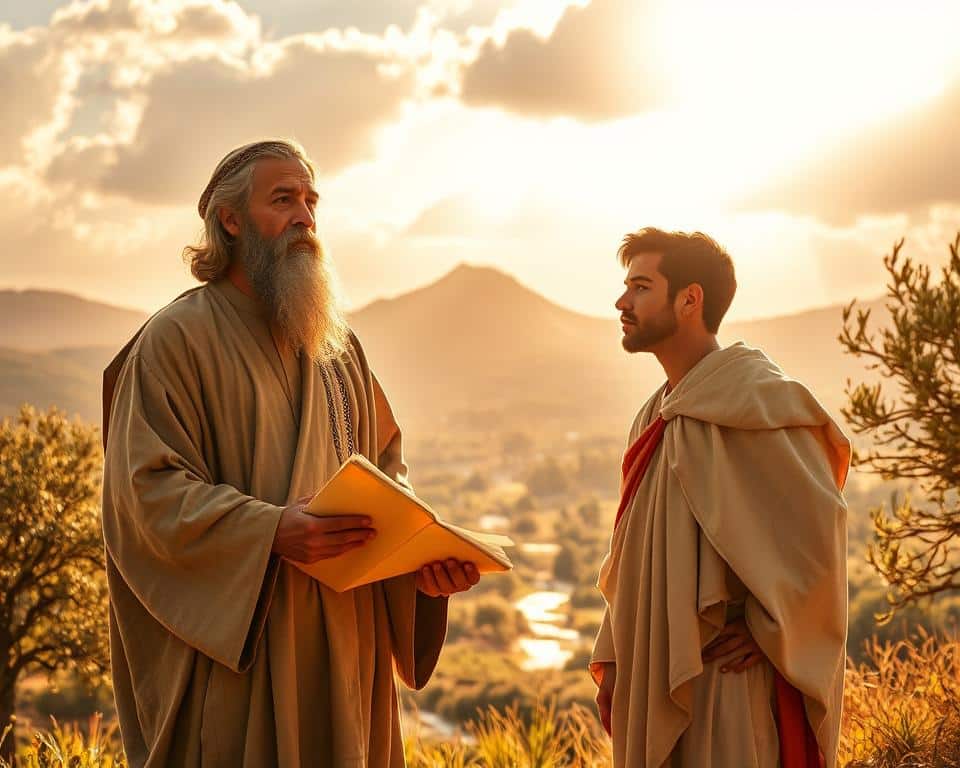
Elijah placed his cloak on Elisha as a call. Elisha left his plow and followed. They moved from Gilgal toward Bethel, Jericho, and the Jordan while a band of prophetic witnesses watched.
Heaven whirlwind: chariot of fire and horses separate them
At the Jordan, Elijah struck the water with his cloak and the river divided. He asked, “What can I do for you?” Elisha answered:
“Let me inherit a double portion of your spirit.”
A chariot of fire and horses of fire then appeared. A heaven whirlwind took Elijah upward while the witnesses saw the sign.

Elisha crosses the Jordan and begins his ministry
Elisha saw the ascent, cried out in grief and resolve, then picked up the cloak. He struck the Jordan and crossed as the water divided again. The prophets declared that the spirit rested on him.
From Jericho’s water to Bethel: early signs and conflict
Elisha healed Jericho’s bad water with salt and God’s word, and the spring remained pure. Soon after, mockers in Bethel insulted him; judgment followed when two bears mauled forty-two boys. These events set the authority for his way of service.
| Event | Action | Significance |
|---|---|---|
| Call at the field | Cloak placed; disciple follows | Public transfer of authority |
| Jordan crossing | Cloak struck river; waters divide | Miracle confirms succession |
| Ascension | Chariot of fire; heaven whirlwind | Divine endorsement of mission |
| Early ministry acts | Jericho healed; Bethel conflict | Power shown; authority tested |
The double portion request and what it signified
Here I examine why the double portion request mattered for legacy and ministry. The phrase named a legal right for the firstborn to receive the main share of inheritance and duty.
When Elisha asked for a double portion of his mentor’s spirit, he used household law language to ask for authority to serve with power and faith. This was a prayer for service, not status.
Elijah said the request was hard, and he set a condition: Elisha must see the taking to receive the sign. That tied the gift to God’s timing, not human demand.
“My father! My father!”
Elisha stayed to the end. He watched the chariot and horses. Because he remained, God answered. The pledge—surely lord lives—shows steady trust. Saying lord lives was a vow that held him to faithful witness.
- Double portion: firstborn right to legacy and duty.
- Requested in terms of spirit so service would bless others.
- Elijah said it was hard; reverence is required for gifts.
I urge readers to pray for a portion of courage and faith that serves Scripture’s mission. Test desires with God’s word so power aims to bless, not to promote self.
Miracles that marked their ministries
The miracles recorded in the narratives tie each prophet’s word to mercy and judgment. I list clear actions and outcomes so the link between sign and message is plain.
Elijah’s signs show God’s power from heaven. Fire consumed the altar. He struck the Jordan with his cloak and the water parted. Finally, a chariot of fire with horses arrived as elijah went up in a whirlwind, confirming God’s call.
Elisha’s acts meet practical need. He purified Jericho’s water with salt. He multiplied a widow’s oil so she could pay debts. He raised the Shunammite’s son after death, restoring hope to a grieving household.
- Naaman washed seven times in the Jordan and received healing by faith.
- Elisha refused payment to keep focus on God; Gehazi’s greed brought leprosy as correction.
- After Elisha’s death a man came back to life when his body touched the prophet’s bones.
“These signs point to the LORD who gives life and calls for humility.”
Each miracle offered mercy to those in need and correction to those tempted by gain. I urge readers to see these acts as signs that prompt repentance, deepen faith, and honor God’s word.
Mentor and student: loyalty, mantle, and spirit
A final farewell can reveal the roots of mentorship: presence, prayer, and public witness. I describe how a mentor trains by shared work and steady trust in God’s word.
My father, my father is more than grief. It is a tribute from a pupil who learned duty and love. When elijah said the parting words, the disciple refused to leave. He stayed until the end.
“My father! My father! The chariots and horsemen of Israel!”
After the crossing, many people declared that elisha saw the mantle passed and that the spirit rested on him. This public affirmation showed the transfer of responsibility and hope for new service.
I note two roles: the mentor models prayer, integrity, and steadiness. The student shows teachability, faithful work, and bold prayer for God’s help.
- Mentor: presence, shared tasks, trust in God’s word.
- Student: perseverance, humility, asking for a greater portion.
Such loyalty shapes life in hard seasons. When people watch honor and truth, they find courage to serve. I urge mentors to model prayer and students to seek wisdom and remain faithful.
Israel history and kings: prophets amid a dismal stage
Across turbulent reigns, prophetic words cut through royal politics to call people home.
Ahab to Ahaziah: calling people back to the Lord God
I trace how israel history shows kings leading people into idolatry while God sent messengers to correct that path.
In these pages I note that elijah went where God sent him and spoke truth to Ahab and Ahaziah without fear.
Advice to the king of Israel: arrows, ground, and limited victories
Elijah told Joash to shoot an arrow then strike the ground. When the king struck three times, the prophet said Israel would win three victories but not finish Aram.
This quick scene shows cause and effect: half‑hearted action yields partial results when God asks for full trust.
Lessons for life and leadership
- Measure rulers by faithfulness to God’s word, not by politics.
- Use your study bible notes to see that help comes from God, not armies.
- Remember that a man god must speak plainly to power and keep hope in God.
I urge people to pray for leaders, obey God first, and let study bible guidance shape daily life and public life. The history here records God’s patience, God’s justice, and a clear call for people to return to faithful living.
From Sinai to the mount: Elijah with Jesus at the Transfiguration
On the mount, Heaven’s past and promise meet as Moses and Elijah stand beside Christ. The scene shows how the old testament points forward to a greater fulfillment in Jesus.
The three Gospel accounts place Moses and the prophet with Jesus as eyewitnesses to His coming mission. They spoke about His departure that would lead to the cross and resurrection.
“This is my Son, whom I love; with him I am well pleased.”
Witness to hope: Moses and Elijah point to fulfillment in Christ
The mountain confirmed that Law and Prophets unite in one way to Christ. The chariot and fire images from earlier days echo here. Elijah’s heaven whirlwind ascent hints at glory now fulfilled in the Son.
| Witness | Image | Meaning |
|---|---|---|
| Moses | Law fulfilled | Jesus completes the old covenant way |
| Prophet | Chariot / fire echoes | God’s power leads to saving work |
| Apostles | Vision at mount | Faith is steadied by Scripture and sight |
Study bible notes help readers see how heaven scenes connect. Read both Testaments as one witness. Respond with worship, obedience, and steady trust in God’s word.
Lessons for life today: faith, obedience, and the way of the Spirit
Apply these scenes to modern duty: ask, serve, and stand firm in truth. I give direct steps that shape daily life and public witness.
Ask for a greater portion: bold prayer with a clear purpose
Ask God plainly for courage and wisdom. Elisha asked for a double portion and received it when he watched the sign. Bold prayer must aim to bless people and honor God’s word.
Serve without payment: God’s power, not human profit
Refuse offers that confuse the message. When service becomes a business, trust fractures. Gehazi’s choice shows what happens when a servant chases gain.
Stand firm in hard times: God’s word on solid ground
Act with full trust and do not stop short. Joash struck the ground only three times and won limited victories; half measures give half results.
“Measure success by obedience, not applause.”
| Action | Lesson | Today’s application |
|---|---|---|
| Ask boldly | Request a greater portion | Pray for courage to serve people faithfully |
| Refuse payment | Keep focus on God’s power | Serve as a servant, not for profit |
| Act fully | Trust without half measures | Work with full obedience on firm ground |
Call to action: Keep Scripture open daily, persevere in prayer, and let miracles point people to God’s rule as you wait for him to move.
Conclusion
Conclusion
I sum up that heaven guided those events: a chariot, fire, horses, a cloak, and a whirlwind marked a public transfer that showed God’s care for a dismal stage israel.
Those signs back mercy and miracles which met real need. A man came to life, water was healed, and a son rose — all to point people to the Lord God and to faithful service today.
Ask plainly for a double portion of courage and serve as a faithful servant. Let the vow surely lord lives shape your time, your counsel to king and your work on the ground.
I urge mentors to pass the faith like a father, and leaders to seek God’s prophet before acting. Trust Christ, read Scripture daily, and live with hope until the day we meet him in heaven.