
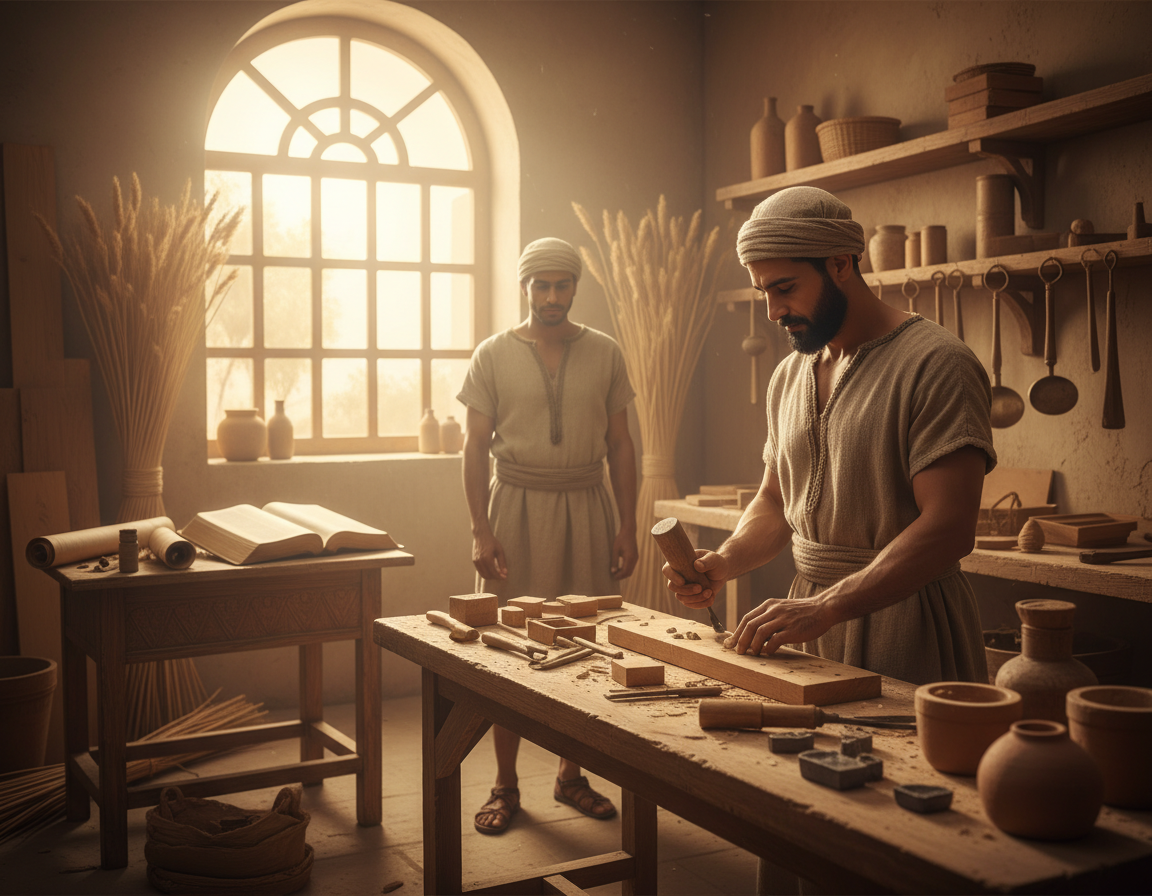
C.S. Lewis once said, “Integrity is doing the right thing, even when no one is watching.” This truth echoes powerfully in the life of a young man far from home.
I want to explore a biblical account that has deeply encouraged my own walk. The passage in Genesis 39:1-18 details his early years in Egypt. It shows us how profound trust in God shaped every task he was given.
This narrative isn’t just ancient history. It’s a living lesson for anyone who wants their daily labor to matter. How do we maintain our beliefs in a secular workplace? How does our faith directly influence our professional conduct?
Every part of this story offers an answer. It provides a model for honoring God right where we are. Let’s look together at this powerful example of steadfast hope.
Key Takeaways
- Faith directly influences our daily tasks and professional behavior.
- Maintaining integrity is possible in any environment.
- Biblical stories offer practical guidance for modern careers.
- Trusting God transforms our entire approach to work.
- Our professional life is a key arena to honor God.
- Scripture provides a clear path for integrating belief and duty.
- This biblical example teaches us about steadfast faithfulness.
Understanding the Historical and Biblical Context
The account in Genesis 39 unfolds against a backdrop of ancient Egypt, a land of immense power and foreign customs. To appreciate its lessons, we need to see the world this young man entered.
His journey began in betrayal. Sold by his brothers, he arrived in Egypt not as a visitor but as a slave. This was a brutal shift in his life.
Joseph’s journey from slavery to leadership
An Egyptian official named Potiphar, captain of Pharaoh’s guard, purchased him. Scripture tells us God was with him in that foreign house. Because of this, everything he did prospered.
Potiphar noticed this blessing. Over time, he entrusted more and more responsibility to his Hebrew servant. The slave became the manager of the entire household.

Scriptural background in Genesis 39
This chapter details his faithful service and the severe test that followed. Potiphar’s wife made false accusations, leading to his unjust imprisonment.
Even in prison, the pattern continued. God’s favor was upon him, and he was put in charge of other prisoners. This difficult time was part of a larger plan.
We see how God directed all things, even through hardship, to prepare him for future leadership. The prison experience and the interpretation of a fellow prisoner’s dream were crucial steps in that divine process.
Biblical Foundations for Ethical Work
Understanding God’s perspective on our vocation transforms how we perform each duty. Scripture gives us a clear model for this.
Our faith provides the bedrock for honest labor. It shows us that our daily tasks have eternal value.
Insights from Joseph’s example in Potiphar’s house
Even as a slave, he accepted his job with total diligence. Potiphar saw this and put him in charge of his entire house.
The Lord blessed the Egyptian’s household because of this faithful servant. Every single thing he did reflected a deep commitment.
This part of the story teaches a powerful truth. God values the labor we offer, even in difficult roles.
His primary calling was to honor God above all. That’s why he refused the advances of Potiphar’s wife.
He viewed his daily duties as a direct way to serve the Lord. His actions brought success to his master’s affairs.
| Biblical Principle | Action in Potiphar’s House | Modern Application |
|---|---|---|
| Diligence in All Tasks | Managed the entire household with excellence. | Perform every job with care, as for God. |
| Integrity Under Pressure | Rejected temptation to remain faithful. | Uphold honesty even when it’s costly. |
| Service as Worship | Saw daily labor as a way to honor God. | View your profession as a calling from God. |
This example shows that our work is never just a job. It is a platform for God’s work in and through us.
When we adopt this view, our approach changes completely. We find purpose in every small task we are given.
Joseph’s work ethic: Faith and Ethical Leadership
In today’s world, we often see a tragic disconnect between personal belief and professional action. This separation can lead to catastrophic failures.
History gives us clear examples of both success and collapse. We must learn from them.
How Joseph’s Character Shaped His Career
Joseph developed a strong inner character. This allowed him to lead with fairness during a long, difficult career.
He understood that his character was the most important part of his professional life. True leadership considers the needs of others.
Modern failures show the opposite path. Bernie Ebbers served as a church deacon yet oversaw the WorldCom fraud.
Enron reported $100 billion in turnover before its collapse. These failures cost the U.S. economy $40 billion and harmed many people.
| Leadership Model | Core Principle | Outcome | Modern Example |
|---|---|---|---|
| Biblical (Joseph) | Integrity rooted in faith | Sustained influence and trust | Leaders who integrate belief and duty |
| Failed Modern | Ethics separated from work | Collapse and widespread harm | Enron, WorldCom leadership |
| Ideal Application | Faith guides daily decisions | Builds lasting legacy | Professionals avoiding ethical issues |
We must avoid the mistakes of those who compartmentalize. Our faith should guide every decision in our daily work.
Strive to live like Joseph. Let your character, shaped by truth, define your entire career.
Handling Temptation and Upholding Integrity
One of the most defining moments in this biblical account comes with a sudden, severe test. It moves from faithful service to a direct moral crisis.
I see this as a powerful lesson for our own lives. How we respond under pressure reveals the true depth of our character.
The challenge of resisting unwanted advances
The situation arose in Potiphar’s house. His master’s wife made repeated advances, creating a deeply difficult moment.
He faced a clear choice. He could sin against God or protect his integrity. His response was immediate and decisive.
He fled, leaving his garment behind. This action shows his priority. He valued a clear conscience more than his safety or position in that house.
The false accusation that followed was swift. It led directly to his unjust imprisonment. This turn in the story is heartbreaking.
Maintaining a clear conscience in difficult moments
Even in prison, the way Joseph handled this trial is instructive. His focus remained on the Lord during those dark days.
He spent many years confined for a crime he did not commit. Yet, he did not become bitter. His faith sustained him.
Doing the right thing is not always easy. It is necessary for anyone who serves God. We can trust that He is in charge of our lives, even in unfair times.
| Temptation Faced | Immediate Action | Lasting Principle |
|---|---|---|
| Unwanted advance from Potiphar’s wife | Fled, leaving garment behind | Integrity is more valuable than safety |
| False accusation and loss of status | Accepted unjust imprisonment | Trust God’s plan when wronged |
| Long years in prison as a slave | Remained faithful in daily tasks | Character is built in hidden seasons |
| Pressure to compromise belief | Chose obedience over comfort | A clear conscience guides every decision |
This part of the life story teaches us a vital truth. Our response in a single day can define our path for years. Let his example encourage us to choose rightly, no matter the cost.
Transforming Injustice into Growth Opportunities
When life places us in unjust circumstances, our response can turn a prison into a place of purpose. Consider the thirteen years this faithful man spent as a slave and then in confinement. He was sold by his own brothers into a life he did not choose.
Yet, he did not waste that time. In Joseph’s prison, he used his God-given ability to help other men. He interpreted the dream of the cupbearer, seeing the world through another’s eyes.
This difficult job became an opportunity to serve God and his fellow people. We often face similar issues that feel deeply unfair. We can follow the example of those like Joseph who remained steadfast.
God uses all things to prepare us for our future calling. Even when we are stuck, He is at work. The way we handle hardship shapes our character for what comes next.
| Unjust Circumstance | Typical Human Response | Faithful Response (Like Joseph) |
|---|---|---|
| Sold into slavery by family | Bitterness and despair | Acceptance and diligent daily tasks |
| Falsely accused and imprisoned | Anger and self-pity | Serve others and interpret dreams |
| Long years of waiting | Giving up hope | Trust that God resolves the situation |
| Unchosen, difficult place | Viewing it as a dead end | Seeing it as preparation for a calling |
His story shows that our darkest seasons can be where God does His deepest work. Trusting Him with our pain opens the door for growth. He can bring great purpose from our deepest injustice.
Lessons on Consistency and Daily Commitment
Our character is often forged not in dramatic moments, but in the quiet consistency of everyday tasks. I see this truth vividly in the biblical narrative. It teaches us that faithful labor, done day after day, builds a legacy of trust.
This principle becomes especially powerful when faced with adversity. How do we maintain our dedication when challenges arise?
Working heartily despite adversity
He served with all his heart in Potiphar’s house. The Lord gave him success in every single task. This was not due to perfect conditions.
He faced a severe test with his master’s wife. Yet, he did not let this stop his diligent duties. His commitment remained steady.
We learn from his example. Our own daily business tasks are a chance to show similar integrity. Each thing we do can be an act of worship.
Faith requires us to be reliable and honest, even when rewards seem distant. Every day offers a new opportunity to build a strong character.
| Daily Commitment | Biblical Example | Our Application |
|---|---|---|
| Managing tasks with excellence | Oversaw Potiphar’s entire house | Give full effort to each project |
| Resisting distraction | Refused to be swayed by temptation | Stay focused on our core duties |
| Viewing labor as worship | Served as unto the Lord | See daily work as a calling |
| Persisting through hardship | Maintained character in prison | Keep going when times are tough |
His way of serving shows that true success flows from a life anchored in faith. Let’s embrace this model for our own time.
Career Lessons from Joseph’s Life Story
Setbacks and delays are not dead ends but divine preparation times, as seen in a famous Old Testament story. I find great hope in this truth for my own professional journey.
This post explores how God often works in ways we cannot see immediately. The path to leadership is rarely a straight line.
Learning from setbacks and delayed rewards
He spent thirteen long years as a slave and in prison. That is a significant portion of anyone’s life. Yet, those years were not wasted.
They were a training ground for his future calling. God used that difficult time to build his character.
Consider the moment he interpreted a dream for the cupbearer. He must have felt hope for a quick release.
Instead, he waited two more years in that cell before being remembered. This part of the joseph story teaches us patience.
Many people struggle with similar issues today. Our own career path can seem to go nowhere for a season.
We must learn to wait on the Lord, just like joseph did. Our calling is often revealed over many years.
Remain faithful in the small things while you wait for change. This is the core lesson from his joseph prison experience.
Trust that God is preparing you, even in the hidden places. Your current job, no matter how humble, is part of His plan.
Modern Applications of Biblical Work Ethics
The connection between Sunday faith and Monday work is a challenge many believers face in today’s fast-paced world. I often hear from friends in the church who feel a disconnect between their belief and daily professional duties.
This gap can lead to frustration. Yet, Scripture gives us a clear path for integration.
Aligning daily work with faith
Our career is more than a job. It is a calling from God to serve right where we are.
Think about the biblical figure who served faithfully in an Egyptian official’s house. His example shows we can honor God in any position or industry.
Your daily tasks become meaningful when offered as an act of worship. This alignment transforms our entire approach to life.
Practical examples from today’s workplace
We can help others in our office, just as he helped those he met in prison. Look for chances to encourage a struggling coworker.
Offer your skills to support your team. Small acts of service reflect God’s love to people around you.
Every situation is an opportunity to demonstrate integrity. Your character, shaped by trust in God, will shine through.
Do not let a dream for future success distract you from being faithful now. Stay focused on your current responsibilities.
For more on applying faith in action at the, explore this resource. It offers practical steps for living out your beliefs.
| Biblical Action | Modern Workplace Example | Key Principle |
|---|---|---|
| Faithful service in a foreign house | Excelling in a secular company culture | Honor God in any environment |
| Interpreting dreams to help others | Using your insight to solve team issues | Serve colleagues with your gifts |
| Maintaining integrity under pressure | Refusing to cut ethical corners for profit | Let faith guide tough decisions |
| Viewing labor as divine calling | Seeing your job as a platform for ministry | Work with eternal purpose |
These examples show how timeless truth meets our modern day. Let your faith shape every part of your professional life.
Integrating Faith and Duty in Everyday Business
What we do in our career and how we do it should reflect the truth we hold in our hearts. This post explores that vital connection. It’s about bringing our whole selves to our daily tasks.
Joseph’s life shows this integration perfectly. He served with excellence in Potiphar’s house as a slave. Later, he worked for the king to preserve life across the whole land.
His character led to great success in business. He managed Egypt’s resources during a severe famine. This was God’s work through a faithful person.
We can follow his example in our own calling. View your job as a way to serve the Lord right where you are. The church teaches that all labor has eternal value.
Trust God with your time and future, even during tough business challenges. Let your faith shape every professional decision you make.
| Biblical Integration | Joseph’s Example | Our Modern Application |
|---|---|---|
| Faith Informs Duty | Managed a household and a nation with integrity. | Let biblical truth guide your daily business ethics. |
| Character Drives Success | His trustworthiness led to leadership over Egypt. | Build a career on honesty and reliability. |
| Work as Divine Calling | Viewed saving lives as serving God. | See your job as a platform for ministry and service. |
| Perseverance Through Seasons | Remained faithful from slave to ruler. | Stay dedicated in your career through all phases of life. |
Joseph integrated his belief with his duty at every stage. We are called to do the same. Your professional life is a key place to honor God.
Conclusion
Our witness to the world is most powerful when our private convictions shape our public conduct. This biblical story provides a clear model for living with integrity in our daily life.
We are called to stand for what is right, even when it costs us. Like Joseph, we must let our faith guide our way.
Consider Henry Olonga and Andy Flower. They wore black armbands to protest injustice in Zimbabwe. Their courage shows that belief must influence our actions in the world.
We should be known by the people in our church and workplace for our commitment to truth. These issues define our witness today.
They show others we serve a God who cares about justice. Let us commit to living with the same faith and consistency displayed in that ancient life.
FAQ
How did Joseph go from being a slave to a leader?
What does the Bible say about having ethics in my career?
How can I handle temptation at my job like he did?
Can injustice actually lead to personal growth?
How do I stay consistent when my work feels unrewarding?
What is the biggest career lesson from his life story?
How can I align my modern job with my faith today?
How do I integrate my beliefs with my daily business duties?
Related: Lessons for Today from the Book of Genesis
Related: Understanding Judas Iscariot’s Betrayal in Scripture
Related: Christian Ethics in Work: Biblical Workplace Integrity
Related: Who Was Esther in the Bible? Discover Her Story
Related: The Life of Moses: Lessons in Faith and Leadership
Related: What the Book of Judges Teaches About Faith
Related: How God’s Timing Reflects Divine Wisdom
Related: Samson’s Strength and Downfall: Faith and God’s Word
Related: The Story of Anthony Burns and the Quest for Freedom