

I ask a simple question to begin: what does God command, and what does that mean for life now?
I will define the Fourth commandment and the Sabbath in clear terms. Exodus 20:8-11 links this rule to creation, rest, and God’s word. Mark 2:27 reminds us that rest was made for people.
In this post I will walk through Genesis, Exodus, Deuteronomy, the prophets, and Jesus’ teaching. I will note why Christians still study this part of the ten commandments. I will also address the Saturday versus Sunday debate and show what the Bible texts say and what sources claim.
My aim is informational. I invite careful reading of Scripture and respectful dialogue. I write as a mentor who hopes to deepen your faith and guide confident study of God’s word.
Key Takeaways
- We will define the Fourth commandment and its link to creation and rest.
- The main question asks what God requires and how that shapes life today.
- Scripture passages from Genesis through Jesus inform the practice.
- Christians differ on Saturday or Sunday observance; Scripture and sources will be examined.
- The post aims to inform and invites careful, respectful study of God’s word.
What the Fourth Commandment says in Exodus
Exodus 20 gives a clear weekly pattern for work and rest. I summarize the text and explain its wording so readers can follow its shape.
“Remember the sabbath day, to keep it holy.” (Exodus 20:8-11)
Days of labor and rest
The law orders six days for labor and one day set apart. The phrase six days shall means ordinary work and business. I define work as regular labor and profit-seeking in the weekly rhythm.
Who rests in the command
The command extends rest to each son and daughter, every servant, the immigrant within the gates, and the household animals. The limit applies to the whole household, not one person alone.
Keep holy links to God’s act of hallowing the day. Exodus gives the reason: God made the heavens and the earth in six days and rested the seventh. That Creator claim grounds why this day is set apart.

| Phrase | Meaning | Who it includes |
|---|---|---|
| Remember the sabbath day | Call to set the day apart weekly | Household and community |
| Six days you shall labor | Ordinary work and profit-seeking | Workers, owners, traders |
| Rest the seventh day | Cease regular labor; keep holy | Son, daughter, servants, stranger, animals |
God set the Sabbath at creation
Genesis places the weekly rhythm at the heart of creation, not at the start of Israel’s history. The text reports that God finished his work, then rested on the seventh day. That act gives the week a Creator-focused origin.
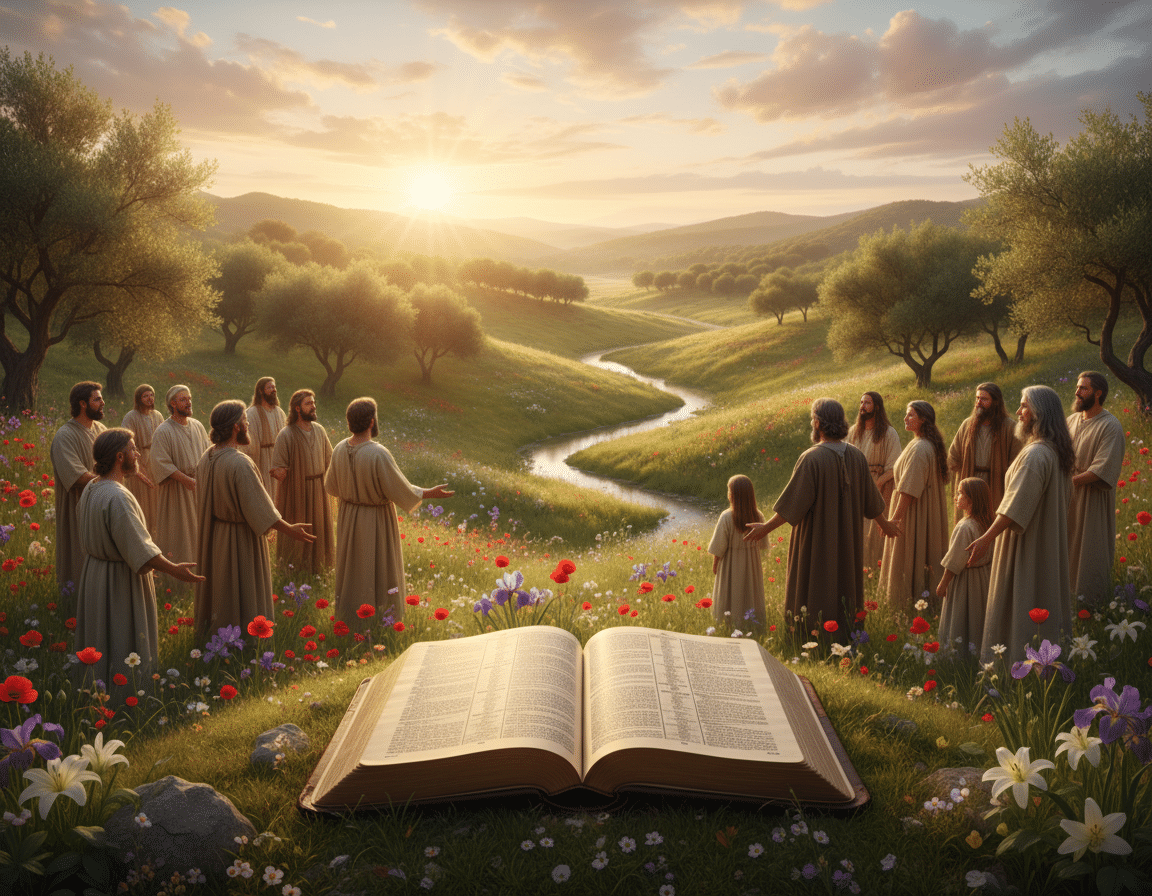
God rested on the seventh day (Genesis 2:1-3)
“Thus the heavens and the earth were finished, and all the host of them. And on the seventh day God finished his work that he had done, and he rested on the seventh day from all his work that he had done.”
The passage shows cause and effect: God completed the work of the six days, then ceased work on the seventh day. Scripture uses that example as a reason in later law texts.
God blessed the seventh day and made it holy
When the text says God blessed the seventh day and made it holy, the plain meaning is that God set this time apart. That blessing marks the day as distinct within the week.
- Genesis places the pattern before national law, so the week begins with creation.
- God’s rest serves as the model cited in Exodus for human practice.
- Blessing and sanctifying a day means setting that time apart for its purpose.
| Claim in Genesis | What it shows | Practical effect |
|---|---|---|
| God finished the heavens and the earth | Work completed in six days | Establishes the structure of the week |
| God rested on the seventh day | Rest modeled by the Creator | Gives reason for weekly rest |
| God blessed and sanctified that day | Day set apart | Marks a recurring holy time each week |
Fourth commandment and Sabbath: why this command still shapes faith
This rule names a set-apart time that comes from God, not from human design. Scripture says God marks the day by his work in creation. Exodus links the instruction to how God made the heavens and the earth and rested.
The command names holy time that God sets
The law shows that holy time is what God sets, not what people invent. When we keep holy the day, we accept God’s naming of that time.
The command points people to the Creator of heavens and earth
Scripture ties weekly rest to remembering the Maker. The weekly day becomes a sign that points the mind back to God’s word and to the fact that he made all things.
“For in six days the LORD made the heavens and the earth…”
| How the command works | Effect on faith | Practical result |
|---|---|---|
| God sets the holy time | People remember the Creator | Weekly focus on trust and hope |
| Text links day to creation | Faith rooted in God’s works | Week ordered by work and rest |
| Day serves as signpost | Mind returns to Scripture | Habits form around the Lord |
Remember sabbath day: what “remember” requires each week
To remember sabbath day means we plan our time so rest can happen. Planning makes rest real instead of accidental.
I expect readers to arrange tasks across the week. Use the six days for steady work so the appointed day is free for worship and family.
People plan work so rest can happen
Plan meals, finish shopping, and complete job tasks before the rest time. Wrap up chores during the six days so the household can pause together.
People prepare before the Sabbath starts
Preparation reduces pressure and protects rest for everyone. Families can set tools aside, confirm schedules, and ready worship items the night before.
- Finish shopping: buy food and supplies during the week.
- Finish cleaning: do routine chores before the day begins.
- Finish job tasks: plan deadlines so work pauses on the appointed day.
When households follow this weekly pattern, the command supports diligence. The law calls for six days of effort, not idleness, and one set-apart day for worship and rest.
| Action | When to do it | Benefit |
|---|---|---|
| Meal prep | During the six days | Less stress; shared meals on the day |
| Work deadlines | Schedule before the day starts | Protects communal rest |
| Worship setup | Prepare night before | Worship readiness; family peace |
Plan your week with care so you can remember sabbath with clear minds and loving hearts. Do this today for a steadier life.
Which day is the seventh day Sabbath?
When the Bible counts days, which weekday aligns with the seventh day? I define the seventh day as the cycle that follows six days of work and then rest. That is the Bible’s weekly pattern.
Sources that identify the day as Saturday
Source 1 says biblical scholars identify the seventh day as Saturday. Source 1 adds that in Bible time the day runs from Friday sunset to Saturday sunset.
Source 3 also says each day begins in the evening using Genesis 1:5 language of “evening and morning.” That claim places the seventh day from sundown Friday to sundown Saturday on our modern calendar.
“And there was evening and there was morning—the first day.” (Genesis 1:5)
Sunset-to-sunset counting and practical clarity
Note the difference between one day as a full 24-hour cycle and daytime hours used in casual speech. Scripture’s count uses the full evening-to-evening cycle, not just daylight.
- I define the seventh day using the Bible’s count after six work days.
- Source 1 and Source 3 both claim the seventh day maps to modern Saturday.
- Genesis 1:5 explains the evening-to-morning pattern that supports sunset-to-sunset time.
| Claim | What Scripture shows | Modern label |
|---|---|---|
| Day begins at evening | Genesis 1:5 uses “evening and morning” | Evening-to-evening cycle |
| Seventh day defined | Six days of work, then rest | Friday sundown to Saturday sundown |
| One day vs daylight hours | Scripture counts full day cycles | Full 24-hour period, not only daylight |
Did anyone change the Sabbath day in the Bible?
Does Scripture record a command that changes the weekly day set apart by God? I ask this question plainly so we can sort text from later tradition.
Source 1 claims no biblical verse orders a change of the weekly rest day and that the apostles did not alter it. That view reads the New Testament as silent on a divinely given day switch.
Source 2 argues that after the resurrection the church began meeting on Sunday as the Lord’s Day. It cites Acts 20:7, 1 Corinthians 16:2, John 20:19-22, and Revelation 1:10 as evidence of new meeting patterns.
What the Bible describes and what it commands
Acts and Corinthians record gatherings and collections on the first day of the week. John and Revelation describe events tied to that day. These are descriptions of practice, not explicit legislative orders changing the law of the weekly rest.
I encourage readers to weigh Scripture carefully. Test each claim by God’s word and hold conclusions with humble confidence.
“I was in the Spirit on the Lord’s day.” (Revelation 1:10)
Deuteronomy links Sabbath rest with freedom
Deuteronomy repeats the weekly rule and gives a new reason rooted in freedom. The text names Israel’s release from Egypt as the reason God requires a weekly day of pause.
God commands rest for servants so all people can rest. The law protects sons, daughters, hired workers, and resident strangers. It prevents endless labor and guards human dignity.
Because God freed Israel, the weekly sabbath day becomes a weekly reminder of deliverance. That rescue forms a memory that points forward to salvation in Christ, a link Source 1 highlights with 1 Corinthians 10:4.
When the lord acts to free his people, the weekly pause shapes hope for everyday life. Regular rest shows that God cares for work, needs, and the worth of all people.
| Deuteronomy claim | Meaning | Practical effect |
|---|---|---|
| Repeat of the weekly rule | Confirms ongoing duty | Weekly rhythm sustained |
| Rest for servants and strangers | Protects vulnerable workers | Preserves dignity and fair life |
| Reminder of Egypt deliverance | Memory of God’s freeing act | Hope that God frees and restores |
| Connection to Christ (1 Cor. 10:4) | Deliverance as broader salvation | Weekly signpost to redemption |
Jesus is Lord of the Sabbath
Jesus affirms that the weekly rest belongs to God and that his teaching shapes how we honor it. Exodus tells us plainly:
“The seventh day is the Sabbath of the LORD your God.” (Exodus 20:10)
That text assigns ownership of the seventh day to the LORD. The day belongs to God, not to human invention.
Jesus then claims authority over that same time. He says plainly:
“The Son of Man is Lord even of the Sabbath.” (Mark 2:28)
This claim shows that Christ’s teaching governs correct practice. His lordship ties the weekly rule back to God’s word and purpose.
I will show next how Jesus corrects added burdens and defends mercy. For now, trust that the sabbath lord language points us to God’s authority through Christ the lord.
| Claim | Scripture | Meaning |
|---|---|---|
| Day belongs to God | Exodus 20:10 | Ownership by the LORD |
| Jesus claims authority | Mark 2:28 | Christ governs its use |
| Guides practice | Gospel teaching | Mercy and truth upheld |
The Sabbath was made for man
Jesus says the weekly rest was given for human good. Mark 2:27 puts the purpose plainly: the law serves people, not the reverse.
Jesus states the purpose (Mark 2:27)
Jesus frames the weekly day as a gift that protects human dignity. He makes clear that God designed rest for man’s benefit.
The command protects workers and households from nonstop labor
The command protects families by forcing a weekly stop to regular work. Households gain time for care, recovery, and shared meals.
The command protects the poor, immigrants, and animals
Exodus and Deuteronomy name servants, strangers, and cattle. This law limits exploitation and preserves life for the weakest.
- Weekly rest supports health and family rhythms.
- It guarantees pause for hired workers and resident strangers.
- It even shields animals from constant labor.
| Who | What is protected | Effect |
|---|---|---|
| Workers | Right to pause work | Fair rest each week |
| Immigrants & poor | Equal rest | Dignity preserved |
| Animals | Relief from labor | Care for creation |
Jesus corrects rule-making that adds burdens
When leaders accused the disciples for plucking grain while hungry, the issue was not theft but the burden of added rules. Matthew 12:1-8 records the charge and Jesus’ reply.
Why leaders accused the disciples (Matthew 12:1-8)
The disciples picked heads of grain to eat while walking. Some leaders treated this as unlawful labor on the holy day.
Jesus answers with Scripture and necessity. He cites David’s need and priestly exceptions to show that human rules must not override mercy.
Jesus allows mercy and necessity on the Sabbath (Matthew 12:10-13)
In Matthew 12:10-13 Jesus heals a man with a withered hand. He challenges the legal reasoning that forbids doing good.
Jesus treats mercy and urgent care as lawful. His action makes clear that God’s law aims at life for people, not burdensome ritual that harms need.
Jesus says people should do good on the Sabbath (Mark 3:4)
Mark 3:4 records Jesus asking whether it is lawful to do good on the holy day. The question invites people to choose mercy over rigid rules.
This teaching shows that extra human requirements can add burden. God’s word intends care, rescue, and household help as part of faithful practice.
| Incident | Action | Outcome |
|---|---|---|
| Plucking grain (Matt. 12:1-8) | Disciples ate because of hunger | Jesus defends necessity using David |
| Healing a man (Matt. 12:10-13) | Jesus restores a withered hand | Mercy affirmed as lawful on the day |
| Mark 3:4 teaching | Jesus asks about doing good | People encouraged to act in mercy |
Practical examples of mercy that fit these texts include urgent medical care, rescue from danger, and helping a neighbor with household needs. These actions show how God’s law serves life.
What breaks the Sabbath in the prophets
Several prophetic texts pinpoint commercial work as what destroys the weekly day’s intended pause.
Nehemiah rebuked sellers who trod winepresses, loaded donkeys, and carried goods through the city while the day was meant for rest. He shut the gates to stop the market and confronted those who turned rest into trade.
Hauling loads through the gates
Jeremiah warns plainly against carrying burdens through Jerusalem’s gates on the day. The prophet treats load bearing as an act that turns sacred time into an ordinary market day.
Profiteering that harms the poor
Amos 8:4-5 condemns those who trample needy people, hurry the market open, and use dishonest scales. The text links greed to injustice, saying God will not accept profit built on exploiting the weak.
In short, the prophets define Sabbath-breaking with direct examples: commerce, hauling goods, and profiteering that hurt people. These texts call communities back to justice, to rest that honors God’s care for the earth, for workers, for families.
“Take care to do nothing that profanes the day; act for justice, mercy, and true rest.”
| Prophet | Offense | Action Taken |
|---|---|---|
| Nehemiah | Market activity, loading animals | Closed gates; rebuked sellers |
| Jeremiah | Carrying loads through gates | Warning against profaning the day |
| Amos | Profiteering; dishonest trade | Condemned injustice toward the poor |
The Sabbath sets limits on land use and debt
The Bible applies the weekly principle to years as well as days, shaping land care and debt relief. God commands cycles that protect soil, workers, and needy people.
Land rest and food for the needy
Exodus 23:10-12 requires that after a period the land lie fallow so the poor can gather food. Leviticus 25:2-4 repeats a clear cycle: the earth observes a rest year so soil recovers and harvests feed the vulnerable.
Release from service after six years
Exodus 21:2 limits service to six years, then calls for release. This law prevents lifetime servitude and affirms human dignity.
Debt release after seven years
Deuteronomy 15:1-2 orders debt remission in a seven-year rhythm so people do not remain crushed by endless credit. These rules curb exploitation and protect life.
In short: God sets limits on land, labor, and lending so communities flourish. These measures serve creation, guard the poor, and keep work from consuming people.
See a broader case for weekly and yearly limits in Scripture at why Sabbath keeping matters.
| Rule | Scripture | Purpose |
|---|---|---|
| Land rest | Exod. 23; Lev. 25 | Soil recovery; food for needy |
| Service release | Exod. 21:2 | End to prolonged servitude |
| Debt remission | Deut. 15:1-2 | Protects borrowers; prevents exploitation |
Saturday and Sunday: what the sources say
A clear way to frame the debate is to separate what sources claim from what the Bible records. I list the New Testament passages Source 2 uses and state what each text reports.
First-day passages used for Sunday worship
Source claims: Acts 20:7 reports a gathering on the first day for teaching. 1 Corinthians 16:2 reports setting aside offerings on the first day. John 20:19–22 records Jesus meeting disciples on that day and giving the Spirit.
How Source 2 defines “the Lord’s Day”
Source 2 labels Sunday as the “Lord’s day” based on Revelation 1:10. That is its stated view about why churches meet on the first day.
Colossians 2:16–17 in the debate
Source 2 reads Colossians 2:16–17 as release from weekly rules, saying feasts and sabbaths are a shadow. Other sources say the verse addresses festival judgment, not the weekly rest command.
| Claim | Source 2 | Bible text statement |
|---|---|---|
| First-day gatherings | Support for Sunday worship | Acts 20:7 and 1 Cor 16:2 report meetings and collections |
| Lord’s Day | Sunday named by Revelation 1:10 | Revelation records a visionary “Lord’s day” |
| Colossians use | End of Sabbath duty | Another reading limits verse to festivals and judgment |
I invite readers to compare each source claim with Scripture and weigh which reading fits the whole of God’s word.
How Christians can keep Sabbath time today
Keeping a day of rest today begins with simple, practical steps. I urge readers to stop ordinary work and stop profit-seeking for the day. Ordinary work means routine job tasks, business sales, and paid labor that aims for gain. Profit-seeking means commercial activity or trading for money.
Stop ordinary work and profit-seeking
Stop office labor. Stop running a business online. Let routine tasks wait so the day can serve its purpose.
Gather for worship with the church
Gather with believers for worship, encouragement, and teaching.Hebrews 10:24-25shows why church meeting strengthens faith and bonds the week.
Pray, read Scripture, and think on God’s word
Pray without hurry. Read a chapter from Scripture. Meditate on truth so the day refocuses the heart on God.
Share meals and time with family
Share simple meals. Talk with children about faith. Walk outdoors and appreciate creation together. These actions build stable life rhythms at home.
Help others through mercy work
Do mercy actions like visiting a widow, aiding a neighbor, or caring for an orphan.James 1:27ties pure faith to care for the vulnerable. Jesus allowed mercy when need required it, so help fits the day’s purpose.
| Action | What to stop | Why it matters |
|---|---|---|
| Work | Paid labor, business sales | Protects rest and family time |
| Worship | Gather with church | Encourages faith and service |
| Mercy | None—act for need | Shows God’s care in practice |
How to make Sabbath rest a delight
If people honor God’s holy day with gentle speech and wise choices, then Scripture promises delight in the LORD. Isaiah 58:13–14 links words to action. It says honoring the day yields joy and renewed strength.
Isaiah’s test: honor the day in speech and choices
Isaiah calls for refusal of selfish plans, quiet words that bless, and choices that protect rest for others. If we refuse usual work, then God will make our life secure and glad.
Psalm 92: thanks and praise on the day
Psalm 92 reads as a song of thanks. It models how people use this time to give praise, record God’s faithful love, and speak of mercy.
- Use gentle speech that builds family peace.
- Make simple plans that protect rest for workers.
- Set aside time for praise, Scripture, and quiet fellowship.
| Scripture | Action | Result |
|---|---|---|
| Isaiah 58:13–14 | Honor the day in word and choice | Delight in the LORD |
| Psalm 92:1–4 | Give thanks and praise | Gratitude and peace |
| Practical steps | Gentle speech, simple plans | Restful home life |
Conclusion
The weekly pattern God gave places the seventh day at the center of life. Creation shows God rested, blessed, and set that time apart, and Exodus ties the rule to household care so workers, strangers, and animals are protected.
Deuteronomy links the day to freedom, and the Gospels show Jesus as Lord who says the rest was made for man. The prophets condemn commerce that steals pause from the poor.
Choose a clear plan: stop ordinary work, gather with church for worship, show mercy, and enjoy family rest. Read Scripture with prayer, test these truths, and let hope in Christ shape your week.