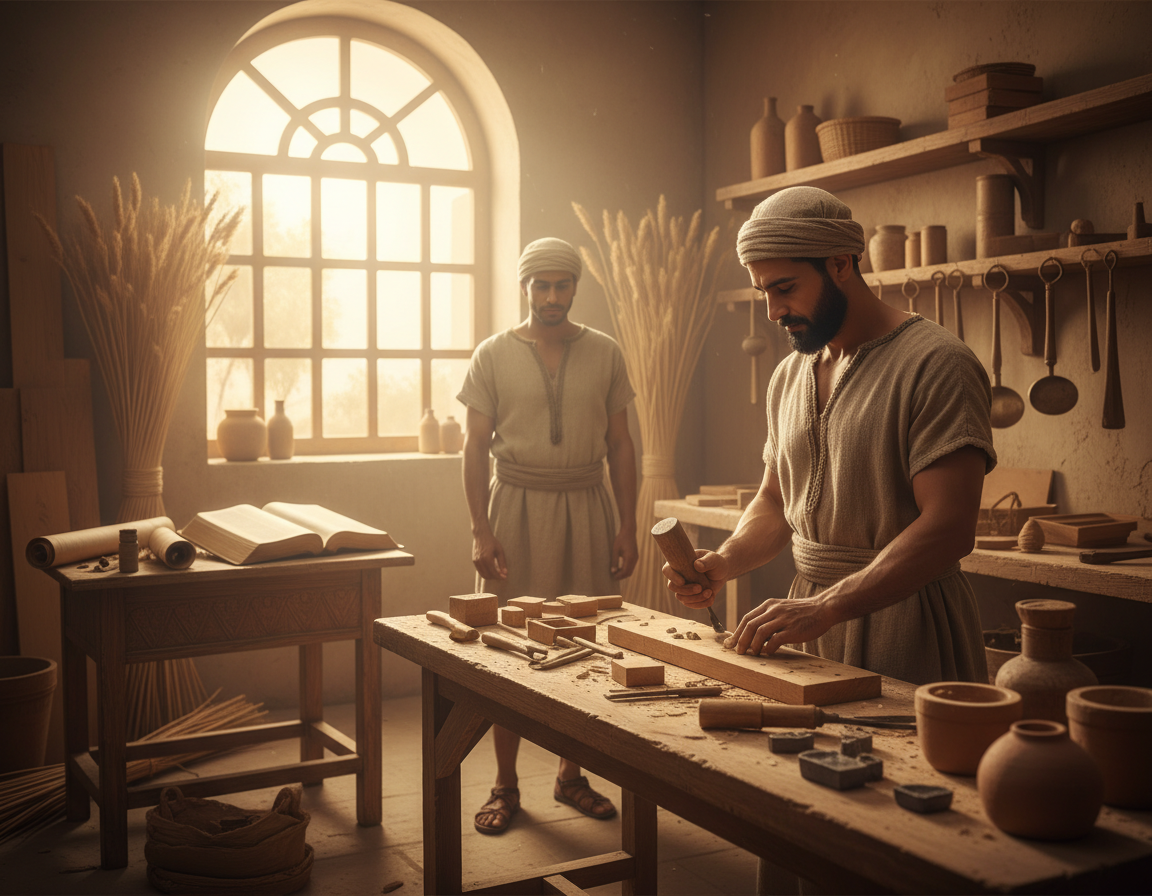

The author Thomas Carlyle once observed, “Blessed is he who has found his work; let him ask no other blessedness.” This thought challenges our modern view of daily labor.
Consider this: the average person will spend roughly 90,000 hours at their job. For many, this massive part of life feels draining, not fulfilling.
But Scripture paints a different picture from the very beginning. In Genesis 2:15, God placed man in the garden with a purpose: to work it and keep it.
This vocation was given before sin entered the world. It was part of God’s perfect design for His creation.
The fall changed everything. It introduced frustration and sweat into our efforts. Yet, the original intent for our labor was not erased.
We believe God’s word holds the truth that can restore meaning. Our daily tasks can reflect His image and bring glory to heaven.
Let’s journey back to the beginning. We will discover how our job can be a source of true fulfillment, not a curse.
Key Takeaways
- Work was part of God’s original, good design for humanity from the start.
- People often spend 90,000 hours at work yet struggle to find deep meaning.
- The introduction of sin changed our experience of labor but not its core purpose.
- Aligning our daily efforts with Scriptural truth can restore joy and purpose.
- Our work, when done for God, becomes a way to honor and reflect Him.
- Genesis shows that meaningful labor was a vocation given before the fall.
- Understanding this biblical foundation can transform your view of your job.
Biblical Foundation for Work
Genesis opens with a powerful display of intentional creativity and purpose. We see the Lord God actively shaping the heavens and the earth. This sets the stage for understanding our own daily efforts.
Work in Creation
Our Creator spent six days forming the world. He then rested on the seventh day. This established a natural rhythm for all human activity.
This pattern shows that productive labor is holy. It is part of the original design for a good life. Our tasks are meant to follow this divine example.
| Divine Example | Human Implication | Key Verse |
|---|---|---|
| Six days of creative work | Our labor brings order and beauty | Genesis 2:2-3 |
| Rest on the seventh day | We need regular Sabbath rest | Exodus 20:8-11 |
| Filling and subduing the earth | We are stewards of creation | Genesis 1:28 |
| Declaring all “very good” | Our work can have intrinsic value | Genesis 1:31 |

Purpose from Genesis
In Genesis 1:28, humanity receives a clear vocation. We are to be fruitful and fill the earth. We are also called to subdue it and rule with care.
This command was given before any notion of sin entered the picture. It shows that meaningful labor was always part of the plan. Our job allows us to reflect the image of God.
By cultivating and keeping, we participate in His ongoing purpose. This truth can restore deep fulfillment to our daily routine.
Work as a blessing in the Bible
From the very first pages, Scripture frames our vocational efforts within a context of purpose and divine approval. Our daily tasks are not an afterthought.
Scriptural Examples in Genesis
Genesis 1 shows us a powerful model. The Lord God worked to form the heavens and the earth.
He repeatedly surveyed the result of His labor. Each time, He declared it good. This reveals His satisfaction in a job well finished.
The garden of Eden serves as the primary example. Here, meaningful labor was a source of joy and fulfillment before sin entered the world.
Ecclesiastes 3:13 echoes this truth. It reminds us that everyone should take pleasure in all his toil. This is a gift from the Lord.
God’s Approval of Labor
Our Creator’s own example grants dignity to our efforts. When we perform good works with a grateful heart, we reflect His character.
Colossians 3:23 gives clear instruction. We are to work with all our heart, as for the Lord rather than for people.
This shifts our entire perspective. Our labor becomes an act of worship when we seek to honor Him.
| Biblical Example | Divine Attitude | Our Application |
|---|---|---|
| God creating the world | Saw that it was good | Find satisfaction in work done well |
| Adam tending the garden | Vocation given before the fall | View our job as a source of joy |
| Ecclesiastes 3:13 | Calls toil a gift from God | Receive daily labor with gratitude |
| Colossians 3:23 | Approves work done for the Lord | Serve wholeheartedly in all tasks |
We must reject the idea that our job is merely a curse. Instead, we can embrace it as a way to glorify God each day.
Impact of the Fall on Labor
After the fall, humanity’s relationship with toil shifted from joyful purpose to weary struggle. Our daily tasks were no longer purely fulfilling.
This change introduced the work curse into human existence. What was once a source of joy became a heavy burden.
From Enjoyment to Toil
Because of sin, we now feel the sweat of our brow. Genesis 3:19 explains this consequence clearly.
It states that man shall eat bread by the sweat of his face. This is until he returns to the ground.
Many people today experience this negative impact directly. Incompetent managers or monotonous roles drain energy and spirit.
We must recognize the struggle in our jobs. It is a direct result of the curse that entered the world.
Despite the difficulty, we can still find hope. God’s original design for our work remains the ultimate goal.
The transition from Eden changed how we see daily responsibilities. It also altered our perception of rest.
| Aspect of Labor | Before the Fall | After the Fall |
|---|---|---|
| Primary Experience | Joyful Purpose | Frustrating Toil |
| Physical Condition | Effortless Cultivation | Sweat and Struggle |
| Spiritual Connection | Direct Reflection of God | Obscured by the Curse |
| Ultimate Outcome | Intrinsic Satisfaction | Mixed with Fatigue |
Our faith reminds us this curse is not the final word. Scripture points us back to a better design.
Even in a fallen world, our work can have meaning. We labor with the hope of restoration.
The Role of Work in Shaping Identity
Identity is often tied to what we do, but Scripture offers a deeper foundation. Our daily tasks are not just about earning a living. They are part of how we express who we are in Christ.
Reflecting the Image of God
Our labor allows us to mirror our Creator’s character. When we cultivate the earth, we act as His representatives. We bring order and care, just as He did.
Genesis 2:15 establishes this role. The Lord God placed humanity in the garden of Eden to work and keep it. This calling continues to shape our identity as humans.
Stewardship and Responsibility
We are called to manage the resources He provides well. This includes our time, talents, and the world around us. Faithful stewardship shows our commitment to His truth.
Our true identity is found in being created for purpose. It is not about job status. Every task, whether in an office or at home, is an opportunity to demonstrate excellence.
By managing well, we show we take our responsibility seriously. Our daily labor becomes a way to reflect our faith.
Value of Work in Everyday Life
Every action, no matter how small, contributes to the tapestry of a purposeful life. Our faith teaches us that no task is insignificant when done with a faithful heart.
Daily Tasks and Their Purpose
Proverbs 31 highlights this truth beautifully. It shows the excellent wife engaged in routine chores like making clothing and preparing food.
These efforts are presented with great dignity. They provide for a household and serve the community.
We often overlook the importance of our own routine. Yet, each faithful effort builds toward a meaningful life.
Scripture encourages us to do our labor with all our might. This applies whether you are in a factory or managing a home.
By focusing on the purpose behind our toil, we can discover joy. Even the most repetitive days of the week gain new meaning.
Our daily work becomes a way to serve others. It meets practical needs and reflects God’s care through our hands.
He is honored when we perform our duties with integrity. We can trust that He sees every effort made for His glory.
Striving for a Work-Rest Balance
The rhythm of creation itself provides a blueprint for our own weekly cycle. We often forget that our need for downtime is not a sign of weakness. It is part of God’s original design for a healthy and whole life.
Sabbath Principles in Scripture
Exodus 20:8-11 gives us a direct command. We are to remember the seventh day and keep it holy. This means ceasing from our regular labor to focus on the Lord.
This day of rest is a gift, not a burden. Jesus affirmed this in Mark 2:27. He taught that the Sabbath was made for man, not man for the Sabbath.
It provides a necessary break from our daily toil. By honoring the seventh day, we acknowledge our limits. We are finite beings who need time to be still.
Natural Rhythms and Rest
Our world operates on a cycle of day and night. This natural pattern reminds us we are designed for both activity and rest. A healthy work-rest balance protects us from burnout.
Many people in our society push themselves to exhaustion. They ignore this divine pattern. We find true peace when we follow the model of six days of work followed by one of rest.
This rhythm allows us to recharge our bodies and minds. It helps us return to our tasks with renewed focus and joy. Embracing this balance is a step toward living in harmony with God’s truth.
Finding Purpose and Joy in Your Labor
What if our labor could be more than just a means to an end, but a source of deep satisfaction? Scripture invites us to view our daily efforts through a lens of faith. This perspective transforms routine into something meaningful.
Emulating God’s Example
Our Creator modeled purposeful activity. He surveyed His work and called it good. We can follow this pattern by taking pride in our tasks.
When we complete a project, we should pause to appreciate it. This mirrors the divine example and brings fulfillment. True purpose emerges when we imitate how God worked.
Experiencing Satisfaction in Small Tasks
Not every day brings major achievements. Yet, even minor chores hold value. Preparing a meal or organizing a desk serves others.
These actions build a life of service. They teach us that no effort is wasted when done with love. Every well-written email is an opportunity for gratitude. This is a real blessing.
Glorifying God Through Daily Efforts
Colossians 3:23 gives clear direction. It says to labor heartily, as for the Lord. This truth shifts our entire motivation.
We stop seeing our job as a burden. Instead, we view it as a way to serve. Our ordinary tasks become acts of worship that bring glory to God.
Dedicating our daily efforts to Him transforms them. We find joy by focusing on His approval, not human praise. This brings Him glory and is a profound blessing.
Living Out God’s Calling Through Work
Recent studies reveal a startling truth: nearly half of Americans identify as workaholics. This highlights a deep cultural struggle with our daily labor. Our faith calls us to a different path.
We are invited to see our tasks as a divine vocation. This transforms our routine into a reflection of our Creator’s heart.
Work as a Reflection of the Creator
Our labor is meant to mirror God’s order and care. Even after the fall introduced sin and frustration, this purpose remains. We can still find deep meaning in our efforts.
Human resources data shows 95% of professionals blame burnout for losing good employees. This is the curse at work. Yet, we can choose a different way.
Here is how we live out this calling:
- Serve with integrity: Do your job well, as for the Lord. This brings glory to God even in difficult times.
- Avoid making it an idol: Remember your ultimate purpose. Your identity is in Christ, not your career.
- Share your blessings: Use your skills to help other people. Show Christ’s love in your workplace.
- See the bigger plan: Your work on this earth is part of God’s story. He is unfolding His plan throughout time.
By trusting the Lord with our time, we overcome the curse’s negative impact. Our daily job becomes a channel for His grace. We provide for our fellow man and bring order from chaos.
This is how we reflect our Maker. We turn our labor into a true blessing for His glory.
Conclusion
The narrative of creation offers a lasting blueprint for human purpose. Our labor was woven into God’s good design from the very beginning.
It was meant for our fulfillment and to reflect His image. While the fall introduced frustration, this original intent was not erased.
Our daily efforts can still carry deep meaning. We honor this design by balancing our labor with true rest, following the biblical rhythm of work and rest.
Every task, when done for God’s glory, becomes significant. We are called to serve Him and others through our daily efforts. Find hope and purpose in His word.
FAQ
Where does the idea of work first appear in Scripture?
How was labor viewed before humanity’s fall?
What changed about work after the events in the Garden of Eden?
How does our daily labor connect to being made in God’s image?
Can routine tasks really have a higher purpose?
Why is rest, like the Sabbath, so important to our work life?
How can I find joy in my job, even if it feels mundane?
What does it mean to have a ‘calling’ in my career?
Related: Lessons for Today from the Book of Genesis
Related: The Fourth Commandment: Why the Sabbath Still Matters
Related: How Adventists Keep the Sabbath Holy
Related: Lessons from Seasons Mentioned in the Bible
Related: How Faith Guides Caring for God’s Creation
Related: The Role of Gardens in Bible Stories
Related: Christianity and Environmental Care: Your Biblical Guide