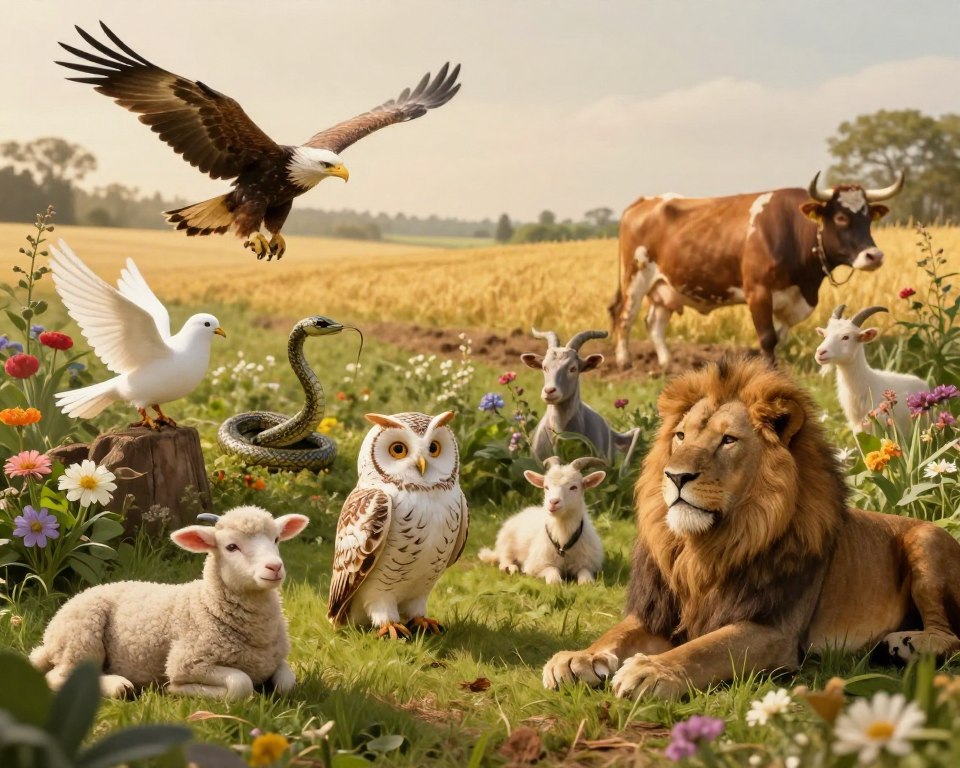
Have you ever paused to consider the profound stories whispered by the creatures filling Scripture’s pages? From the mighty lion to the humble ant, each one carries a whisper of divine truth. Our Creator speaks through all He has made, weaving lessons into the very fabric of His creation.
God filled our world with over 120 different species referenced in His word. These range from powerful leopards and bears to diligent insects. You won’t find every modern creature, like the domestic cat, but you will discover a world where every animal has purpose.
Scripture shows us that God made and sustains all life. He also placed their care into human hands. Beyond their physical presence, these beings served deep symbolic roles. They helped people grasp God’s power, His messages, and His love.
My goal is to guide you through this fascinating part of God’s word. We’ll explore ten specific creatures and the powerful truths they reveal. Understanding this can strengthen your faith and draw you closer to Christ through His created world.
Key Takeaways
- Scripture references over 120 different creatures, from lions to ants.
- God created, sustains, and entrusts humans with the care of all life.
- Animals in the Bible often carried important symbolic meanings.
- These symbols helped communicate God’s character, power, and plan.
- Studying biblical fauna can deepen your understanding of Scripture.
- This exploration aims to strengthen your personal faith and hope.
- Each creature points us toward a greater knowledge of our Creator.
Introduction to Biblical Animal Meanings
Why did God fill His word with so many references to the animal kingdom? I believe this was a deliberate choice. The creatures in Scripture are not just background details. They are vital parts of His message to us.
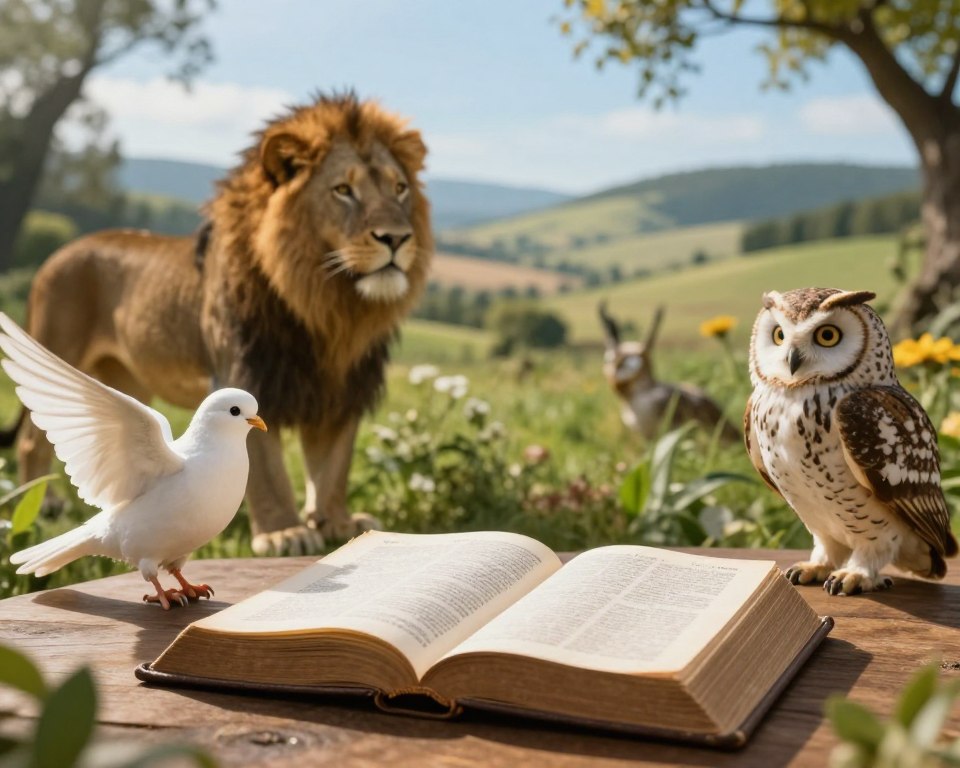
The land itself held great variety. Palestine had more fauna than other places at its latitude. This was due to extreme changes in elevation and temperature. From dry deserts to wooded hills, this small area was home to many species.
Purpose and Scope
My goal here is simple. I want to show you why these creatures matter in God’s plan. Each one serves a purpose. They help us grasp truths about faith, obedience, and God’s care.
You will see their scope is vast. References span from Genesis to Revelation. This study aims to equip you with knowledge. It makes Scripture come alive in a new way.
Simple Overview of Terms
It helps to know how the Bible talks about animals. Some references are literal. They describe real creatures in historical settings. Others are deeply symbolic.
These symbols communicated God’s power and love to ancient believers. They continue to teach us today. Understanding this difference is your first step. It opens the door to a richer study of God’s word.
Overview of Animals in the Bible
Ancient readers understood God’s creation through a simple, four-fold system based on how creatures get around. This overview helps you see how Scripture organized the living world. It made perfect sense to people in their daily lives.
Definition and Categories
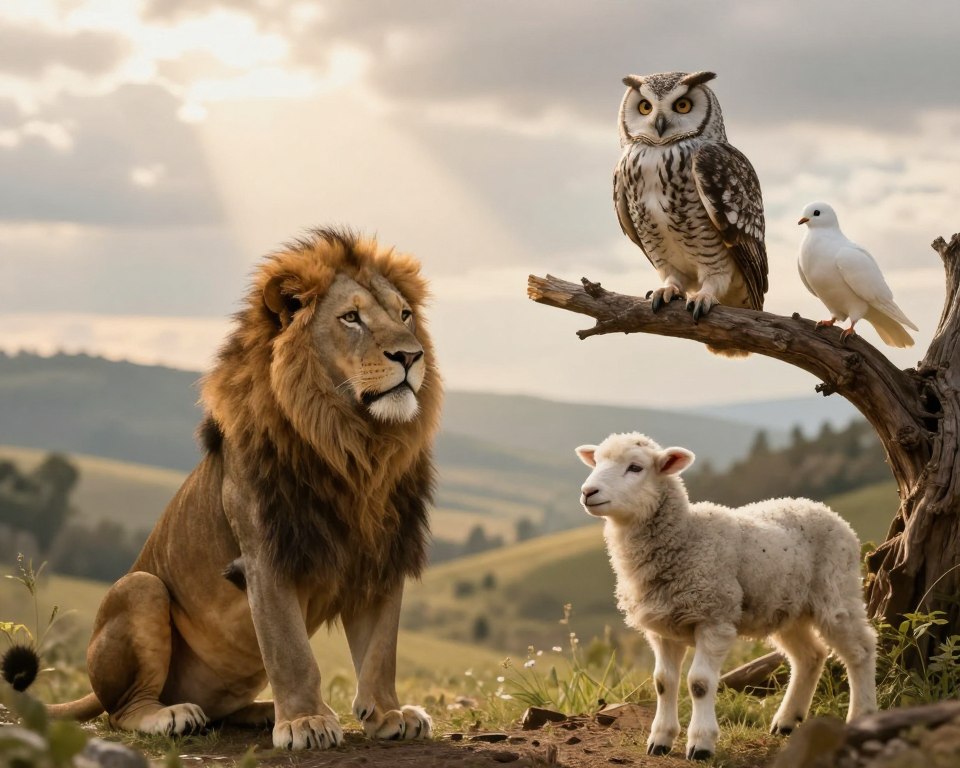
The Bible groups all living beings by their mode of locomotion. There are four main classes. The first is beasts, which includes large walking animals.
This class splits into cattle, or domesticated animals, and wild beasts of the field. The second class is fowls. This includes all flying things, even a certain kind of insect.
Water creatures form the third group. They are noted for having fins and scales. The fourth class is creeping things, like reptiles and small insects.
This kind of grouping differs from modern science. Yet it reveals God’s practical design for each animal. You learn about human stewardship from the split between tame and wild beasts.
My hope is this shows God’s attention to detail. His word speaks timeless truth through categories ancient people used every day.
Scriptural References and Verses
To truly grasp the meaning behind biblical fauna, we must turn directly to the Word itself. The verses provide our foundation for understanding.
Key Bible Passages
Dogs figure prominently in several passages. Animal names vary from one translation to another. Sometimes these creatures are difficult to identify.
A comprehensive list includes sightings based on the New Living Translation. Examples include the Addax (Deuteronomy 14:5), Ant, Bear, Camel, Dove, Eagle, and Lion.
These passages give you a roadmap for deeper study. My desire is that these verses strengthen your faith. They show how God weaves His truth through every part of His creation.
Roles of Animals in Biblical Narratives
From providing daily sustenance to illustrating divine lessons, animals fulfilled diverse roles in biblical history. Scripture presents them in two clear ways. They served literal, physical purposes for God’s people. They also carried deep symbolic meaning, pointing to greater truths.
God created every creature and placed their care into human hands. This established our role as stewards. In daily life, these beings provided essential food, transportation, and labor. The Law of Moses distinguished between clean and unclean types. Only clean animals were permitted for eating and for use in Israel’s sacrificial system.
The Lord also used creatures to demonstrate His mighty power. Think of the plagues in Egypt or the great fish that swallowed Jonah. They participated directly in key moments of salvation. A ram replaced Isaac on the mountain. A dove descended at the baptism of Jesus.
In the New Testament, Christ Himself used animal imagery in His parables. Sheep, wolves, and birds taught vital lessons about faith and the kingdom. I want you to see they were never just background details. Each one was an active participant in God’s unfolding plan for humanity.
Understanding Clean and Unclean Animals
One of the most practical ways God set Israel apart was through their diet. His Law provided clear food regulations. These rules taught holiness in everyday life.
Biblical Regulations on Dietary Laws
God’s commands in books like Leviticus made a vital distinction. Only clean creatures could be eaten or used in worship. This rule is clear in Leviticus 20:25-26.
Specific beings were also dedicated to the Lord for sacrifice. This practice showed total consecration. My belief is these laws taught obedience and trust.
Differences in Clean Versus Unclean
From a religious view, all fauna fell into two classes. Clean types included certain cattle and fish with fins. They were for food and altar.
Unclean animals were forbidden. The bat, for example, is listed among unclean winged things in Leviticus 11:19. Avoiding these marked God’s people as separate.
These were not arbitrary rules. They were part of God’s covenant. He used meals to teach a lifestyle of holiness. This knowledge points us to His detailed care and plan.
Animals mentioned in the Bible: Core List
A comprehensive alphabetical reference can greatly enhance your personal Bible study. I want to give you a practical tool for exploring Scripture’s rich variety of creatures.
This table provides a clear starting point. It shows specific fauna with their primary scriptural locations.
| Creature | Primary Reference | Additional References |
|---|---|---|
| Addax | Deuteronomy 14:5 | – |
| Ant | Proverbs 6:6 | Proverbs 30:25 |
| Bear | 1 Samuel 17:34 | – |
| Egyptian Vulture | Leviticus 11:18 | – |
| Wild Goat | Deuteronomy 14:5 | – |
Remember, animal names can vary between translations. A bird like the great owl in Leviticus 11:17 might have a different label in your Bible.
Use this list to look up passages. You will see God’s detailed design in laws from Leviticus and powerful imagery from Isaiah. My hope is it deepens your faith through His word.
Animal Symbolism in Scripture
God often used familiar creatures as living symbols to reveal His character and plans. Scripture uses animals symbolically to communicate deeper truths about His nature and kingdom.
For example, the wild ass symbolized Ishmael’s untamable nature. The aurochs represented untamed strength. Bees pictured relentless armies.
Common Symbolic Meanings
Many creatures carry consistent emblematic meanings across biblical passages. This table highlights key examples.
| Creature | Symbolic Meaning | Key Passage |
|---|---|---|
| Lamb | Innocence, sacrifice; points to Jesus | John 1:29 |
| Lion | Christ’s majesty; Satan’s destructiveness | Revelation 5:5; 1 Peter 5:8 |
| Dove | Peace, the Holy Spirit | Matthew 3:16 |
| Serpent | Deception, evil | Genesis 3:1 |
| Eagle | God’s care, renewed strength | Isaiah 40:31 |
Modern Interpretations
Understanding these symbols enriches your reading. You recognize when an animal serves a deeper purpose.
My goal is to equip you to interpret biblical symbolism correctly. Always let Scripture explain Scripture. Avoid forced interpretations. This knowledge strengthens your faith through God’s word.
Historical Context of Biblical Fauna
The landscape described in Scripture was teeming with life that has since vanished from the region. I want you to see that the Holy Land looked very different in biblical times.
Lush forests and diverse wildlife once filled areas that are barren today. This change helps you visualize the world where biblical events actually occurred.
Extinct Species and Their Impact
Many creatures are now gone. The mighty aurochs is globally extinct. Lions, leopards, and bears vanished from the Levant.
The Syrian brown bear is extinct there. Recent digs found early camel bones in Israel from around 930 BCE.
These losses impact your reading. References to these animals made perfect sense to ancient readers. They seem foreign to us now.
Species That Still Exist Today
Palestinian fauna is not as rich today. Yet, some species persist. You can connect biblical descriptions to modern observation.
The Asiatic wild ass was reintroduced to the Negev after its extinction. This historical perspective enriches your Bible study.
My hope is you appreciate Scripture’s accuracy. You also understand the dramatic ecological changes over millennia.
Cultural Significance of Animal Imagery
The biblical writers drew their most powerful metaphors from the daily life of an agricultural society. Scripture was written by and for people deeply connected to the land. Their constant interaction with nature made references to the animal world completely natural.
These creatures were far more than just resources. They carried deep cultural weight that shaped social customs. For instance, a rare white ass was a status symbol, reserved for nobles as seen in Judges 5:10.
This imagery defined entire concepts. The ass represented peace, while the horse stood for war. Animal symbolism even influenced personal names. “Deborah,” the Hebrew word for bee, was a favorite name for women.
I want you to see how this context enriches your reading. God used imagery His original audience understood instantly. My hope is this knowledge helps you grasp Scripture’s lessons with fresh eyes and deeper faith.
Practical Insights from Animal Lists
When you approach biblical fauna with a systematic list, your study transforms from random reading to focused discovery. I want to show you how this simple tool offers real benefits for your personal faith and understanding of God’s word.
An organized list helps you locate specific passages quickly. This makes your devotional time more productive. You spend less time searching and more time learning the truth Scripture holds.
Study and Prioritization Benefits
Looking at which creatures appear most often reveals what mattered to biblical writers. The frequency of references to certain species gives us a fair idea of historical conditions. This knowledge enriches your overall comprehension.
Prioritizing your study of commonly mentioned fauna yields greater insight. Start with sheep, lions, and doves. They build a foundation for understanding more complex symbolism later.
This practical method helps you grow consistently. My goal is to equip you with study habits that make Scripture accessible. You’ll see God’s word with fresh eyes and deeper hope.
Comparisons Across Translations
The task of translating ancient Hebrew animal terms into modern English has led to fascinating variations across Bible versions. I want you to see that these differences don’t change God’s truth. They reflect the honest challenge of bridging language and time.
Variations in Animal Names
Look at the Hebrew word qa’ath. In the Douay Version, it is called a “bittern” in some books. In Deuteronomy, the same word becomes “cormorant.” This shows how a single term can get different names.
Another example is the word re’em. Older translations sometimes called it a “rhinoceros.” In other passages, they used “unicorn.” Translators from Greek and Latin times sometimes applied mythical creature names to real fauna.
This happened due to limited knowledge or cultural bias. Modern translations benefit from better archaeology and linguistics. They give us more accurate identifications.
Understanding this empowers your Scripture study. You see the scholarly effort behind your translation. This knowledge helps you read with greater confidence and discernment.
Examining Specific Verses (e.g. Leviticus and Deuteronomy)
The lists in Leviticus 11 serve a profound purpose, separating God’s people from surrounding cultures. These passages provide exact instructions for daily life and worship. I want to guide you through a detailed look at these key texts.
Detailed Analysis of Key Passages
Leviticus 11 dedicates extensive text to classifying creatures. This reveals God’s concern for holiness. For example, Leviticus 11:19 identifies the bat as unclean. Leviticus 11:18 names the Egyptian vulture. These rules taught practical separation.
In Deuteronomy 14:5, God lists the addax and the wild goat as clean. This verse taught Israel which creatures He approved for their consumption. Such precise lists show God’s attention to their everyday needs.
Prophetic books like Isaiah also use fauna symbolically. Isaiah 34:15 mentions the buzzard in a scene of judgment. Isaiah 59:5 uses the viper to picture deceit. These passages convey deep truth through familiar imagery.
This close study enriches your understanding of God’s law. You see His character in the details of Leviticus 11:22 and Leviticus 11:17. My goal is to show how these verses strengthen your faith in Scripture’s precision.
Visual Representations in Art and Media
From stained glass to storybooks, images of biblical creatures shape how we imagine God’s word. I believe these visual tools help our faith connect with ancient stories in a powerful way. They make scriptural accounts feel immediate and real.
Consider the Holy Family’s flight to Egypt. Christian painters often copied eastern customs in their scenes. They showed Mary riding a donkey, an animal familiar to their audience. This artistic choice helped viewers relate to the sacred journey.
Artists have depicted these animals for centuries. Their work spans medieval manuscripts and modern children’s books. This visual history preserves a cultural memory. It shows us creatures that no longer live in the Holy Land.
Accuracy in these portrayals matters for our understanding. A historically informed image teaches truth. An inaccurate one can introduce cultural bias. We must learn to look with discernment.
Iconography is especially rich with symbolic birds. The dove represents the Holy Spirit. The eagle signifies God’s renewing strength. These visual symbols reinforce biblical truth and deepen worship.
My purpose is to encourage wise use of visual resources. Let accurate art strengthen your connection with Scripture. Evaluate media critically. Allow faithful representations to draw you closer to God’s word.
Lessons for Modern Readers
The timeless wisdom found in Scripture’s creatures continues to speak directly to our lives today. These lessons bridge ancient faith and our current walk with Christ.
Faith Perspectives
God created and sustains all life. He placed their care into our hands. This truth forms a core faith perspective.
We are stewards of His creation. Watching a bird trust its daily needs to the sky teaches us about divine provision. Our role is one of responsible guardianship.
Practical Life Applications
Proverbs points to the ant for lessons in diligent work. We can apply this to our own planning and effort.
The dove symbolizes peace and the Holy Spirit’s presence. This bird reminds us to seek tranquility and spiritual guidance in chaos.
Even the bee, used to picture a numerous army, shows communal strength. These practical examples guide ethical treatment of all living beings.
I want you to see God’s hand in creation around you. Let these observations strengthen your faith and hope each day.
Ongoing Discussions Among Scholars
The identification of certain creatures in Scripture remains a topic of lively debate among experts. I want you to understand these discussions reflect an honest pursuit of truth. They do not weaken biblical authority.
Debates on Animal Identification
Take the behemoth from Job 40:15. Some scholars see a mythical monster. Others suggest a dinosaur. Many now agree it describes a hippopotamus.
Leviathan presents similar questions. Is it an earthly crocodile? Could it be a ancient sea serpent? Some even propose a dinosaur reference.
The Hebrew word táhásh is another puzzle. Strong’s Concordance calls it a clean animal, likely an antelope. Other translations interpret it as “blue-processed skins.”
Why such uncertainty? Extinct species and ambiguous ancient terms are key factors. Names for fauna changed across languages and time.
Scholars use comparative linguistics and archaeology. They study ancient texts and natural history. This kind of evidence helps clarify God’s word.
My goal is to strengthen your confidence in Scripture. Human understanding of details grows. God’s truth remains perfect and reliable.
Summary of Animal Meanings
Let’s bring together the core truths we’ve discovered about God’s creation in Scripture. Over 120 species of animals fill its pages. They reveal His character and teach us about faith.
These animals divide into four classes by locomotion. We see beasts, birds, water swimmers, and creeping things. Each kind held significance for biblical teaching.
God used diverse creatures from different regions. This made His word accessible across cultures and times. A bird might symbolize peace, while another bird showed God’s care.
They served practical purposes like food, sacrifice, and labor. They also fulfilled symbolic functions, illustrating prophecy. The distinction between clean and unclean set Israel apart.
It pointed forward to holiness in Christ. Every animal mentioned serves God’s purpose. They demonstrate His creative power and illustrate His redemptive plan.
My goal is to leave you with a clear framework. This enhances your ongoing Scripture study and faith development.
Conclusion
As we conclude this exploration, I trust you’ve gained fresh insight into how God’s creation speaks through Scripture. You have journeyed through over one hundred biblical animals, each revealing aspects of God’s character and plan.
Let this knowledge enrich your daily Bible reading. I encourage you to continue studying these symbols as part of your devotional practice. They teach us about trust, obedience, and faith.
Remember, God placed every animal under our care. We are called to responsible stewardship as part of our covenant with Him. May your understanding draw you closer to Christ, the Creator.
He sustains all life by His power. Continue growing in your grasp of God’s word. It holds everything needed for faith, hope, and eternal life.