God wrote the Bible through human writers. That is the plain reading of Scripture’s own claim. So when someone asks who wrote the Bible, give both parts of the answer: prophets and apostles wrote in their own voices, while the Holy Spirit guided their message and gave Scripture its authority.
Who wrote the Bible?
God is the Bible’s ultimate author, working through many human writers across the Old and New Testaments. Some writers are named in the text. Others are known through early Christian or Jewish tradition, and several remain unknown.
The Bible does not hide the human hands involved. Moses wrote, David sang, Luke investigated, Paul dictated letters, and John recorded what he saw. Their grammar, interests, and settings remain visible.
Yet Scripture also claims a source above them. Second Peter 1:21 says men spoke from God as the Holy Spirit carried them. God did not erase the writers. He used them.
That two-level answer matters. Say only “God wrote it,” and you flatten the real history. Say only “people wrote it,” and you leave out what those people said was happening.
What does the Bible say about its own origin?
Start with 2 Timothy 3:14-17. Read the verses on either side of the familiar line.
Paul reminds Timothy that he had known the sacred writings since childhood. Then Paul says all Scripture is “God-breathed” and useful for teaching, correction, and training in righteousness. Its divine origin explains its practical authority.
Now read 2 Peter 1:16-21. Peter first denies that the apostles followed clever stories. He points to eyewitness testimony about Christ and then speaks about prophecy.
Second Peter 1:21 gives the point: prophecy did not begin in human will. Men spoke from God while carried by the Holy Spirit. The writers acted, but the message did not start at their desk.
A fair objection follows. The Bible’s claim about itself does not settle every historical question by itself. However, it does tell you what claim must be tested.
You can then examine the manuscripts, historical setting, fulfilled prophecy, and unity of the message. Our guides to the Bible as a historical record and how prophecy supports Christian faith take up those questions.
Did God dictate every word to the biblical writers?
No. The Bible teaches Spirit-guided inspiration, but it does not present every book as mechanical dictation.
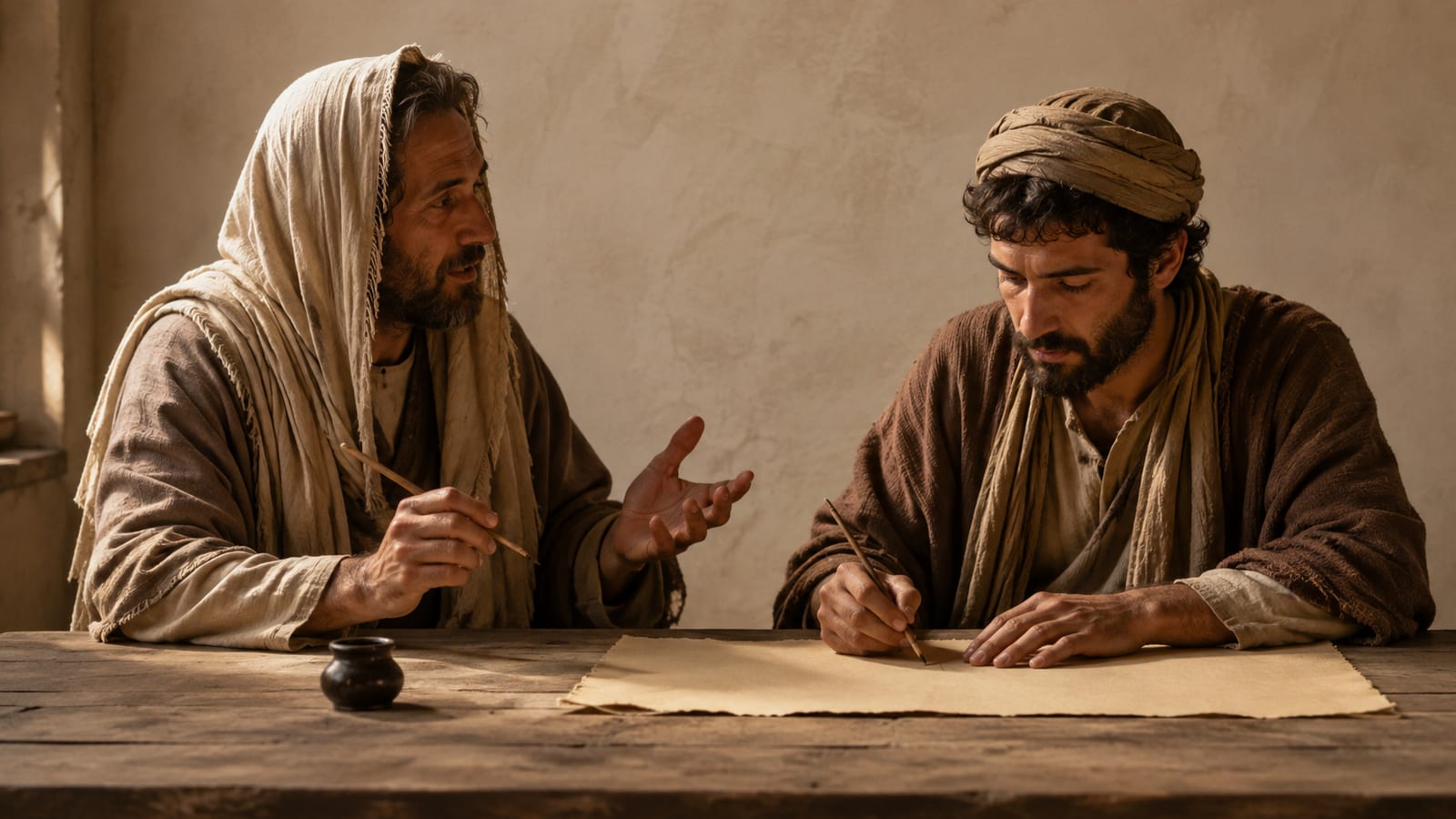
Some passages were dictated directly. Exodus 34:27 records God telling Moses to write specific words. Jeremiah 36:2 gives a similar command, and Jeremiah then dictates his message to Baruch in Jeremiah 36:4.
Still, that is not how every page was produced. Luke 1:1-4 says Luke investigated events, considered earlier accounts, and arranged an orderly record. That sounds like careful work because it was careful work.
Paul’s letters sound like Paul. John’s writings sound like John. Amos speaks with the eye of a shepherd, while Luke writes like an educated historian. God did not turn them into identical typewriters.
Even the writers’ emotions remain. Jeremiah grieves. David complains, repents, and sings. Paul can move from close argument to personal appeal within the same letter.
The plain reading is that God guided the writers without emptying them of personality. Inspiration protects Scripture’s message and purpose. It does not require every writer to sound as though he came from the same office.
Which human authors wrote the books of the Bible?
The honest answer is uneven. Some books name their writers clearly. Others carry strong traditional names, while a few give us no name at all.
Do not make uncertainty sound like dishonesty. An unsigned book is still an unsigned book, even when a good tradition stands behind it.
Old Testament authorship at a glance
| Books | Traditional or textual connection | What we can say plainly |
|---|---|---|
| Genesis through Deuteronomy | Moses | Scripture repeatedly connects the law with Moses, though Deuteronomy records his death and shows signs of final shaping after him. |
| Joshua | Joshua | Joshua 24:26 says Joshua wrote words in the Book of the Law. The finished book does not name its final editor. |
| Judges | Samuel in later tradition | The book itself is anonymous. |
| Ruth | Samuel in later tradition | The text does not identify its writer. |
| 1 Samuel and 2 Samuel | Samuel, Nathan, Gad, and later compilers | First Chronicles 29:29 names records connected with these prophets. Samuel could not have written the events after his death. |
| 1 Kings and 2 Kings | Jeremiah in later tradition | The books are anonymous and appear to use royal and prophetic records. |
| 1 Chronicles and 2 Chronicles | Ezra in Jewish tradition | The final writer is not named. |
| Ezra | Ezra and an editor | Parts speak in Ezra’s own voice. Other parts tell the story from outside his viewpoint. |
| Nehemiah | Nehemiah and an editor | Much of the book contains Nehemiah’s personal account. |
| Esther | Unknown | The book names its main people but not its writer. |
| Job | Unknown | Suggestions include Moses and later wisdom teachers, but the text does not settle it. |
| Psalms | David, Asaph, the sons of Korah, Moses, Solomon, and others | The headings name several writers. Some psalms have no named author. |
| Proverbs | Solomon, other wise men, Agur, and Lemuel | Proverbs 25:1 also says Hezekiah’s men copied part of Solomon’s collection. |
| Ecclesiastes | Traditionally Solomon | The writer calls himself the Teacher and a son of David, but does not use Solomon’s personal name. |
| Song of Solomon | Traditionally Solomon | The title connects the book with Solomon, though scholars debate the exact force of that wording. |
| Isaiah | Isaiah | The book names Isaiah, while scholars disagree about how its final form was assembled. |
| Jeremiah | Jeremiah, with Baruch as scribe | Jeremiah 36:4 says Baruch wrote the prophet’s words as Jeremiah dictated them. |
| Lamentations | Traditionally Jeremiah | The book itself is anonymous. |
| Ezekiel | Ezekiel | The visions and messages are presented as Ezekiel’s prophetic testimony. |
| Daniel | Daniel and a final compiler | Parts speak in Daniel’s voice, while other parts describe him from outside. |
| Hosea through Malachi | The prophets named in each book | These books connect their messages with Hosea, Joel, Amos, Obadiah, Jonah, Micah, Nahum, Habakkuk, Zephaniah, Haggai, Zechariah, and Malachi. |
This table separates the text from tradition. Keep those labels attached. Confidence is no substitute for a name that the page never gives.
New Testament authorship at a glance
| Books | Traditional or textual connection | What we can say plainly |
|---|---|---|
| Matthew | Matthew the apostle | Early Christian tradition names Matthew. The Gospel narrative does not identify its writer by name. |
| Mark | Mark, a companion of Peter | Early testimony connects Mark’s account with Peter’s preaching. The Gospel itself is unsigned. |
| Luke | Luke, a companion of Paul | The writer presents himself as a careful investigator. Tradition identifies him as Luke. |
| John | John the apostle | The book points to the beloved disciple as a witness in John 21:24, though it does not name him there. |
| Acts | Luke | Acts continues the account addressed to Theophilus and includes passages where the narrator says “we.” |
| Romans | Paul | Paul is named as the author of Romans in Romans 1:1. |
| 1 Corinthians through Philemon | Paul, sometimes with named co-senders | These letters name Paul in their openings, though scholars debate some individual letters. |
| Hebrews | Unknown | The book does not name its writer. Theories are plentiful, which is another way of saying we do not know. |
| James | James | James 1:1 names James, but does not state which James beyond calling him a servant of God and Christ. |
| 1 Peter and 2 Peter | Peter | Both letters name Peter. The authorship of 2 Peter receives more scholarly debate. |
| 1 John | Traditionally John | The letter is anonymous but speaks from eyewitness testimony. |
| 2 John and 3 John | “The elder,” traditionally John | The writer uses a title rather than a personal name. |
| Jude | Jude, brother of James | Jude 1:1 identifies the writer this way. |
| Revelation | John | Revelation 1:1-4 names John, though the book does not directly call him John the apostle. |
A traditional name may be well supported without being printed in the body of the book. That is especially true of the Gospels, whose titles were carried with them through the church’s manuscript tradition.
Who wrote the first five books of the Bible?
Moses stands behind Genesis, Exodus, Leviticus, Numbers, and Deuteronomy. Jesus refers to “Moses” and “the law” together in Luke 24:27 and John 7:19. Exodus 24:4 also says Moses wrote down the words of the Lord.
However, that does not require Moses to have written every sentence in the final form. Deuteronomy 34 records his death and burial. Moses did not write his own funeral notice afterward and tuck the pen into the grave.
The books also contain place names, explanatory notes, and editorial wording that may come from later hands. Some scholars therefore argue that older sources and later editors helped shape the finished Torah, the Jewish name for these first books.
Here is where the text ends and reconstruction begins. Scripture confirms Moses as prophet, lawgiver, and writer. It does not give you a publishing history for every paragraph.
You can accept real editorial work without treating the books as a loose scrapbook. The central claim remains that God gave his law and covenant instruction through Moses.
Who wrote the Gospels?
The four Gospels are traditionally connected with Matthew, Mark, Luke, and John. That tradition is early and consistent, but the Gospel narratives do not open with sentences such as, “I, Matthew, wrote this book.”
Matthew was an apostle and eyewitness to much of Jesus’ ministry. Mark was linked by early Christians with Peter’s preaching. Luke identifies himself as an investigator who consulted earlier accounts and eyewitness testimony in Luke 1:1-4.
John 21:24 points to the beloved disciple as the witness behind that Gospel. Early Christians identified him as John the apostle, although the verse itself does not print the name beside the title.
The strongest objection is that the Gospels are technically anonymous within their narrative text. That is true. However, anonymous does not mean ownerless, late, or invented.
The titles and early church testimony are historical evidence. They should be weighed, not waved away. Still, do not claim the Gospels say more about their writers than they do.
More importantly, each Gospel asks you to face Jesus. John 20:31 states its purpose: these things were written so that you may believe Jesus is the Christ and have life in his name.
Did Paul write all the letters attributed to him?
Paul’s name appears in the openings of the New Testament letters traditionally called Pauline, apart from Hebrews. Romans is especially plain: Romans 1:1 names Paul as its author.
Several letters also name co-senders or scribes. First Corinthians 1:1 includes Sosthenes, while Romans 16:22 names Tertius as the person who physically wrote down the letter. Paul could author a letter while another man held the pen.
Modern scholars debate letters such as Ephesians, Colossians, the pastoral letters, and 2 Thessalonians. Their arguments usually concern vocabulary, style, church structure, and historical setting.
Those questions deserve careful work. They do not deserve the usual trick where doubt is treated as proof. A change in style may come from subject matter, a secretary, co-workers, age, or a different audience.
Hebrews is the clear exception. It never names Paul, and Hebrews 2:3 sounds like its writer received the gospel through earlier witnesses. Origen, Barnabas, Apollos, Luke, and others have been suggested.
I do not know who wrote Hebrews. Neither does anyone else with enough evidence to close the case. The church received it because its witness to Christ agreed with apostolic teaching, not because someone won the guessing contest.
How did oral tradition become written Scripture?
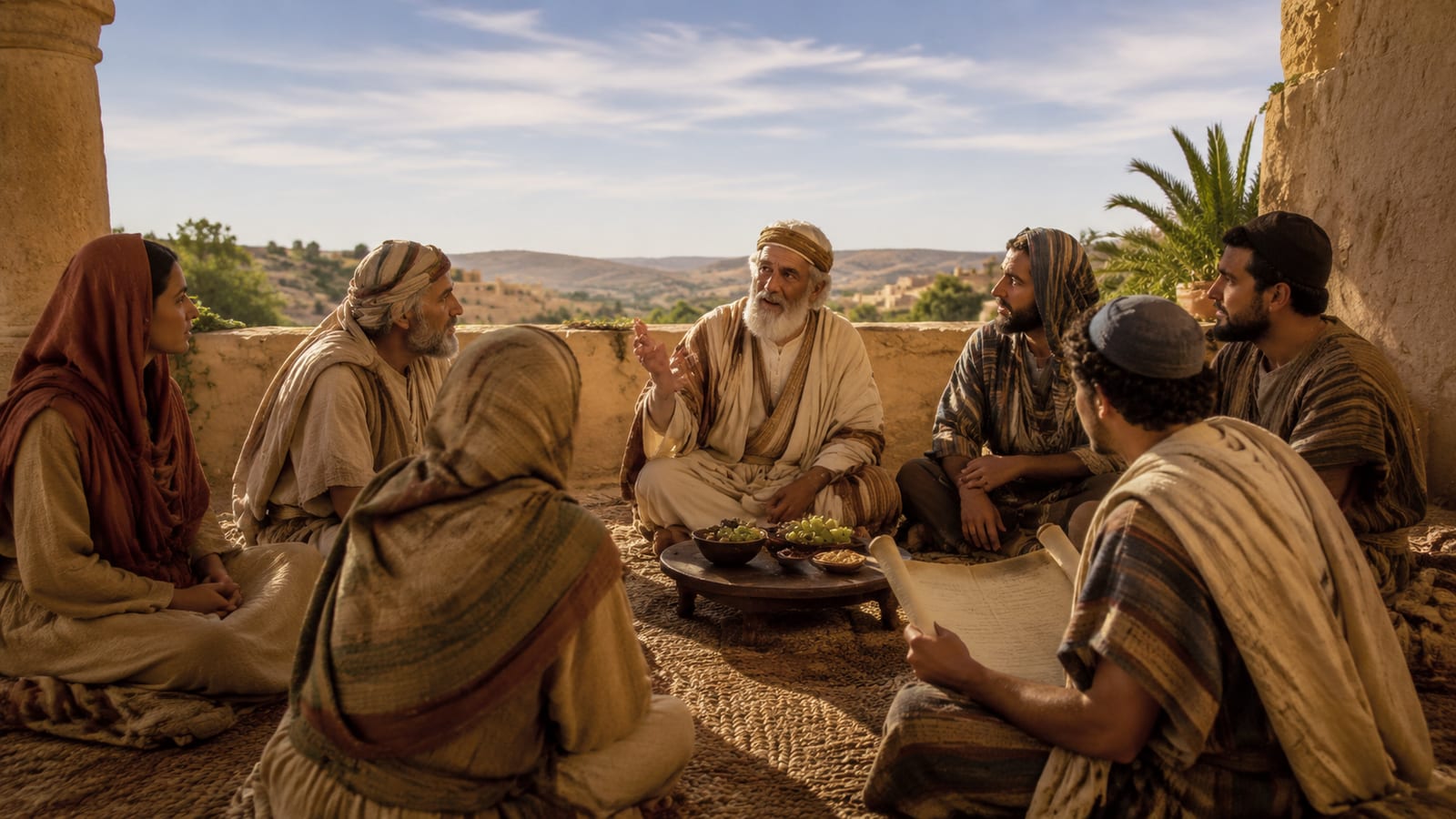
God’s words and acts were first seen, heard, remembered, taught, sung, and preached. Then they were written and preserved under the Holy Spirit’s guidance.
Oral tradition was not idle gossip traveling around a market. Biblical communities taught their history in worship, homes, feasts, songs, and public readings. Deuteronomy 6:6-9 tells parents to repeat God’s commands through the ordinary parts of the day.
The apostles worked the same way. First Corinthians 15:3 says Paul delivered what he had received about Christ’s death, burial, and resurrection. That message was already being taught before Paul wrote the letter.
Writing then gave the message a stable public form. Luke investigated testimony. Paul sent letters to churches. John wrote what he saw. Those writings were copied, read aloud, and shared, as Colossians 4:16 shows.
The canon is the recognized collection of books received as Scripture. The church did not make an ordinary book inspired by putting it on a list. Believers recognized books already carrying prophetic or apostolic authority.
That process involved real judgment. Christians asked whether a writing came from an apostle or close witness, agreed with the faith already received, and was used broadly among churches. It was a workshop, not a magic stamp.
What should Christians do with traditional authorship and modern scholarship?

Use both, but keep their labels on. The biblical text is evidence. Early Jewish and Christian testimony is evidence. Language, manuscripts, and historical setting are evidence too.
However, a scholar’s proposed source or editor is still a proposal. A church tradition is still tradition unless Scripture confirms it. Neither becomes certain because it appears in a footnote.
This cuts both ways. Christians should not pretend Hebrews names Paul. Skeptics should not pretend an anonymous book has no connection to eyewitness testimony or reliable memory.
Ask three questions as you study:
- What does the book say about its writer or source?
- What does early historical testimony add?
- Where does the evidence stop and reconstruction begin?
Then read the book itself. A theory about Isaiah is no substitute for Isaiah 53. A debate about John’s name does not answer John’s claim that Jesus rose from the dead.
Historical study can clear brush from the path. It cannot decide beforehand what God is allowed to say.
Where does the Adventist understanding of inspiration begin?
Adventists begin with the Bible’s own claim that the Holy Spirit inspired its writers. Second Timothy 3:16-17 and 2 Peter 1:20-21 carry the main weight.
The official Seventh-day Adventist belief on the Holy Scriptures says God gave knowledge necessary for salvation through chosen writers. Scripture is the authoritative revelation of God’s will.
Here is how Adventists read the human side. Inspiration rests upon the writers and the message God entrusted to them. It does not require the Holy Spirit to dictate every sentence in one uniform voice.
That view fits Luke’s research, Jeremiah’s use of Baruch, the varied psalms, and Paul’s personal letters. The words matter because words carry the message. Yet God gave that message through real people with real vocabulary.
This does not make Scripture partly trustworthy. It explains why a divine book still smells of sheepfolds, prison rooms, fishing boats, ink, dust, and bread.
Adventists also hold that later Christian writers must be tested by Scripture. Isaiah 8:20 gives the rule, and Acts 17:11 praises people who checked teaching against the written Word. The Bible remains the final measure.
Why does it matter who wrote the Bible?
Divine authorship gives Scripture authority. Human authorship gives it history, setting, language, and a voice you can hear.
If God is the source, Scripture has the right to correct you. Second Timothy 3:16-17 does not say the Bible exists to decorate a shelf. It teaches, rebukes, corrects, trains, and equips.
If human writers were involved, context matters. You must read a letter as a letter and a psalm as a song. You should not handle Proverbs like a signed contract or Revelation like a calendar on the break-room wall.
Knowing who wrote the Bible also keeps faith from becoming vague. Christianity rests on public claims made by witnesses, prophets, and apostles. They name rulers, roads, failures, meals, trials, and empty graves.
Still, the final question is not whether you can win an authorship debate. James 1:22 tells you to do the word rather than hear it only. The Bible’s authority becomes uncomfortable when it reaches your timesheet, your temper, and the words spoken at your kitchen table.
What should you do before next Sabbath?
Read one biblical book from beginning to end. Pick a short letter such as Philippians or James, and read it as one whole message rather than a jar of loose verses.
Then do three things:
- Mark every statement about the writer, audience, and purpose.
- Compare the book with 2 Timothy 3:14-17 and 2 Peter 1:16-21.
- Write down one command or correction you need to obey this week.
Check the verses on either side of every line you mark. If a study note states an uncertain author as settled fact, write “tradition” or “proposal” beside it.
Then let the text finish its work. Grace first, obedience after. Scripture is a gift to receive and a word to follow, not a puzzle kept safely on the table.
FAQ
Did King James write the Bible?
No. King James authorized an English translation, but he did not write the biblical books or personally translate the whole work.
The books existed in Hebrew, Aramaic, and Greek long before that English edition. Calling it the King James Bible names the royal project behind the translation, not the author of Scripture.
Did church councils create the Bible?
No council turned ordinary religious books into God’s Word. Councils later confirmed collections that churches had already been reading, copying, and receiving as authoritative.
The process was not tidy, and some books were discussed longer than others. Still, recognition and creation are different jobs. A council can recognize a loaf on the table without having baked it.
Why do Catholic and Protestant Bibles contain different Old Testament books?
Catholic and Protestant churches received somewhat different Old Testament collections. The disputed writings are often called the Apocrypha or deuterocanonical books, meaning books received as Scripture later or in a secondary collection.
Seventh-day Adventists follow the Protestant Old Testament canon. The additional books can still help with Jewish history and thought, but Adventists do not use them to establish doctrine.
Were the biblical writings changed while being copied?
Copyists made spelling differences, skipped lines, repeated words, and sometimes added clarifying phrases. Scholars compare surviving manuscripts to identify those changes.
Most differences do not alter the meaning of a passage. Where a reading remains uncertain, responsible Bible editions usually mark it in a footnote rather than hiding it. The worn edges are visible, and the message has not disappeared.