Genealogies are important in the Bible because they tie God's promises to real people with real fathers. Each name is a link in one chain that runs from Adam through Abraham and David to Jesus. Together they show God acting in real history, keeping His covenant, His binding promise, and sending the Messiah through the family He named.
These are the pages most readers skip. They're also the pages that make the gospel checkable, because a list of fathers and sons can be traced.
Why are genealogies important in the Bible?
Legends don't keep family records. A myth starts long ago in a land with no name. Scripture says this man was the son of that man, from this tribe, and then tells you who came next.
Look at how often a story ends in a list. Ruth 4:18-22 closes a love story with a family line that lands on David. Luke 3:1-2 dates John the Baptist's preaching by naming Tiberius, Pilate, Herod, and the high priests Annas and Caiaphas.
Ancient readers could check those records, and they did. When the exiles came home from Babylon, Ezra 2:62 says some men who claimed to be priests searched for their family registration and couldn't find it. As a result, they were kept out of the priesthood.
Ezra 2:64 counts the whole returning assembly at 42,360, and the chapter lists them family by family. Somebody kept those rolls. That's why genealogies are important in the Bible: they are the paperwork of real history, with names you could look up.
So when Scripture says God acted, it hands you people, not legends.
The promise runs from Abraham to Jesus
God's first promise of rescue is a promise about a child. In Genesis 3:15 He tells the serpent that the woman's seed, meaning her offspring, will crush its head. From that verse on, Genesis keeps asking one question: which child carries the promise?
The genealogies answer it. Genesis 5 follows the line from Adam through Seth to Noah. Then Genesis 11:10-26 picks it up with Noah's son Shem and walks it down to Abram. Each list narrows the field.
Next, God makes the promise personal. In Genesis 22:18 He tells Abraham that through his offspring all the nations of the earth will be blessed. From then on, Scripture tracks one family through its sons, its tribe, and finally its king.
Here is the promise passed from hand to hand. Read the verses on either side of each one so you see it in context:
- Genesis 3:15: the woman's offspring will crush the serpent's head.
- Genesis 22:18: all nations will be blessed through Abraham's offspring.
- Genesis 49:10: the scepter will not depart from Judah.
- 2 Samuel 7:12-13: God will raise up David's son and establish his throne forever.
- Matthew 1:1: Jesus the Messiah is the son of David, the son of Abraham.
That's why Matthew opens the New Testament with a list. Before he tells you one thing Jesus did, he shows you whose son Jesus is. His first readers heard those two names and knew which two promises had just come due.
Matthew 1:17 then sums up the whole line in three equal blocks. From Abraham to David, fourteen generations. From David to the exile in Babylon, fourteen more. From Babylon to the Christ, fourteen again. In other words, the centuries had a shape, and the shape ended at Jesus.
Why do Matthew and Luke list different names?
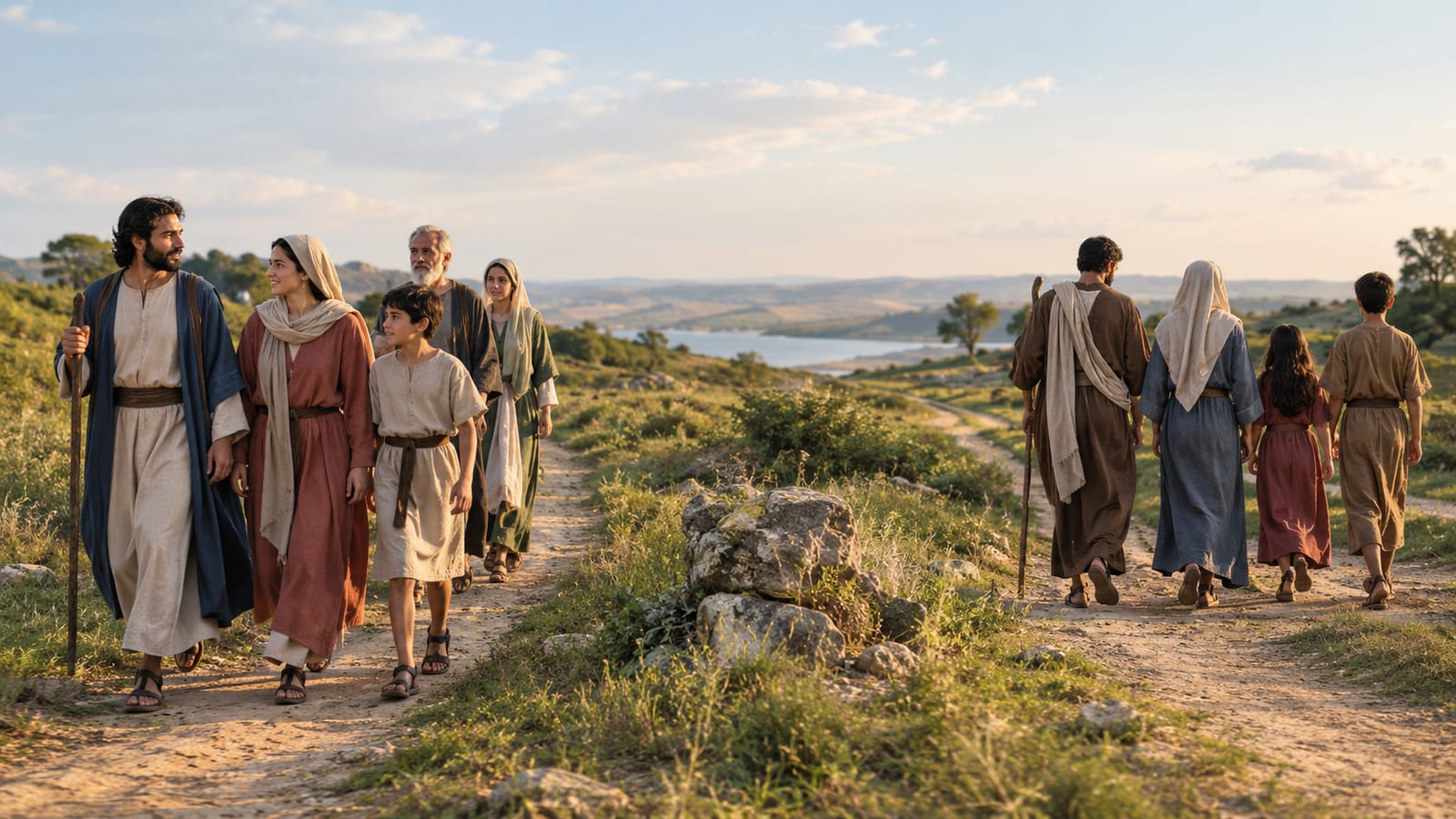
They trace the line by different routes, and Christians have puzzled over the genealogy of Jesus since the early church. Matthew starts with Abraham and moves forward through Solomon, David's son. Luke 3:23-38 starts with Jesus and moves backward through Nathan, another son of David, all the way to Adam.
There are two old explanations. One says Matthew gives Joseph's legal line, the line of the throne, while Luke gives Mary's. Luke 3:23 leaves room for that, because it calls Jesus the son of Joseph "as was supposed."
The other says both lines belong to Joseph, joined by a levirate marriage. That was the custom in Deuteronomy 25:5-6, where a man married his dead brother's widow so the brother's name would go on. The firstborn son then counted as the dead man's heir.
Which one is right? I do not know, and I'd be careful with anyone who claims certainty. Both fit the text. Still, neither changes the point, since both writers reach David and both reach Jesus.
Matthew also trims his list on purpose. For example, Matthew 1:8 says Joram was the father of Uzziah. However, 1 Chronicles 3:11-12 names Ahaziah, Joash, and Amaziah in between, and calls Uzziah by his other name, Azariah.
In Hebrew usage, "father of" can mean "ancestor of," so the shorter list is still accurate. Matthew shortens it so the three blocks come out even, which also makes the line easier to remember.
The names nobody would have chosen
Matthew's list keeps people a careful editor would have cut. Read Matthew 1:3-6 slowly. Tamar is there, and in Genesis 38 she posed as a prostitute to get a child by her father-in-law.
So is Rahab, the Canaanite prostitute of Jericho from Joshua 2. So is Ruth, a Moabite, from a people Deuteronomy 23:3 kept out of the assembly. Then Matthew writes "the wife of Uriah," his pointed way of reminding you how David got Bathsheba.
The kings aren't much cleaner. Matthew 1:10 names Manasseh, who filled Jerusalem with innocent blood, according to 2 Kings 21:16. Yet 2 Chronicles 33:12-13 says he humbled himself in his distress, and God heard him.
This is grace first, obedience after, written out as a family tree. God kept His word through the family that actually existed, scandals and all.
So if you think your past puts you outside God's story, read those verses again. The Messiah's own family line includes a foreign widow, a prostitute, and a king who shed innocent blood. Matthew made sure you'd notice them.
Paul's warning about endless genealogies
The strongest objection comes from Paul. In 1 Timothy 1:4 he tells Timothy to stop people from devoting themselves to myths and endless genealogies. Titus 3:9 tells Titus to avoid foolish controversies and genealogies, because they're unprofitable and worthless.
That's a fair question to raise, so read the verses on either side. In 1 Timothy 1:4 the trouble is that these things stir up speculation and do nothing to build faith. Paul is warning about teachers who spun theories out of family trees and argued over them for sport.
Paul himself kept using the Bible's records. In Philippians 3:5 he names his own tribe, Benjamin. Meanwhile, Romans 1:3 says Jesus descended from David according to the flesh, right in the opening lines of the letter.
So the test is what the reading produces. If a genealogy points you to the promise and to Jesus, you're reading it the way it was written. If it turns into a contest over obscure names and hidden codes, that's the habit Paul told Timothy to shut down.
Where the text ends and the Adventist reading begins
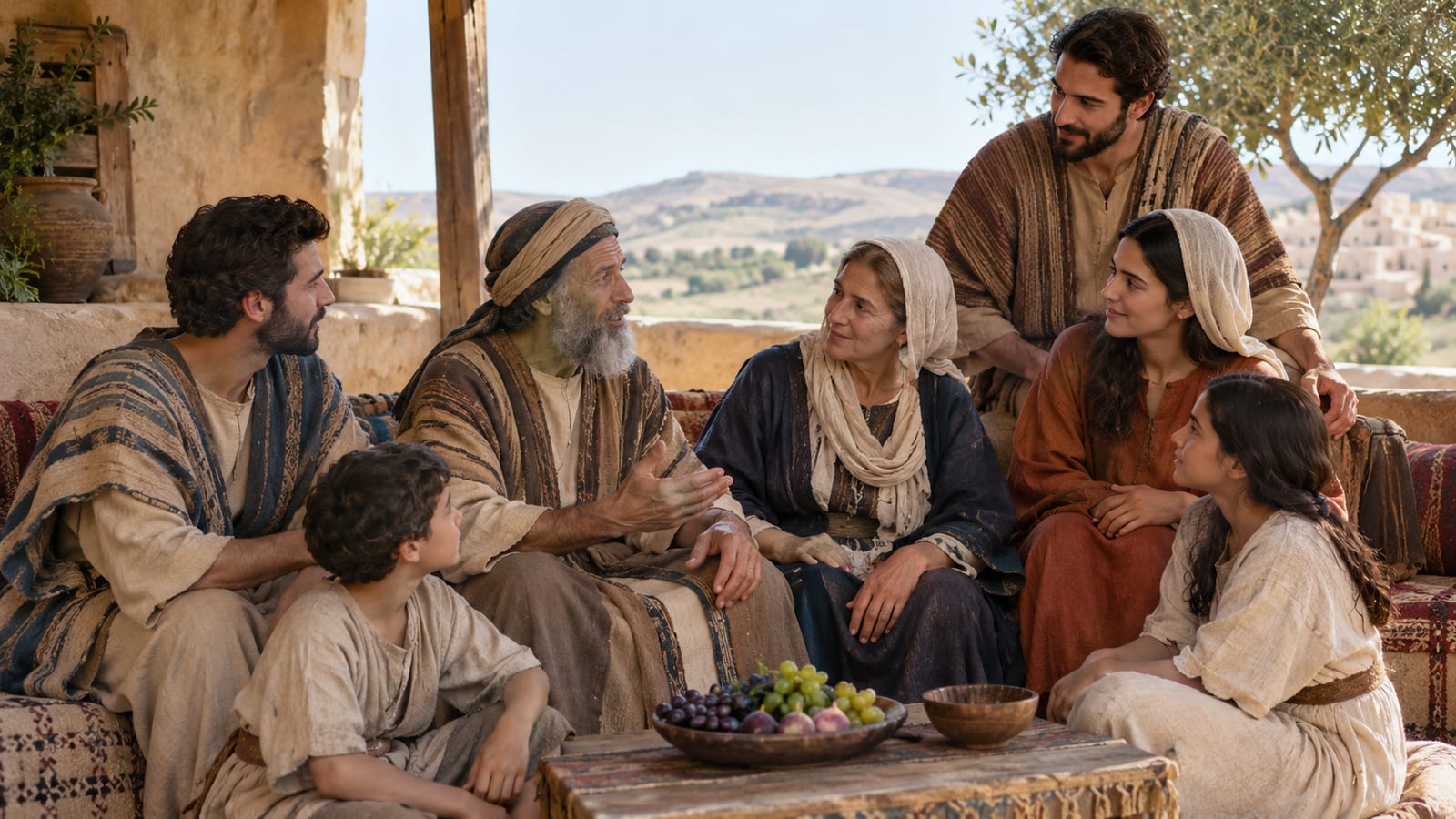
The text says Adam was a real man at the head of a real family. Luke 3:38 ends its list with "Adam, the son of God," in the same pattern it uses for every name before it.
Jesus speaks of the first couple as real in Matthew 19:4. Paul also builds his argument about sin and grace in Romans 5:12-19 on one man's act.
Here is how Adventists read it. We take Genesis 1 and 2 as a literal week, with Adam and Eve as the first humans and the seventh day blessed at its end in Genesis 2:2-3. The genealogies are part of the reason. If Adam is only a symbol, Luke's list ends in a symbol, and the line that reaches Jesus starts somewhere nobody can trace.
That last part is our conclusion, and you should check it for yourself. Other Christians who love Scripture read the opening chapters of Genesis differently. Still, the New Testament writers never treat Adam as anything less than a man. The fourth commandment in Exodus 20:11 also points straight back to that same week.
What to do with Matthew 1 before next Sabbath
Read Matthew 1:1-17 out loud once this week, slowly, without skipping a name. It takes only a few minutes. Then work through it with a pen:
- Underline each woman's name and read her story where the Old Testament tells it.
- Circle Abraham and David, then read Genesis 22:18 and 2 Samuel 7:12-13 beside them.
- Mark the turning points in verse 17: David, the exile, and the Christ. Ask what changed at each one.
- Write one sentence about what this list shows you about God's patience.
Bring that sentence to your Sabbath School class and compare it with someone else's. You'll likely find they noticed a name you passed over.
FAQ
If priests needed a family record, how can Jesus be a priest?
Hebrews raises that exact problem. Hebrews 7:14 says our Lord came from Judah, a tribe Moses never linked with the priesthood. The writer's answer is that Jesus serves in the order of Melchizedek, and Hebrews 7:3 notes that Scripture gives Melchizedek no genealogy at all.
Hebrews 7:16 grounds Christ's priesthood in a life that cannot be destroyed. That's why Adventists focus on His present work in the heavenly sanctuary, the true tent Hebrews 8:1-2 says the Lord set up.
Do the genealogies matter if I'm not Jewish?
Yes, because the family they trace is open to you. Galatians 3:29 says that if you belong to Christ, you are Abraham's offspring and heirs of the promise. No surname or family Bible is required. Galatians 3:7 puts it another way: those who have faith are the children of Abraham.
Can you date creation by adding up Genesis 5 and 11?
Those two chapters are unusual because they give a father's age when his son was born, as Genesis 5:3 does for Adam and Seth. That detail is why many readers, including many Adventists, use them to argue for a young earth. The church's statement of belief holds that creation was recent and literal.
Whether the lists add up like a ledger, or allow some gaps, is a question careful Adventist students still discuss. The text gives you the ages. It leaves the arithmetic to you.
Why does 1 Chronicles open with so many names?
Chronicles was written after the exile, for people trying to rebuild. Its opening chapters, 1 Chronicles 1 through 9, are almost all family lines, starting with Adam and ending with the families who resettled Jerusalem. For people who had lost their land and their temple, a name on that list meant they still belonged.