

The Bible's friendship verses are tougher than the greeting cards make them look. Start with Proverbs 17:17, "a friend loves at all times." Then add Proverbs 27:17, Ecclesiastes 4:9-10, and John 15:15, where Jesus calls his disciples friends. Together these Bible verses about friendship describe someone who sharpens you, carries you when you fall, and keeps what you tell them. They also show that Jesus offers that kind of friendship before he asks anything of you.
So here is the plain reading in one breath. A biblical friend tells you the truth, shows up when it costs something, and keeps your secrets. You learn to be that friend by first being a friend of Jesus, who called his followers friends because he told them everything.
What are the best Bible verses about friendship?
Start with these. Read the verses on either side of each one before you quote it to anybody. Several of them hit harder in context than they do on a coffee mug, and Proverbs 27:6 is the one people tend to stop quoting once they've read it slowly.
| Verse | What the text says | Reach for it when |
|---|---|---|
| Proverbs 17:17 | A friend loves at all times, and a brother is born for adversity | A friend is going through a hard season |
| Proverbs 18:24 | There is a friend who sticks closer than a brother | You wonder whether real loyalty exists |
| Proverbs 27:6 | Faithful are the wounds of a friend | Someone told you a hard truth |
| Proverbs 27:17 | Iron sharpens iron, and one man sharpens another | You need people who make you better |
| Ecclesiastes 4:9-10 | Two are better than one; if one falls, the other lifts him up | You're trying to do life alone |
| Proverbs 13:20 | Whoever walks with the wise becomes wise | You're choosing who to spend time with |
| Proverbs 17:9 | Whoever covers an offense seeks love | A friend has wronged you |
| John 15:13-15 | Greater love has no one than this; I have called you friends | You need to know where friendship starts |
The sections below take these verses one theme at a time, starting with the one people like least.
A real friend tells you the truth
The biblical reference for "iron sharpens iron" is Proverbs 27:17. It sounds cozy until you picture it. Two blades scraping against each other make noise and throw sparks. That's how an edge gets made.
The verses around it say the same thing in different words. Proverbs 27:6 says the wounds of a friend are faithful, while an enemy is generous with kisses. Then Proverbs 27:9 calls a friend's earnest counsel sweet, like oil and perfume. A friend who only agrees with you is pleasant company, and nothing more.
This is the friendship our culture has the least patience for. We tend to keep the people who make us comfortable and drift from the ones who ask hard questions. If you want more of Solomon's practical wisdom on this, see these life lessons from the book of Proverbs.
So ask yourself who has told you no lately. If nobody comes to mind, you may have plenty of friends and no one sharpening you.
Two are better than one
Ecclesiastes 4:9-10 is the Bible's case for not going it alone. The Amplified Bible, Classic Edition renders verse 9 this way: "Two are better than one, because they have a good [more satisfying] reward for their labor." Verse 10 gives the reason. If one falls, the other lifts him up, and it's hard for the one who falls with nobody there.
Think about moving a couch up a narrow staircase by yourself. You can do it, maybe. Still, it takes longer, you scrape the wall, and nobody catches the end when it slips. Friendship works like that. The load gets lighter, and the job turns out better.
Paul turns the same idea into a command. Galatians 6:2 says bear one another's burdens. Of course, that means you'll be the one lifting sometimes, and it will be inconvenient. Here are some practical ways to support fellow Christians in hard times when it's your turn.
Friendship is also different from teamwork. Our post on Bible principles for working well with others covers coworkers and committees. This page is about the people who stay after the project ends.
What does it mean that Jesus calls you his friend?
Here is the verse. In John 15:15 Jesus says, "I no longer call you slaves, because a slave does not know what his master is doing. I have called you friends, because I have told you everything I have heard from my Father."
Notice what makes the difference. A servant gets instructions. A friend gets the reasons. Jesus defines friendship as being let in on what he knows.
He wasn't starting something new. James 2:23 says Abraham was called the friend of God. Exodus 33:11 says the Lord spoke with Moses face to face, as a man speaks with his friend. So friendship with God is an old idea that Jesus opened to ordinary fishermen.
Isn't that friendship conditional?
That's a fair question, because John 15:14 says, "You are my friends if you do what I command you." It can sound like a deal: obey and you're in.
However, read the verses on either side. Verse 13 says greater love has no one than to lay down his life for his friends, and Jesus did that before anyone earned it. Verse 16 says you did not choose me, but I chose you. The friendship comes first. Obedience is how friends act once they belong.
Here is how Adventists read it
The text says Jesus chose his friends and told them everything. What follows is our conclusion from that, so check it for yourself. Adventists see this friendship as the root of keeping God's commandments, the Sabbath included. Grace first, obedience after.
We read the fourth commandment as a standing weekly appointment with a Friend. From sundown Friday to sundown Saturday, you set aside time the way you'd clear your calendar for someone you love. Obligation isn't the point. You keep the appointment because you want the time with him.
Choosing friends wisely
Proverbs 13:20 says whoever walks with the wise becomes wise, but the companion of fools will suffer harm. Paul puts it more bluntly in 1 Corinthians 15:33: bad company ruins good morals. And Proverbs 22:24-25 warns against making friends with a hot-tempered man, so you don't learn his ways.
The point is direction. You become like the people you spend your evenings with. Habits rub off, and so do jokes, spending, and the way people talk about their spouse.
The strongest objection is that Jesus ate with tax collectors and sinners. The religious leaders complained about it in Mark 2:16. True, and Jesus answered that the sick need a doctor. He changed every room he walked into, and nobody pulled him off course.
So here's the test. After time with this person, are you more like Christ or less? If they're steering you, step back. If you're both moving toward God, or you're the one with the open Bible, stay close.
How do you keep a friendship from breaking?
Two things wreck friendships in Proverbs: repeated grudges and loose talk. Proverbs 17:9 says whoever covers an offense seeks love, but whoever repeats a matter separates close friends. Proverbs 16:28 adds that a whisperer separates close friends. Meanwhile, Proverbs 11:13 says a trustworthy person keeps a thing covered.
Covering an offense means forgiving it and not bringing it up again. Colossians 3:13 says forgive as the Lord forgave you. That's daily work, like wiping the counter after every meal so it never gets sticky.
One caution, though. Covering an offense does not mean hiding harm. If a friend is hurting someone, Matthew 18:15 tells you to go to them directly. Abuse and danger belong in the light, and no proverb asks you to keep them quiet.
Before you share a friend's struggle as a "prayer request," ask whether they'd want it shared. Gossip often wears church clothes.
Friendships worth studying in Scripture
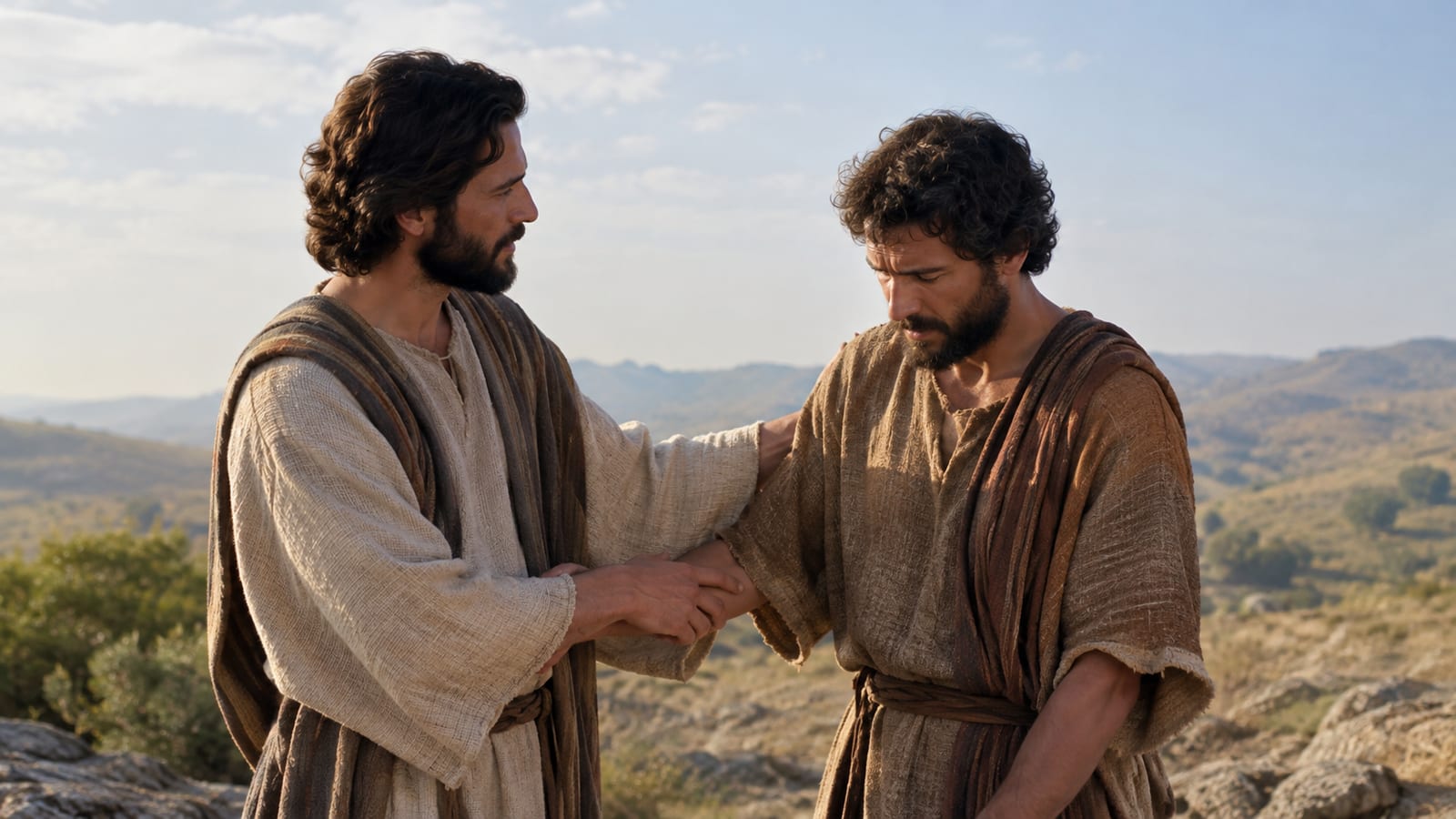
The Bible shows friendship as much as it describes it. These stories fill in what the proverbs leave out.
David and Jonathan
First Samuel 18:1 says Jonathan's soul was knit to David's. Jonathan was the king's son and heir, yet in 1 Samuel 23:16-17 he went to David in the wilderness and strengthened his hand in God. He told David he would be king. That's friendship that hands over the crown.
Ruth and Naomi
Ruth 1:16 is often read at weddings, but it's a widow speaking to her mother-in-law. "Where you go I will go." Ruth had every reason to go home, and she stayed.
Job's friends
Job's friends got the first part right. Job 2:13 says they sat with him on the ground and said nothing, because they saw how great his suffering was. Then they started explaining, and in Job 42:7 God says they did not speak rightly about him. Sometimes the most faithful thing a friend can do is sit down and keep quiet.
The friends who dug through the roof
In Mark 2:1-5, friends carried a paralyzed man to Jesus. The house was packed, so they opened the roof and lowered him down. Mark 2:5 says Jesus saw their faith. Sometimes your friend can't get to Jesus alone, and your faith carries them.
When you feel like you have no friends

Loneliness isn't a sin, and it isn't proof that God has left you. Elijah said in 1 Kings 19:10 that he alone was left. In 1 Kings 19:18, God answered that he had kept many others faithful. Elijah just hadn't met them yet.
Psalm 68:6 says God sets the lonely in families. Hebrews 10:24-25 tells believers not to stop meeting together but to encourage one another. Church is one of the ordinary places God answers that psalm. Here's why church fellowship is essential for faith and not optional.
This isn't only a church concern. The U.S. Surgeon General's advisory on social connection treats loneliness as a public health problem. Scripture got there first.
I do not know why some seasons stay lonely longer than others. Still, the pattern in Scripture is steady: friendship usually starts when someone makes the first move. You can be that someone.
What this changes about your week
Pick one of these before next Sabbath, and actually finish it:
- Text one friend Proverbs 17:17, and name one specific thing they did for you that you haven't forgotten.
- Ask a friend you trust, "Is there anything you've noticed in me that I should hear?" Then listen without defending yourself.
- Invite someone who sits alone at church to Sabbath lunch. Make the soup Friday afternoon so you're not rushing.
- Think of one offense you keep replaying. Forgive it in prayer, and stop retelling it, even at your own kitchen table.
FAQ
Is it wrong to end a friendship?
Not always, and Scripture records a sharp split between two good men. Paul and Barnabas disagreed so strongly over Mark that they went separate ways, as Acts 15:39 records. Years later, in 2 Timothy 4:11, Paul asked for Mark because he was useful. So distance can be the season a friendship needs before it mends. Leave the door open where it's safe to.
Can a Christian be close friends with someone who isn't a believer?
Yes, with care. Second Corinthians 6:14 warns against being unequally yoked, which describes binding partnerships like marriage, where both people pull in the same harness. A neighbor you trade tomatoes with over the fence isn't a yoke, but a business partner who wants the shop open on Saturdays might become one. James 4:4 warns about loving the world's values, which is a different thing from loving a neighbor who doesn't share your faith.
Did Jesus have close friends?
He did, and the Gospels name some of them. John 11:5 says Jesus loved Martha, her sister, and Lazarus, and John 11:35 records that he wept at Lazarus's tomb, even though he had come to raise him. John 13:23 mentions "the disciple whom Jesus loved." Tradition identifies him as John, but the text never names him, so I do not know for certain.
Is the friend who sticks closer than a brother Jesus?
Not in its plain reading. Proverbs 18:24 is about human friendship, setting a crowd of shallow companions against one loyal friend. Many Christians apply it to Jesus, and that application fits what John 15 shows about him. Use it that way if it helps you, but say it's an application, and keep the original meaning in view too.