The Enoch most readers mean is Jared's son, and almost everything worth knowing belongs to him. Cain's son gets a city named after him in Genesis 4:17, and nothing more. Jared's son is the one people mean when they ask about Enoch in the Bible. He walked with God, foretold the Lord's coming, and then God took him (Genesis 5:24, Hebrews 11:5).
Scripture gives him only a handful of verses. So this page stays close to them and shows you each one in context. It also tells you plainly where the text stops and the Adventist reading starts, so you can check it for yourself.
Genesis has an Enoch in each family line
Genesis follows Cain's family and Seth's family in back-to-back chapters. Chapter 4 traces Cain's descendants. Chapter 5 starts over with Adam and follows Seth, and each line has an Enoch.
A fast reader often merges them into one man. The fix is to read the verses on either side of the name. The fathers are different, the sons are different, and the stories head in opposite directions.
| Enoch, son of Cain | Enoch, son of Jared | |
|---|---|---|
| Family line | Cain | Seth |
| Main passage | Genesis 4:17-18 | Genesis 5:18-24 |
| Known for | A city named after him | Walking with God and being taken |
| Children named | Irad | Methuselah, plus other sons and daughters |
| Named in the New Testament | No | Luke 3:37, Hebrews 11:5, Jude 14-15 |
Enoch in Cain's family line
Genesis 4:17 says Cain's wife bore a son named Enoch. Cain then built a city and named it after him. Verse 18 adds that Enoch fathered Irad, and the text moves on.
There's no character note, no prophecy, and no word about faith. So don't build a sermon on this Enoch, because the text doesn't. Some readers notice that Cain was sentenced to wander in Genesis 4:12 and then built a city anyway. That's a fair observation, but Moses never comments on it, so hold it loosely.
The real contrast comes a few names later. Count the same number of steps from Adam down Cain's line and you land on Lamech. He brags to his wives about killing a man in Genesis 4:23-24.
Do the same down Seth's line and you reach Enoch, who walks with God. Genesis sets the two side by side and lets you draw the line yourself. It's one of the plainest lessons from the book of Genesis: a family tree doesn't decide anyone's character.
Who was Enoch in the Bible?
Read Genesis 5 out loud and you'll hear a drumbeat. A name, an age, sons and daughters, and then "and he died." Enoch's entry is where the drumbeat breaks.
He was the son of Jared, born when Jared was 162. He was the seventh man in the family line from Adam. At 65 he became the father of Methuselah, and he had other sons and daughters after that (Genesis 5:21-22).
His life on earth ended at the age of 365. That's far short of the men listed around him, most of whom lived far longer. Then Genesis 5:24 gives him a line no one else in the chapter gets: "Enoch walked with God: and he was not; for God took him."
Enoch's genealogy and descendants
The family line in Genesis 5 runs Adam, Seth, Enosh, Kenan, Mahalalel, Jared, Enoch, Methuselah, Lamech, and Noah. That makes Enoch Noah's great-grandfather. This Lamech is a different man from Cain's boasting descendant.
Three passages fix his place in the line:
- Genesis 5:18-24, the full entry from Jared's son to Methuselah's father.
- 1 Chronicles 1:3, where the King James spells him "Henoch," just before Methuselah and Lamech.
- Luke 3:37, which traces Jesus' family line back through Enoch to Adam.
Luke's list matters most. Enoch isn't a side story or a curiosity. He stands on the road that runs from Adam to the Flood's survivor and on to Bethlehem.
What does it mean that Enoch walked with God?
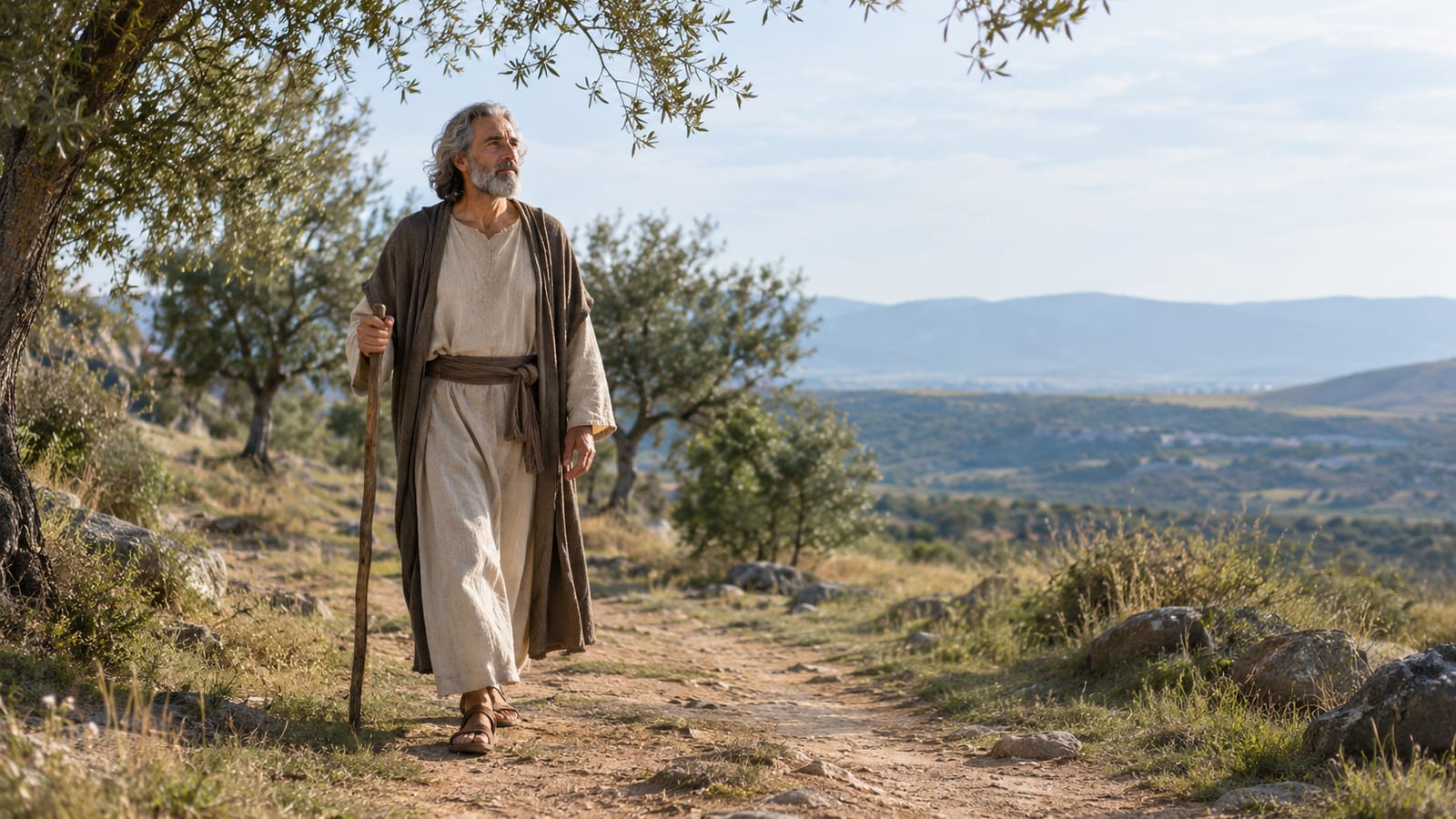
To walk with God means to live in steady, agreed company with him, going his direction day after day. Genesis says it about Enoch in 5:22 and again in 5:24. It uses the same words for Noah in Genesis 6:9.
Some translations put it as "Enoch kept walking with the true God." That catches the ongoing sense of the verb. This was a habit kept over centuries.
Amos 3:3 gives the plain meaning as a question: can two walk together unless they agree? When you walk with someone, you share a direction and a pace. Micah 6:8 turns it into a duty: do justly, love mercy, and walk humbly with your God.
Notice when Genesis 5:22 places the walk. It came after Methuselah was born, during the years Enoch raised sons and daughters. His walk with God happened in a house full of children, not a cave.
The usual objection is that "walked with God" sounds too vague to follow. That is a fair question, and Amos already answered it. Agreement shows up in choices, so you can tell by Tuesday's decisions whether you and God are heading the same way.
Enoch as an example of faith
Hebrews 11:5 reads Enoch's walk as faith. Before he was taken, it says, he had this testimony: he pleased God. Verse 6 explains how, since without faith it is impossible to please him.
Whoever comes to God, that verse goes on, must believe that he exists and that he rewards those who seek him. God exists, and he rewards those who look for him. So Hebrews holds Enoch up as a believer first, and his obedience grew out of that trust.
That's the same order the gospel keeps today: grace first, obedience after. Enoch didn't walk his way into God's favor. He trusted God, and the walking followed.
He also had less to go on than you do. He had no written Bible, no temple, and no church down the road. If you add up the ages in Genesis 5, Adam was still alive in Enoch's day, so Eden was family memory and not yet a book.
Enoch's prophecy in Jude
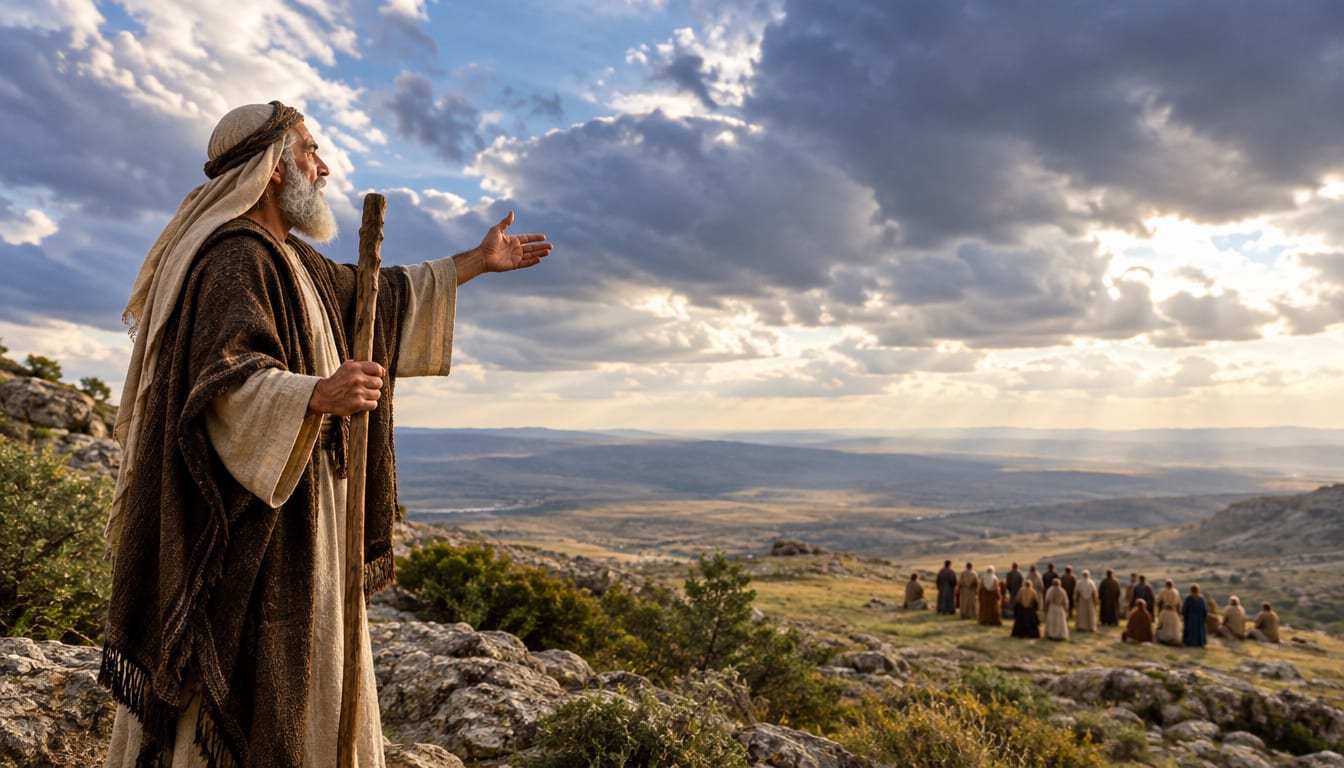
Jude 14-15 quotes Enoch, "the seventh from Adam," warning that the Lord is coming with his holy myriads to judge. Myriads means a crowd too large to count. The judgment falls on ungodly deeds and on the harsh words sinners have spoken against God.
Enoch spoke it before the Flood. Its subject is accountability, and it gives no date.
Jude applies it to people in his own church who were grumblers and complainers (Jude 16). Words weigh as much as deeds in this prophecy, which makes it uncomfortably practical. It sits well beside what the Bible teaches about Christian honesty, because God hears the muttered complaint too.
What does the Bible say about Enoch's departure?
Genesis 5:24 says "he was not; for God took him." Hebrews 11:5 explains it: "By faith Enoch was translated that he should not see death; and was not found, because God had translated him." Translated here means carried across, moved from earth into God's presence.
Read the two verses together and let each one do its own job. Genesis marks the end of his days on earth. Hebrews names what stood behind it, and that thing is faith.
Then the text stops. It doesn't say how he was taken, where he went, or what anyone saw. The words "was not found" suggest people looked for him, the way men searched for Elijah in 2 Kings 2:16-17 and came back empty-handed.
The Old Testament describes Elijah in a similar way, carried up by a whirlwind in 2 Kings 2:11. The life of Elijah is worth reading next to Enoch's. Still, don't borrow Elijah's chariot and park it in Genesis 5.
The strongest objection is Hebrews 9:27, which says it is appointed for people to die once. However, Paul writes in 1 Corinthians 15:51-52 that we shall not all sleep. Believers alive at Christ's return will be changed without dying, so Hebrews 9:27 states the rule, and God can make exceptions to it.
The Book of Enoch is not Scripture
The Book of Enoch isn't in your Bible because Enoch didn't write it. Usually called 1 Enoch, it's a collection of Jewish writings put together in the few centuries before Jesus. It stretches Genesis 6:1-4 into a long story about fallen angels called the Watchers and their giant children.
It was widely read in Jesus' day. Fragments in Aramaic turned up among the Dead Sea Scrolls, and you can view scroll images through the Leon Levy Dead Sea Scrolls Digital Library. The Ethiopian Orthodox Tewahedo Church counts it as Scripture.
Even so, it isn't in the Jewish canon, meaning the list of books accepted as God's Word. Nearly every other church leaves it out too.
Here's the catch people raise. Jude 14-15 closely matches a line in 1 Enoch 1:9, so does that make the book inspired? Paul quotes Greek poets in Acts 17:28 and Titus 1:12, and nobody adds those poets to the Bible.
A true sentence quoted in Scripture doesn't bless the whole book it came from. So read 1 Enoch as background if you're curious, and take no doctrine from it. Isaiah 8:20 sets the test: to the law and to the testimony. Later books called 2 Enoch and 3 Enoch exist as well, and they drift even further from the man in Genesis.
Where Scripture ends and the Adventist reading begins
Here is what the text states plainly about Enoch in the Bible:
- He was Jared's son and seventh from Adam (Genesis 5:18, Jude 14).
- He walked with God and fathered Methuselah and other children (Genesis 5:22).
- He foretold the Lord's coming in judgment (Jude 14-15).
- He pleased God by faith (Hebrews 11:5).
- God took him when his days on earth were done (Genesis 5:23-24).
- By faith he was translated and was not found, because God had translated him (Hebrews 11:5).
Everything past that list is reading, ours included. Here is how Adventists read it.
First, we see Enoch as a preview of God's people alive when Jesus returns. Those believers will be caught up to meet the Lord in the air, as 1 Thessalonians 4:17 describes. Ellen White develops this in Patriarchs and Prophets, and many Adventists tie it to those who keep the commandments of God and the faith of Jesus (Revelation 14:12).
Second, Enoch went to God bodily, so his case doesn't teach that souls drift to heaven at death. Adventists read death as a sleep, from Ecclesiastes 9:5 and Jesus' words about Lazarus in John 11:11. Enoch is an exception God made, and exceptions don't set the pattern.
Third, we don't read the witnesses of Revelation 11 as Enoch and Elijah returning to die. Adventists understand them as the Old and New Testaments. Christians who see it differently are still our brothers and sisters, but Revelation 11 never names Enoch.
Where is Enoch now, and what is he doing? I do not know. The Bible doesn't say, and anyone who describes his days in heaven is telling you more than the text holds.
What to do before next Sabbath
Enoch is a pattern, so put him to work this week. Read Genesis 5 out loud in one sitting and listen for where the drumbeat breaks. Then read Hebrews 11:5-6 and ask yourself the question it raises: do I believe God rewards people who look for him?
Next, pick one ordinary stretch of each day to walk with God on purpose. The drive to work, the dishes after supper, the walk out to the mailbox. Talk to him there the way you'd talk to someone beside you, because that's what the phrase means.
Then take Jude seriously about words. Choose one complaint you repeat out of habit and let it go unsaid until Friday's sundown. Enoch didn't know how his walk would end. He kept walking, and God handled the ending.
FAQ
Are there other people named Enoch in the Bible?
Yes, though English Bibles usually spell them Hanoch. The same Hebrew name belongs to a grandson of Abraham through Midian (Genesis 25:4) and to a son of Reuben (Genesis 46:9). The name is usually understood to mean "dedicated."
Doesn't John 3:13 say no one has gone up to heaven?
It says no one has ascended to heaven except the Son of Man, who came down from there. Read verse 12 first: Jesus is talking about who can speak firsthand about heavenly things. Most readers, Adventists included, take it as a claim about Jesus' authority to reveal heaven, so it leaves Hebrews 11:5 standing.
Was Enoch at the Transfiguration?
No. Matthew 17:3 names Moses and Elijah as the ones who appeared with Jesus on the mountain. Putting Enoch in that scene adds a guest the text never invited.
Is Enoch the angel Metatron?
That idea comes from 3 Enoch and later Jewish mystical writings. Scripture never says Enoch became an angel. Genesis and Hebrews say only that God took him.