
Ezekiel’s prophecies keep their modern significance because they put real choices in front of you: repentance or rebellion, faithful worship or hidden idolatry, trust in God’s presence or confidence in religious form. Read in context, the book gives you a steadier word than headline speculation. God sees sin, judgment is deserved, repentance remains open, and hope rests on his covenant faithfulness.
Last updated: 2026-10-18
Ezekiel’s prophecies center on God’s holiness and our responsibility
The Book of Ezekiel has 48 chapters and three broad movements. Chapters 1–24 warn of Jerusalem’s judgment. Chapters 25–32 announce judgment on surrounding nations. Chapters 33–48 turn toward restoration, renewed worship, and God dwelling with a cleansed people.
You can read the full Book of Ezekiel for yourself. Do it slowly. The strange visions make more sense when you let the plain passages explain them.
Ezekiel served as a prophet among the exiles in Babylon. His ministry began in 593 B.C. and ended with his last recorded message in 571 B.C., according to Ezekiel 1:2-3 and 29:17. The Babylonian Captivity began in 597 B.C. when King Jehoiachin was taken into exile.
Jerusalem later fell in 587 BC. The Babylonians destroyed the city and Solomon’s Temple. That history matters because Ezekiel’s warnings were not empty religious threats. The judgment arrived in the streets, at the gates, and in the smoking ruins of the sanctuary.
The book’s central question is simple: will God’s people treat God as holy?
Ezekiel 8–11 shows the answer Judah had been giving. The people worshiped idols inside the temple, turned toward the sun, and kept religious forms while their loyalty had moved elsewhere. God’s glory then departed from the temple in Ezekiel 10:18-19.
That is the part you should not skip. A person can keep the right words and still give the heart to something else. Ezekiel calls that what it is.
What was Ezekiel’s message?
Ezekiel’s message was that Jerusalem’s judgment was deserved, exile did not cancel God’s rule, and repentance remained the right response. He did not tell the exiles that their suffering proved God had lost control. He showed them that God was judging sin while still keeping his covenant promises.
His first vision makes the point before he explains it. Ezekiel 1 shows the glory of the Lord appearing in Babylon. God was not trapped inside Jerusalem’s temple. His throne moved with his people into exile.
That vision would have unsettled anyone who thought national defeat meant divine defeat. Babylon had won the battle. Babylon had not become God.
Ezekiel received a difficult commission. In Ezekiel 2:8–3:3, he was told to eat a scroll filled with lamentation, mourning, and woe. God’s word tasted sweet to him, even though the message would bring pain.
The prophet was also appointed as a watchman in Ezekiel 3:17-21. A watchman warned the people when danger came. If Ezekiel failed to speak, their blood would be charged to him. If he warned them and they refused to listen, the responsibility rested with them.
That passage does not make you responsible for controlling another person’s response. It does make you responsible for speaking plainly when God’s word has given you a clear duty.
The strongest objection is fair: if God already knew Jerusalem would fall, why call the people to repent? Ezekiel 18 answers that question. God takes no pleasure in the death of the wicked. He says, “turn yourselves, and live ye.” Foreknowledge does not make repentance pointless.
The date of Jerusalem’s siege also became a lasting wound. Ezekiel 24:1-2 names the tenth day of the tenth month in the ninth year. The exiles later observed that date as a fast, because the fall of the city was not an abstract lesson. They remembered the day their home was placed under siege.
The major prophecies in Ezekiel
Ezekiel’s prophecies move from judgment to restoration. The sections belong together, so you should resist pulling one vision away from the book’s larger message.
| Prophecy | Passage | Main message |
|---|---|---|
| The glory of God in exile | Ezekiel 1 | God remains sovereign outside Jerusalem |
| Judgment on Judah | Ezekiel 4–24 | Idolatry and injustice bring real consequences |
| Judgment on the nations | Ezekiel 25–32 | Pride and cruelty do not escape God’s notice |
| A new heart and spirit | Ezekiel 36:22-28 | God cleanses and renews his people |
| The valley of dry bones | Ezekiel 37:1-14 | God can restore a people who appear dead |
| Gog’s defeat | Ezekiel 38–39 | God defeats the enemies of his restored people |
| The restored temple and city | Ezekiel 40–48 | God’s presence defines the final community |
Judgment on Judah and the nations
Ezekiel used enacted signs to make judgment visible. He built a model of Jerusalem, acted out a siege, packed an exile’s bag, and dug through a wall in Ezekiel 4 and 12.
These actions gave the exiles something they could see while they resisted what they heard. People often argue with a sermon. It is harder to argue with your neighbor carrying a bag through a wall because God told him to show you what exile would look like.
Ezekiel also judged the surrounding nations in chapters 25–32. Ammon, Moab, Edom, Philistia, Tyre, Sidon, and Egypt all face a word from the Lord.
The point is larger than a list of ancient enemies. God’s judgment does not stop at the boundary of his covenant people. Nations answer for pride, violence, betrayal, and delight in another people’s suffering.
Ezekiel’s wife died as a symbolic act for rebellious Israel in Ezekiel 24:15-24. God told Ezekiel not to mourn publicly in the usual way. The sign showed how Jerusalem’s coming destruction would leave the people stunned and unable to grieve normally.
That passage is hard. I do not know every reason God chose such a costly sign. The text does make one thing clear: prophetic ministry was carried in the prophet’s own body and home.
A new heart and spirit
Ezekiel 36:22-28 gives the book one of its clearest promises. God says he will gather his people, cleanse them from their uncleanness, give them a new heart, and put a new spirit within them.
The reason matters. God says he will act for the sake of his holy name, which Israel had profaned among the nations. Restoration begins with God’s faithfulness, not Israel’s record of improvement.
This does not excuse obedience. It explains where obedience comes from. A stone heart cannot produce living faith by trying harder. God must make the heart alive, then the life begins to change.
That order protects you from two errors. You cannot earn grace by keeping commands. You also cannot claim grace while defending the idols God tells you to abandon.
The dry bones

Ezekiel 37 opens with a valley full of dry bones. God asks, “Son of man, can these bones live?” Ezekiel gives the only safe answer: “O Lord God, thou knowest.”
That is a good answer when the text leaves room for mystery. Ezekiel does not pretend to know more than God has shown him.
The vision first explains itself as a picture of Israel’s national restoration. The people say their bones are dried, their hope is lost, and they are cut off. God promises to open their graves, bring them up, and place his Spirit within them.
The passage carries resurrection language, but its first stated meaning concerns God restoring his covenant people from apparent death. Later Christian readers may see a wider hope in it. The text itself tells you where it begins.
Gog’s defeat
Ezekiel 38–39 describes Gog from the land of Magog as an enemy who comes against God’s restored people. God defeats Gog and makes his holiness known among the nations.
Gog and Magog have been attached to many modern headlines. That habit usually produces more heat than light. Ezekiel does not give you a timetable for naming present governments. He gives you the settled result: God’s enemies do not have the last word.
Read the chapters beside Ezekiel 36–37. The order matters. Restoration comes first in the vision, then the enemy’s assault, then God’s decisive victory.
The restored temple vision
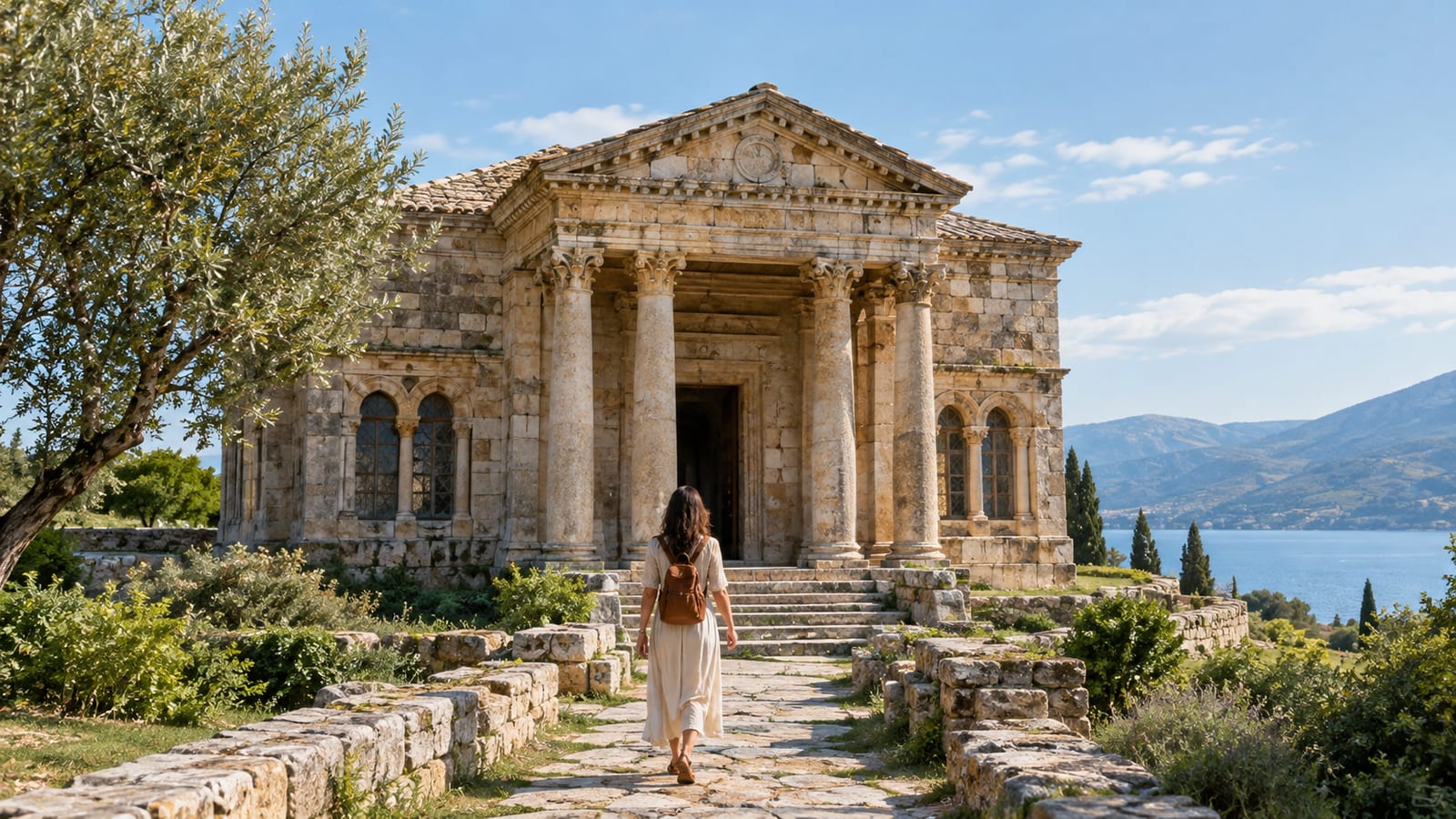
Ezekiel 40–48 describes a temple, its courts, its priests, the land, and a river flowing from the sanctuary. The entrance of the gateway is ten cubits wide and thirteen cubits long. The wall in front of each alcove is one cubit high, and each alcove is six cubits square.
Those details slow you down. They show that the vision is not careless religious poetry. Ezekiel sees a measured order centered on holiness.
The river in Ezekiel 47 grows from the temple and brings life wherever it goes. The final name of the city is the book’s last word: “The Lord is there” in Ezekiel 48:35.
That is the destination. The measurements matter, but God’s presence matters more.
What does Ezekiel 3:10-11 mean?
Ezekiel 3:10-11 means that the prophet must receive God’s words deeply and speak them faithfully to the exiles. It does not give a private code, a hidden date, or permission to turn every unusual event into a prediction.
Here is the verse in the King James Version:
Moreover he said unto me, Son of man, all my words that I shall speak unto thee receive in thine heart, and hear with thine ears.
And go, get thee to them of the captivity, unto the children of thy people, and speak unto them, and tell them, Thus saith the Lord God; whether they will hear, or whether they will forbear.
The command has two parts. Ezekiel must receive the word in his heart, and he must speak it to the exiles. Listening without speaking would fail the commission. Speaking without first receiving God’s word would turn prophecy into personal opinion.
The phrase “whether they will hear, or whether they will forbear” removes the sales pitch. Ezekiel is not told to make the message popular. He is told to deliver it faithfully.
This is also where Ezekiel’s commission differs from a private spiritual impression. The prophet was commissioned by God and given a public message to a named people. You should not use Ezekiel 3:10-11 to baptize your own guesswork. The signs Ezekiel was given are the enacted ones described above in Ezekiel 4, 12, and 24: the siege model, the exile’s bag, and the death of his wife.
Check the verses before and after it. That habit will save you from many confident mistakes.
Where Scripture ends and interpretation of Ezekiel begins
The text explicitly teaches that God is holy, Judah was accountable, judgment was deserved, repentance was possible, and restoration depended on God’s covenant faithfulness. It also teaches that God’s presence is the defining blessing of the restored community.
Interpretation begins when readers connect Ezekiel’s images to later events, doctrines, or prophetic systems. That work can be careful, but it must be labeled as interpretation.
How do Adventists read Ezekiel’s major themes?
Here is how Adventists read several themes:
- Judgment: Ezekiel supports the biblical pattern that God examines the character and conduct of his people. Ezekiel 18 places personal responsibility beside God’s mercy. Adventists connect this pattern with the wider judgment teaching of Daniel 7:9-14 and Revelation 14:6-7.
- The sanctuary: Ezekiel shows God’s holiness, the problem of defiled worship, the departure of divine glory, and the promise of restored presence. Adventists connect these themes with the sanctuary message in Hebrews and Daniel. The connection is theological. Ezekiel does not name every later doctrine in a single verse.
- The remnant: Ezekiel repeatedly shows that God preserves a people who return to him. Adventists connect this with Revelation 12:17 and 14:12, where end-time faithfulness includes keeping the commandments of God and the faith of Jesus.
- End-time restoration: Ezekiel 36–48 gives a powerful picture of cleansing, resurrection-like renewal, defeat of evil, and God dwelling with his people. Adventists read this within the larger biblical hope of Christ’s return and the final restoration. They should not turn every measurement or battle name into a newspaper key.
Scripture is the final authority. Denominational readings must stay beneath the text, not stand above it. You should be able to tell the difference between “Ezekiel says” and “Adventists understand this to mean.”
That distinction is not weakness. It is honesty.
For a wider look at how biblical prophets delivered God’s word, see how prophets delivered God’s word in the Bible. Ezekiel belongs with the prophets, but he must still be read in his own setting.
Why do Ezekiel’s prophecies still matter today?

Ezekiel still matters once you stop using the book as a headline decoder. The book asks what has claimed your loyalty, whether your worship matches your life, and whether you will trust God when judgment exposes what you hoped to hide.
Idolatry still changes shape
Ezekiel 8 names idols in the temple. Today, an idol may be money, status, political power, comfort, romance, or religious reputation. The object changes. The heart’s surrender does not.
The test is practical. What do you protect when obedience becomes costly? What do you excuse while quoting Scripture? What occupies your thoughts before prayer, work, and family?
Ezekiel 14:1-5 says idols can be set up in the heart. That verse leaves little room for pretending idolatry only means kneeling before a statue.
Worship can be hollow
The people in Ezekiel’s visions had a sanctuary, leaders, ceremonies, and religious language. They also had hidden corruption. Ezekiel 22:23-31 connects violence, greed, oppression, and failed leadership.
So the modern church should not measure faithfulness by noise, size, or polish. A congregation may sing loudly and still neglect the poor. A believer may speak about holiness while cheating on a timesheet.
Read Ezekiel beside Jeremiah’s prophetic warnings. Both prophets refuse to let religious confidence cover disobedience.
Watchfulness means faithful speech
Ezekiel 3:17-21 makes watchfulness a duty, not a mood. You do not need to shout at strangers or predict dates. You need to speak the clear word God has already given.
That may mean correcting a friend gently. It may mean refusing dishonest work. It may mean admitting that a church tradition has no support in Scripture.
The right word spoken with pride can still wound. Ezekiel’s commission requires both truth and submission to God’s word.
Suffering does not prove God has left
The exiles had lost land, temple, security, and familiar worship. Yet Ezekiel saw God’s glory in Babylon in Ezekiel 1. That changes how you read a hard week.
You may lose a job, face illness, or sit in a quiet house after someone leaves. None of those things proves God has abandoned you. The promise is that God remains Lord there, even when exile does not feel like home.
Ezekiel’s hope is restoration in God’s presence
Ezekiel does not end with ruins. It ends with God dwelling among a cleansed people.
The restoration begins with a new heart in Ezekiel 36. It continues with the dry bones in Ezekiel 37, where God restores a people who believe their hope is gone. It includes one shepherd, David, in Ezekiel 34:23-24, pointing to righteous leadership under God’s covenant.
The land is renewed. The enemies are defeated. The temple vision gives a picture of ordered worship and life-giving presence. The river flows outward from the sanctuary in Ezekiel 47.
Notice the direction. Life comes from God’s presence and moves outward. The people do not create holiness by building a better system. God cleanses them, gives them his Spirit, and teaches them to live as his people.
The final name of the city settles the matter: “The Lord is there.” That is the hope beneath every vision.
The temple vision also raises questions about how it relates to Christ, the church, heaven, and the new earth. Christians do not agree on every detail. I do not know that every measurement has a separate modern fulfillment.
The safe conclusion is the one Ezekiel gives you. God will not abandon his purpose to dwell with a holy people. The presence is certain even where the exact form remains debated.
Three responses to Ezekiel before next Sabbath
Read Ezekiel 2–3 and 36–37 before next Sabbath. Keep a pen nearby and mark every command to hear, speak, turn, receive, or live.
Then name one competing idol in prayer. Do not choose a respectable word such as “busyness” if the real issue is money, approval, control, or comfort. Say what it is before God.
Finally, speak one clear biblical word of repentance and hope to someone who needs it. Use a verse you have actually read in context. Do not bring a date chart when a plain promise will do.
Grace comes first. Obedience follows. Ezekiel’s message is not a wage you earn by performing well. It is a call to receive God’s word, turn from false worship, and live in the presence of the God who restores.
FAQ
Was Ezekiel speaking only to people in Babylon?
Ezekiel first addressed Jewish exiles in Babylon, but his message reaches beyond that audience. His warnings about idolatry, injustice, and false confidence apply wherever people claim to worship God while resisting his word.
Did Ezekiel predict the destruction of Jerusalem?
Yes. Ezekiel repeatedly announced Jerusalem’s fall before it happened. The city ultimately fell in 587 BC, and the temple was destroyed. His prophecy therefore includes a fulfilled judgment, along with promises that reach beyond the original crisis.
Are Gog and Magog modern nations?
Ezekiel does not identify a present-day nation by name. In Ezekiel 38–39, Gog represents a hostile power gathered against God’s restored people. Any modern identification should remain cautious and should never become a date-setting scheme.
Does Ezekiel’s temple prove that animal sacrifices will return?
The vision includes temple worship, but Christians interpret its fulfillment in different ways. Hebrews presents Christ’s sacrifice as final, so you should not settle the question by isolating Ezekiel 40–48 from the rest of Scripture.
Why does Ezekiel use so many strange symbols?
The symbols made spiritual realities visible to people living through national disaster. A siege model, a scroll, dry bones, and a departing glory gave shape to truths the exiles were tempted to deny. The symbols serve the message. The message is not hidden inside a code.