

How the Ten Commandments Relate to Salvation

Ten Commandments and salvation

Can following a set of rules really be the way into heaven, or does Scripture point us to something deeper?

I will name the main question in plain words: how the Ten Commandments relate to salvation in God’s word.

Many people say that keeping those laws will earn entry to heaven. Scripture corrects that idea. The Bible teaches that grace through faith in Jesus Christ is the true way to be right with God.

The law has a clear role. It reveals sin and drives people to Christ for mercy. Jesus obeyed the whole law for sinners and paid the penalty by His death and resurrection.

I will use Exodus 20, Deuteronomy 5, James 2:10-11, Matthew 5, and Matthew 22 to explain this truth. Expect a calm, hopeful explanation that points to Scripture and to faith in Christ.

Table of Contents

Key Takeaways

  • Scripture shows that grace through faith in Jesus Christ is the true way to God.
  • The law reveals sin and calls people to seek Christ for forgiveness.
  • Rule keeping cannot replace the need for faith and God’s grace.
  • Jesus fulfilled the law and paid the penalty for sinners.
  • The article will examine key passages to make these points clear and hopeful.

What the Ten Commandments are and where they appear in God’s Word

Let’s look closely at the clear moral instructions God gave Israel and where they appear in Scripture.

The ten commandments are presented in Exodus 20:1-17 and repeated in Deuteronomy 5:6-21 in the Old Testament. The Lord God opens by reminding Israel that he rescued them from slavery in Egypt before he gave these words (Exodus 20:2).

The setting at Sinai shows God speaking to a people who had just known rescue. That order—grace then duty—matters for understanding the law and its place in life.

These commandments act as a summary of moral law for worship and daily conduct. The first commands guard loyalty to God and warn against false gods. The later commands protect neighbor rights and keep homes and communities ordered.

Jesus later summarized this pattern: love of God and love of neighbor. These brief words shape how adults treat children, manage households, and live together in the land God gave.

A serene depiction of the Ten Commandments, elegantly represented as two weathered stone tablets standing upright on lush green grass. The foreground features an open Bible with its pages gently fluttering, surrounded by soft morning light that casts a warm glow across the scene. In the middle ground, human figures in modest, professional business attire are engaged in thoughtful discussion about the commandments, embodying fellowship and contemplation. The background is filled with gentle rolling hills and a clear blue sky, creating a peaceful, divine atmosphere. The overall mood exudes faith and tranquility, encouraging reflection on the significance of the Ten Commandments in spiritual teachings.

PassagePrimary focusKey outcome
Exodus 20:1-17God reveals moral words after rescueCommunity order and worship
Deuteronomy 5:6-21Restatement before entering landCovenant life in the land
Matthew 22:37-40Summation by JesusLove of God and neighbor

Ten Commandments and salvation: what the Bible says about being saved

The law functions as a single standard that exposes sin and drives me to Christ.

Why James says the law works as one unit

James treats the law as one whole. He says that breaking a single command shows guilt before God (James 2:10-11). That teaching warns me that the law speaks with one authority, not as separate rules I can pick or choose.

Why rule keeping cannot save

Paul explains plainly that no one is justified by works of the law (Romans 3:20; Galatians 2:16). My best works cannot erase guilt. The law shows sin but does not give the power to fix it.

How the law points to Christ

The law’s teaching use uncovers sin and shows my need for grace. It points people to the only way of rescue. Jesus obeyed the whole law for sinners and bore the penalty by his death and resurrection.
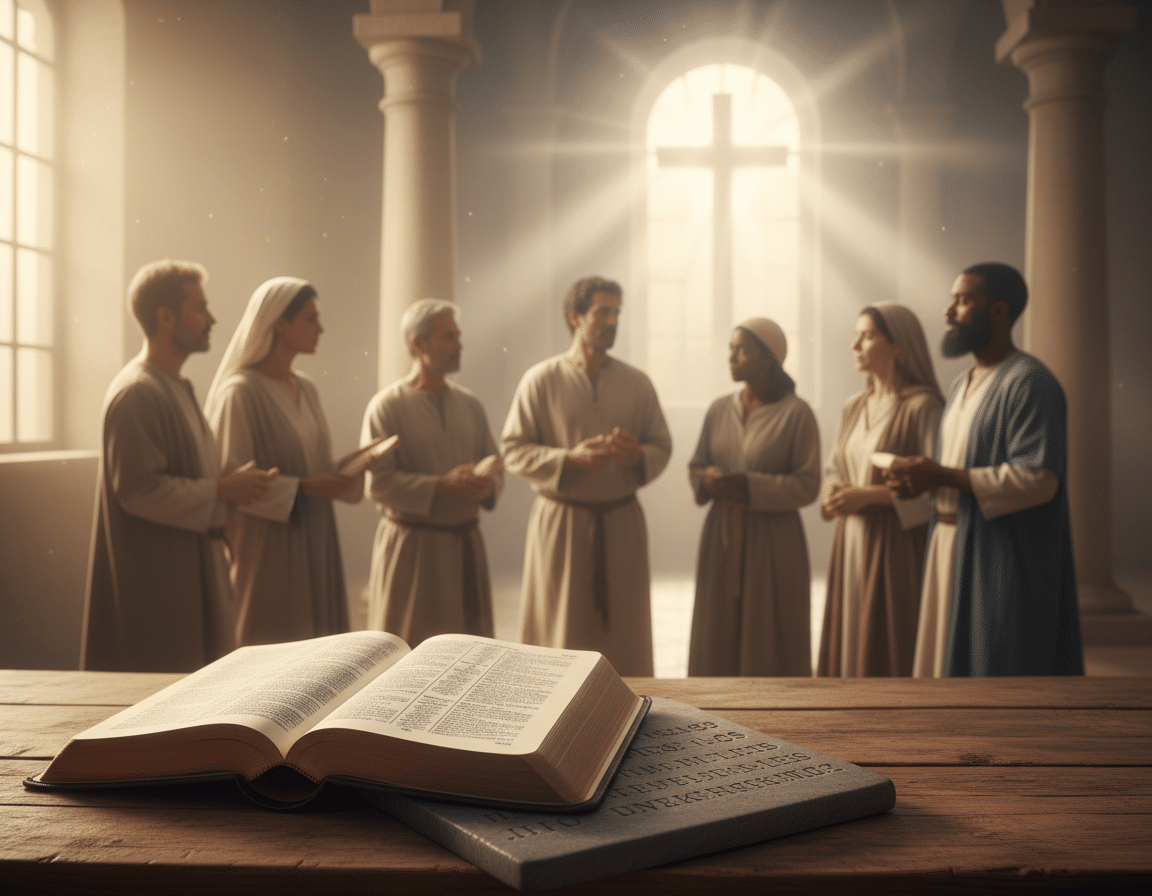
A serene and contemplative scene depicting the relationship between the Ten Commandments, sin, and Jesus Christ. In the foreground, an open Bible rests on a wooden table, with pages gently illuminated by warm, natural light, highlighting key verses. In the middle ground, a diverse group of individuals, dressed in modest casual clothing, engage in thoughtful discussion, embodying warmth and unity, with expressions of reflection and hope. Behind them, an ethereal light cascades down from above, suggesting divine presence, as a faint silhouette of a cross emerges in the background, symbolizing salvation. Soft, calm tones dominate the atmosphere, evoking a sense of peace and faith. The overall mood is one of introspection and spiritual insight.

“The law was our guardian until Christ came, so that we might be justified by faith.”

— Galatians 3:24 (summary)

  • Reflect: Do I trust my record or trust Christ for right standing?
  • Reflect: Does the law lead me to humility and faith or to self-confidence?

For more on how God’s law functions in Scripture, see what Exodus teaches about God’s law.

Jesus Christ and the commandments in the New Testament

Jesus frames the law not as a burden to drop but as a guide he fulfills on our behalf. In Matthew 5:17 he affirms the law’s authority and shows that he completes its purpose by his life and work.

What Jesus means when he says he fulfills the law

To fulfill the law means Christ keeps its demands and brings its promise to full effect. He does not annul the moral law; he meets its righteous standard and opens the way for forgiveness and new obedience.

How Jesus presses beyond actions and speaks to the heart in Matthew

In Matthew 5 Jesus moves from outward acts to inner motives. He links anger with murder and lust with the will to commit adultery. This shows sin begins in the heart before it shows in behavior.

How Jesus summarizes the commandments as love for God and neighbor

Jesus sums the law as love for the Lord God and love for neighbor (Matthew 22:37-40). That simple rule shapes how I treat others at home, in church, and in my place in the world.

Practical points:

  • Law instructs; Christ saves and enables new obedience.
  • Inner renewal matters because hearts produce outward choices.
  • Love for neighbor guides daily speech, marriage, and public life.

“Love the Lord your God… and your neighbor as yourself.”

— Matthew 22:37-40

Why Christians still use the commandments after they trust Christ

My faith in Christ leads me to value the moral standards God gave long ago. Obedience follows faith. I do not keep rules to earn standing. I obey because Christ has changed my heart.

The law serves three clear uses for my life. First, it teaches what is right. Second, it restrains evil by setting public boundaries. Third, it guides thankful obedience as I grow in faith.

How the commandments guide obedience after salvation

The law works as a mirror. It shows where I fail and where I must repent. It also points me to practical habits that form holy living.

How the commandments help restrain evil in daily life and society

Clear laws protect people by naming wrongs. When communities accept moral limits, families and schools gain order and safety.

How the commandments shape worship, family life, marriage, speech, and desire

I apply them to worship by keeping loyalty to the Lord God and honoring his name. I honor the Sabbath day as a weekly time for rest, worship, and family health.

In the home the laws teach respect for parents and care for others. In marriage the rules guard trust and curb desire that would harm another person. In speech they call me to truth and kindness.

“Let every man be swift to hear, slow to speak, slow to wrath.”

— Practical wisdom for using the law in daily life

UseFocusPractical resultScriptural basis
TeachStandards for right livingClear conscience and growthOld Testament moral law
RestrainSet public boundariesOrder in families and landExodus 20; community law
GuideShape grateful obedienceDaily choices that reflect faithJames on Christian conduct
SabbathWeekly rest and worshipHealth, family time, church lifeExodus 20:8-11

Conclusion

I close by saying the law exposes sin while Christ gives grace and rescue.

The law shows need. Faith in Christ supplies forgiveness and new power to live rightly.

Obedience follows faith. When God changes my heart, true honor for father mother shapes home life.

Honoring father mother guides how I speak, listen, and serve children each day. That care protects families.

Do I reduce wrong to outward acts only? Jesus taught that the heart matters; adultery begins inside.

Ask honestly: Am I trusting works or trusting Christ? Receive hope. God offers grace, calls for humble obedience, and restores all who come by faith.

FAQ

How do the law tablets relate to salvation?

The law tablets reveal God’s just standard and expose our need for a Savior. They show that no one can fully meet God’s righteous demands by their own works, so they point people to Christ, who fulfilled the law and offers forgiveness through faith. I emphasize that Scripture invites us to trust Jesus, whose perfect life and sacrifice remove guilt and restore relationship with God.

Where do these moral laws appear in God’s Word?

The moral code appears most clearly in Exodus 20 and Deuteronomy 5. These passages set out basic duties for worship and community life. They are rooted in God’s act of deliverance, given to guide a redeemed people in right worship and holy living.

Why are the laws given after Israel’s rescue from Egypt?

God gave the laws after rescuing Israel to form them as a covenant community shaped by grace. The act of deliverance established God’s authority and love, which undergird the laws. This order teaches that obedience flows from being loved and saved, not from earning that salvation.

How do these statutes summarize moral law for worship and life?

The statutes address both devotion to God and duties to others. They set boundaries for worship, speech, family order, sexual faithfulness, and respect for property and life. By doing so, they provide a framework for individual holiness and social health grounded in God’s character.

How do the laws address love of God and neighbor?

The laws direct our heart toward God and our actions toward others. Jesus later distilled them into love for God with all our being and love for neighbor as ourselves. The statutes protect and promote relationships that reflect God’s love, honor, and justice.

What does Scripture teach about the law and salvation?

Scripture teaches that the law exposes sin and drives us to Christ, but it does not save. Salvation comes by grace through faith in Jesus Christ. The law’s role is diagnostic and instructive: it reveals our need and guides the thankful life of those already justified.

Why does James say the law acts as a single unit?

James points out that the law is an integrated whole: breaking one part shows a heart out of line with God. This means moral failure in any area makes a person guilty before the law, underscoring our universal need for Christ’s mercy rather than self-justification by partial obedience.

Why does breaking one rule make a person guilty under the law?

The law reflects God’s perfect standard. Violating any part demonstrates a breach of that standard and indicates a heart that needs renewing. Scripture uses this logic to show that no one is righteous by their own keeping, so all need the Savior’s grace.

Why doesn’t God save people by rule keeping?

God’s salvation is by grace because human obedience is always imperfect. If salvation depended on keeping rules, it would be based on human merit, not God’s mercy. Instead, God credits righteousness to those who trust Christ, then calls them to live in grateful obedience.

How does the law point people to Christ?

The law exposes sin and shows the impossibility of self-justification. It prepares hearts to receive Christ, who kept the law perfectly and offered himself as the penalty for sinners. Through the law’s mirror, people see their need and look to Jesus for pardon and new life.

How did Jesus obey the whole law for sinners?

Jesus lived in complete obedience to God’s law, fulfilling its demands on our behalf. His active obedience and substitutionary suffering satisfy justice and open the way for sinners to be counted righteous when they believe in him.

What did Jesus mean when he said he fulfilled the law?

When Jesus said he fulfilled the law, he meant he completed its purpose: to reveal God’s will, to condemn sin, and to point to the promised Redeemer. He embodied the law’s intent and brought its saving design to completion through his life, death, and resurrection.

How did Jesus address the heart beyond outward actions?

In the Sermon on the Mount, Jesus showed that God’s law goes deeper than behavior. He taught that anger, lust, and deceit are violations of God’s intent because they spring from the heart. True obedience transforms desires, not merely outward conduct.

How did Jesus summarize the laws as love for God and neighbor?

Jesus taught that all moral requirements hang on two commands: love God wholly and love others as yourself. This summary captures the law’s essence and reorients obedience around relationship—our response to God’s grace and our care for others.

Why should Christians keep these laws after trusting Christ?

Christians follow these precepts as expressions of gratitude and evidence of a changed heart. The laws guide believers in holy living, protect communities from harm, and reflect God’s character in everyday choices.

How do the statutes guide obedience after salvation?

The statutes offer clear directions for worship, family life, speech, sexual fidelity, and stewardship. They serve as a moral compass for those who have been forgiven, helping believers live lives that honor God and bless others.

How do the laws restrain evil in daily life and society?

The laws set moral boundaries that discourage harm and promote trust. When communities uphold these standards, they reduce violence, protect families, and foster stability. They function as both personal guides and public safeguards.

How do the laws shape worship, family life, and desire?

The statutes protect the sanctity of worship, order in the home, fidelity in marriage, truthfulness in speech, and purity of heart. They curb destructive impulses and direct desires toward what honors God, strengthening families and communities.