
Can a set of simple laws speak with fresh authority in our modern public life? I ask this because many dismiss the idea as dated, yet the church has long taught these rules as central for discipleship. I write as a believer who trusts Scripture and hopes to guide readers toward clear truth.
I define the ten commandments as God’s brief summary of loving obedience. I state plainly that their lasting worth matters for faith, conscience, and how people argue about right and wrong in daily life.
I will explain history, Mount Sinai, Jesus and Paul, and how the commandments still shape homes and work. I hold a fair tone toward skeptics while keeping a firm stance rooted in God’s word and hope.
Key Takeaways
- The command serve as a clear summary of obedience taught by Jesus and Paul.
- They shape conscience even when religious language is absent.
- I will address history, objections, and New Testament perspective.
- Scripture offers steady truth for faith and public life.
- The article takes an opinionated but respectful editorial stance.
Why many people call the Ten Commandments outdated
In public debate, people often swap traditional law for a custom-made moral code. I see this pattern in conversations where personal taste becomes public demand.

Self-made moral codes and the “live and let live” message
Many build private rules to fit their life and call that freedom. Kevin DeYoung captures this as crowd-sourced commands: people set standards and expect others to follow them.
Why people still keep “absolute” rules about harm, sex, and honesty
Even when morality is billed as personal, some rules remain firm because they protect neighbors. People hold fast to clear limits on harm, sexual faithfulness, and truth-telling for practical safety.
How moral pressure shows up in public life and online debate
One person’s rules can become public pressure. Online threads demand agreement and often punish dissent with shaming or exclusion.
“Live and let live” itself can become a rule that judges others.
Scripture gives a plain way to test claims. God’s word remains a steady standard where shared rules still matter to limit harm and guide a nation in the right way.
Relevance of Ten Commandments today in American life and public ethics
These brief laws have long guided Western ethics and they still shape how Americans expect neighbors and leaders to act. I write from faith and plain reason. Scripture offers basic rules that undergird public trust.

The Ten Commandments as a base for Western moral thinking
For nearly two thousand years, these commands helped form moral language in law, schools, and family life. Kevin DeYoung notes this long influence. Many civil principles trace back to the second table that cares for neighbor.
Moses as lawgiver in US civic symbols and legal memory
The figure of Moses appears on the Supreme Court building. That image records history, not coercion. It shows a legal memory that shaped civic ideas about duty and justice.
Why shared rules still matter in a divided nation
Shared rules limit harm and protect trust. A nation functions when people follow truth, honesty, and restraint. Those are public goods rooted in the old testament heritage and held in common over time.
| Public Sphere | Legal Memory | Household Norms |
|---|---|---|
| Expect honesty in speech | Moses depicted on courts | Parents teach duty to neighbor |
| Limits on harm and theft | Historic sources for law | Daily habits of truth and work |
| Shared standards for trust | Symbol for moral roots | Honor and restraint at home |
What happened at Mount Sinai and why the commandments carry weight
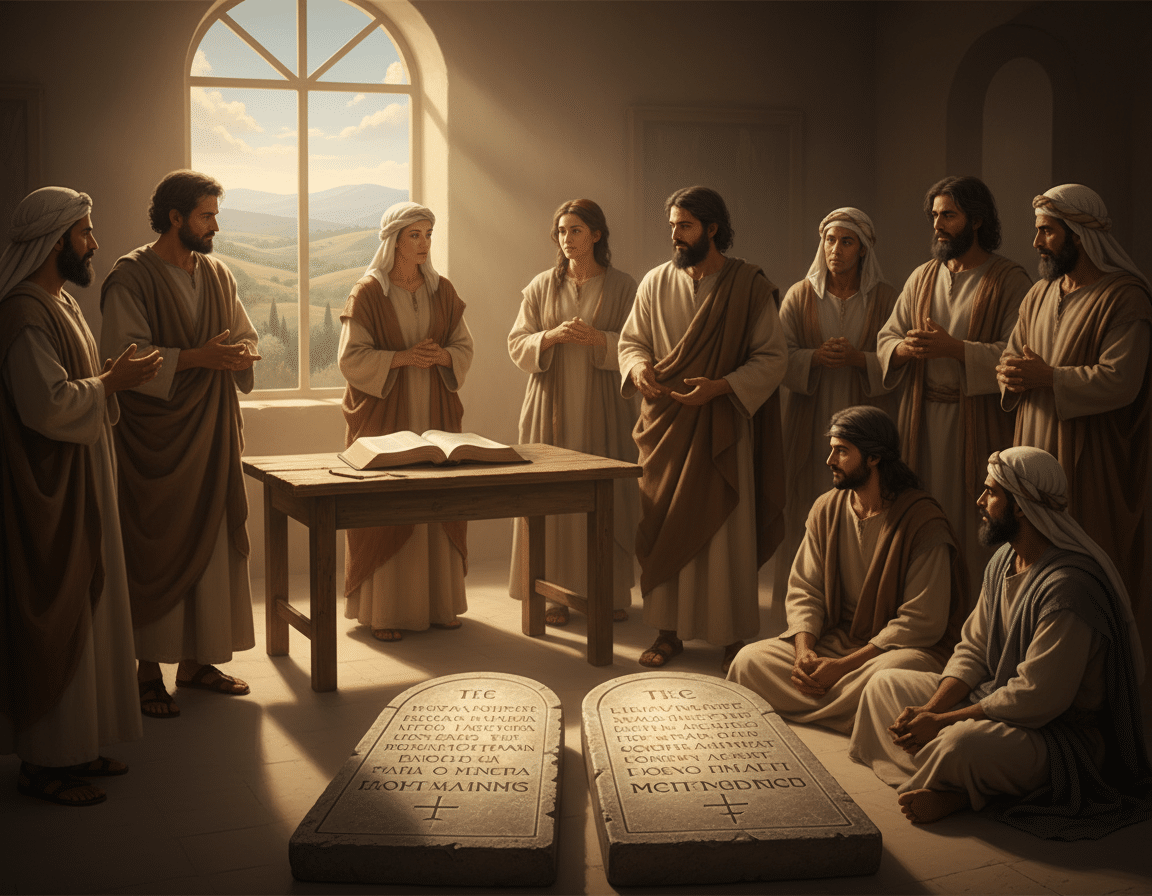
I locate the law in the old testament books Exodus and Deuteronomy. These chapters record the event at mount sinai and list the core laws that follow.
God speaks directly to Israel. Exodus 20:1 says God spoke “all these words” to the people. The people then asked Moses to stand between them and the LORD because they feared the direct voice.
God’s covenant prologue and the power of the name
“I am the LORD your God, who brought you out of Egypt.”
That opening line frames obedience as response to rescue. The LORD God’s name grounds the laws in a history of mercy. Reverence for the name connects worship and truthful speech.
Constitution and case law
I follow Kevin DeYoung’s helpful image: the commandments act like a constitution. Later statutes apply the core law with concrete cases and “if/when/whoever” language. This pattern shows how broad duty becomes specific duty in daily life.
Order and intent
The order matters. Duties to the LORD God come first. Duties to neighbor follow as a natural outflow. That sequence shows law as both vertical loyalty and horizontal care.
Next, I will show how Jesus honors this law and keeps its purpose intact in the New Testament.
Jesus, the New Testament, and the continuing use of the commandments
The new testament shows Jesus and Paul treating the commandments as alive and instructive.
“If you love me, keep my commands.”
I explain that love proves itself in action. John links love and obedience. Faith that rests only on talk will not pass his test.
Jesus fulfills the law
Matthew presents Jesus saying he fulfills the law and does not erase it. That claim keeps the commandments with moral force.
Law applied to the heart
Jesus broadens “shall murder” to condemn hidden anger. He expands “shall commit adultery” to include lust in the heart. These moves show that the law reaches inner wickedness, not just acts.
Examples from Luke and Paul
The rich ruler seeks eternal life and exposes a covetous heart. Paul uses Romans to show the law names sin and drives us to grace. Romans 13 ties several commands to love of neighbor, and 1 Timothy 1 lists public sins as truth tests for the church.
In practice, faith produces real obedience because Christ changes the heart and anchors truth for daily life.
How the Ten Commandments shape home, church, and daily work
Simple rules shape daily habits. I have seen how clear commands guide children in prayer, memory, and Scripture reading at home and in church.
Why children learn these guidelines in catechism
Church teaching has long placed the ten commandments at the center for new learners. Catechisms help children memorize short statements that link faith and duty.
Honor father mother as daily practice
“Honor father mother” shows up in small actions: polite speech, steady help, patience with care needs. I teach these actions as steps toward family repair and forgiveness when wounds remain.
Truth, theft, and work habits
The rule “you shall not bear false witness” keeps truth in speech at home and online. Ephesians 4:25 calls us to honest talk. Ephesians 4:28 forbids stealing and urges work so we can share and avoid shall steal temptations.
Adultery and covet as heart sins
Adultery and covet harm marriages, friendships, and community life. These sins begin in desire and show why God’s word trains the heart and habits.
| Home | Church | Work |
|---|---|---|
| Memory, prayer, family reading | Catechism, teaching, children’s classes | Honest pay, fair labor, no theft |
| Honor father mother in speech | Public confession and correction | Truthful reports, reliable performance |
| Repair through repentance and grace | Teaching duty and hope | Share earnings, help neighbors |
“Children, obey your parents in the Lord, for this is right.”
Conclusion
My claim is simple: Scripture’s brief rules guard faith and shape common life in practical ways.
I note that God spoke these words at Sinai and set a covenantal law that carries real authority. Jesus did not abolish that charge; he fulfilled it and called us to heart-level obedience (Matthew 5:17–19).
Paul shows the law exposes sin and presses us toward love for neighbor (Romans 13:8–9). In the United States, shared rules help restore trust and limit harm in public life.
I invite you to read Exodus 20 and to ask Christ for a faithful life shaped by God’s word. Act in hope and obey what you believe.