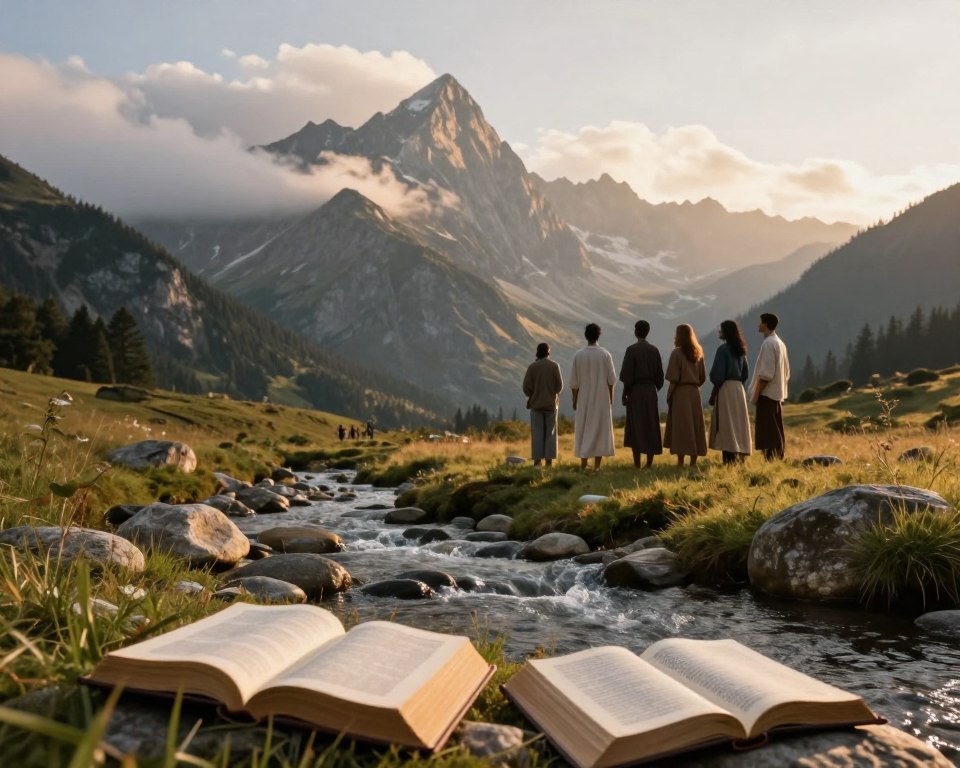
Have you ever stood before a majestic peak and felt a sense of awe, wondering if God was closer in those high places? The significance of mountains in the Bible goes far beyond their physical grandeur. They are sacred meeting points where heaven touches earth.
From the very beginning, God formed these heights on the third day of creation. He separated the dry land from the waters, establishing them as a place for divine encounter. Throughout Scripture, these elevated landscapes became the backdrop for humanity’s most profound moments with God.
These locations represent more than just geography. They symbolize unshakable strength, a sure refuge, and the awesome power of our Creator. When we explore their role in God’s word, we see a pattern of revelation and transformation.
I want to share with you why these high places hold such a special meaning for our faith today. They show us where God tests, teaches, and reveals His truth to His people.
Key Takeaways
- Mountains in biblical understanding are where Heaven and Earth meet.
- God formed these majestic places on the third day of creation.
- They served as the setting for pivotal events between God and humanity.
- Scripture uses mountains as symbols of strength, refuge, and God’s overcoming power.
- Studying these places helps us grasp deeper truths in biblical narratives.
- They remind us that God reveals Himself in specific, tangible ways.
- Understanding this symbolism can strengthen our personal faith journey.
Introduction to Biblical Mountain Symbols
In biblical times, a mountain was never just a mountain; it was a powerful icon of encounter. Scripture uses symbols to help our minds grasp God’s profound truths. These symbols act like bridges, connecting our earthly experience with heavenly reality.
To understand this, we look at the ancient worldview. Many cultures believed a great peak rose from primal waters. This mountain became the center of the world, where gods dwelled. God’s word reflects this idea of a sacred meeting point.
Definition of Symbolism
In God’s word, a symbol is a physical object or place that points to a deeper spiritual truth. It is not the truth itself, but a signpost leading us toward it. God uses symbols because they make complex truths about His character tangible and memorable for His people.
Purpose of Mountain Imagery
The purpose behind this imagery is clear. God chose high places as the focus for key revelations. An elevated location visually represents drawing near to God’s presence. It shows Him reaching down to meet us in a specific, unforgettable way.
Every mention of a peak in Scripture invites us to see a place of transformation. These events remind us that God actively seeks connection. Understanding this symbolism strengthens our own faith journey today.
Foundations in Creation and Early Texts
From the moment God shaped the earth, He established a pattern for meeting with His people. This pattern finds its roots in the very first pages of Scripture.
Mountains in the Genesis Narrative
On the third day of creation, God spoke. He commanded the waters to gather into one place. The dry land appeared. Within this act, God formed these high places as part of His perfect design.
This was not just geography. It was the foundation for all future encounters.
The Garden and the Cosmic Mountain
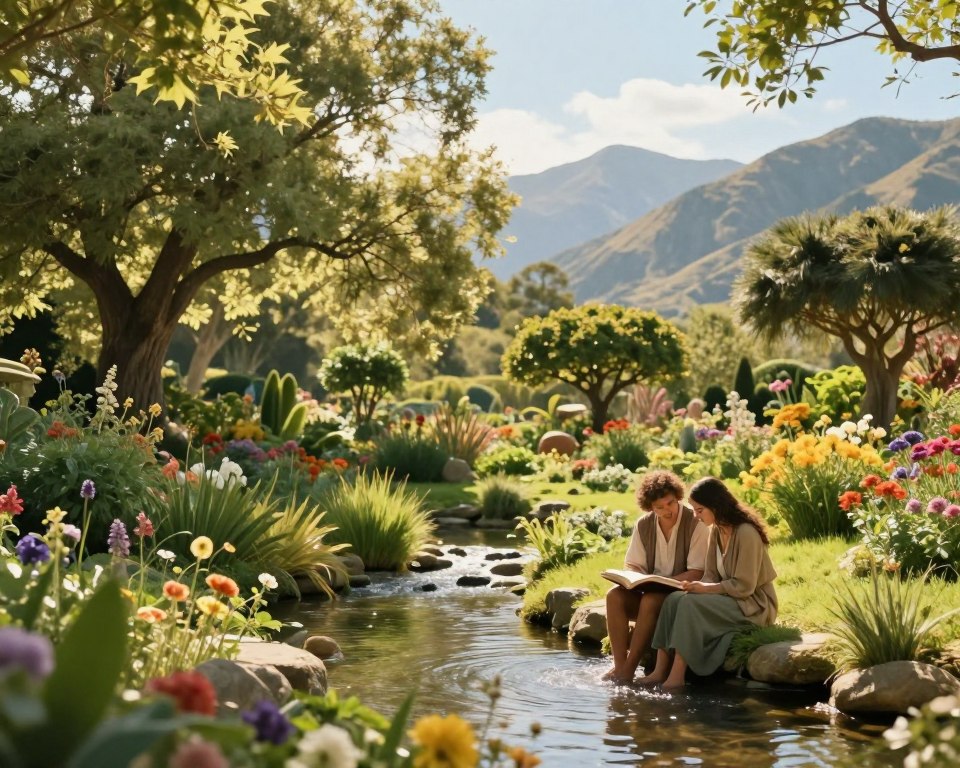
God then placed humanity in a garden. Scripture later reveals this garden, Eden, was planted on a peak. It was the first “cosmic mountain.”
This elevated garden was where Heaven and Earth connected. God walked there with Adam and Eve. It was a place of perfect harmony between Creator and creation.
From this mountain, a river flowed out. It branched to water the entire land. This shows us God’s design for life starts at the point of communion with Him. You can see this theme of water from a divine source echoed in lessons about healthy living through Scripture.
So, from the beginning, God used elevated places to dwell close to us. Eden set the pattern we see throughout God’s word.
Divine Encounters on Mountain Tops
Scripture shows us a consistent pattern. God often calls His people upward to meet Him. These high places became the primary setting for revelation.
Leaving the flatlands behind required effort. This climb symbolized a shift in focus. Individuals entered a sacred space for divine conversation.
Meeting God on High
An ascent meant leaving ordinary concerns. The top provided separation from daily noise. Here, God’s extraordinary presence became tangible.
Prophets like Moses and Elijah climbed for instruction. They received revelation at these heights. Their encounters equipped them to guide nations.
This pattern teaches a vital faith lesson. Drawing near to God requires intentional effort. We must step away from distractions to hear Him clearly.
| Person | Location | Divine Purpose |
|---|---|---|
| Abraham | Mount Moriah | Test of faith and provision |
| Moses | Mount Sinai | Receiving covenant law |
| Elijah | Mount Carmel | Demonstration of God’s power |
| Jesus | Mount of Transfiguration | Revelation of divine glory |
Encountering Wisdom and Instruction
God gave specific direction at these peaks. The place itself focused attention on His word. Wisdom flowed from those meetings.
These encounters transformed the individuals involved. They gained courage and clarity for their calling. Others witnessed God’s power through them.
For us, the pattern remains. God still meets seeking hearts. He provides the wisdom His people need when we ascend to Him in faith.
Key Mountain Events in Biblical Stories
Two pivotal stories show God’s redemptive plan unfolding on high ground. These events mark clear moments of divine intervention and revelation.
Noah’s Ark and the Mountains of Ararat
Noah’s ark came to rest on the mountains of Ararat. This event signaled the flood’s end.
God preserved faithful Noah and his family. The landing of the ark symbolized a fresh start for all people. It showed God’s promise to save those who trust Him.
Jesus’ Transfiguration and Prayer
Jesus took Peter, James, and John up a high mount. His appearance transformed before them. He spoke with Moses and Elijah.
This transfiguration revealed Christ’s divine glory. It confirmed His identity as the fulfillment of God’s word.
Jesus often went to the Mount Olives to pray. He sought the Father’s will during difficult times. The garden called Gethsemane, located there, holds that name.
There, Jesus submitted fully to God’s plan for our salvation.
The Role of Mountains in Abraham’s Test
Mount Moriah stands as a landmark where human surrender met divine provision. God called Abraham to this specific mount for a supreme test of faith. This event defined trust for all who follow God.
The test centered on Abraham’s promised son, Isaac. God instructed Abraham to offer Isaac as a sacrifice at that sacred place.
Sacrifice on Mount Moriah
Abraham obeyed. He journeyed to the mount with his son. He prepared the altar in complete trust.
As Abraham raised the knife, God intervened. He provided a ram caught nearby. This act revealed God as our ultimate provider.
Abraham named the site “The Lord Will Provide.” He recognized this location as a place of life. God confirmed His promise to Abraham’s family through this act.
God’s plan to bless all nations flowed through this family. Abraham’s trust made him God’s partner. This mountain encounter shows us that God tests our faith to strengthen it.
Mount Sinai: Revelation and Covenant
At Mount Sinai, God’s presence descended with undeniable power to establish a lasting covenant. This location became the sacred ground where He formalized His relationship with Israel. God promised to make them a holy nation if they followed His wisdom.
Thunder, Flame, and the Ten Commandments
The people witnessed a dramatic display. Thunder, lightning, and fire covered the peak. They felt deep fear at this powerful manifestation.
God invited the nation to ascend and meet Him. The people asked Moses to go in their place. He climbed up and received the Ten Commandments on stone tablets.
These laws established a clear, divine order. They showed how to relate to God and to each other. This foundation aimed to shape a holy community.
| Divine Manifestation | Human Response | Covenant Outcome |
|---|---|---|
| Thunder, Fire, Trumpet Blast | Fear and Reluctance | Invitation to Relationship |
| God’s Voice from the Peak | Request for Moses as Mediator | Moses Ascends on Their Behalf |
| Giving of the Law | Commitment to Obey | Foundation for a Holy Nation |
Moses’ Experience with God
Moses went alone to the top. He met God directly in that sacred space. He received detailed instructions for worship and daily life.
This encounter showed God’s desire to dwell among His people. Through Moses, God provided clear guidance for faithful living. We learn that God offers wisdom to all who draw near in trust.
Mount Zion: The Dwelling of God
When King David established his city on a sacred hill, he created a permanent center for God’s presence. This place, called Mount Zion, shifted the focus of worship for God’s people. It became the tangible location where heaven met earth in a new way.
The City of Our God
The City of David on this hill housed the temple. God’s presence dwelt there among His people. Scripture sings of this location with great joy.
“Great is the Lord, and greatly to be praised In the city of our God, His holy mountain. Beautiful in elevation, the joy of the whole earth, Is Mount Zion in the far north, The city of the great King” (Psalms 48:1-2 NASB).
Prophets saw this mount as the future heart of God’s kingdom. They spoke of a perfect ruler from David’s line. This king would bring God’s justice and love to all nations.
| Aspect of Mount Zion | Historical Reality | Prophetic Promise |
|---|---|---|
| Political Center | Capital established by David | Future throne of the Messiah |
| Worship Center | Home of the temple | All nations will stream to it |
| Divine Presence | God dwelt in the midst of Israel | God will live with His people forever |
This vision points us to a heavenly city. God’s ultimate focus is making His home with us. Zion reminds us of His faithful promise to dwell among those who love Him.
Other Significant Mountains in Biblical Narratives
Beyond the most famous peaks, other elevated sites in Scripture hold profound lessons for our faith. These significant mountains are not just backdrops. They are active participants in God’s revelation to His people.
The Mount of Beatitudes
The Mount of Beatitudes is also known as the place where Jesus delivered the Sermon on the Mount. On this mount beatitudes, He taught the principles of kingdom living. The famous Beatitudes describe true blessing for His followers.
The Mount of Olives
The Mount of Olives, also known as Olivet, held great importance in Jesus’ ministry. He used this mountain for teaching and deep prayer. Its prophetic significance points directly to prophecies fulfilled in the New Testament.
Metaphors of Strength and Refuge
Mount Carmel became a known mount for a dramatic showdown. The prophet Elijah confronted the prophets of Baal there. Fire fell from heaven, proving the Lord alone is God.
This event on Mount Carmel shows God’s overcoming power. Scripture often uses a high hill as a metaphor for His strength. The prophets described God’s protection as a firm refuge.
Each of these significant mountains played a unique role. They reveal God’s character and advance His purposes for all people.
Exploring Mountains in the Bible
Biblical narratives present high places as dual realities: tangible locations and spiritual signposts. When we explore these peaks in Scripture, we see they function both as real geography and as powerful symbols of faith.
These elevated sites were actual places where history unfolded. Yet they always carried a deeper meaning. God’s word uses their imagery to reveal His character and His desire to meet with us.
Literal Locations vs. Spiritual Symbols
At times, a mountain represents an impossible obstacle. God shows His power by moving it. Other times, a hill becomes a place of refuge, symbolizing His protection.
The significance of this imagery spans from Genesis to Revelation. Each site serves a purpose in showing who God is.
I lift up my eyes to the hills— from where does my help come? My help comes from the Lord, who made heaven and earth.
Understanding this dual nature enriches our reading of God’s word. It deepens our appreciation for His truth. We see that biblical mountains are not just backdrops. They are active participants in His story.
| Mountain Site | Literal Function | Symbolic Meaning |
|---|---|---|
| Mount Sinai | Location for giving the Law | God’s holy presence and covenant |
| Mount of Olives | Place of prayer and prophecy | Divine accessibility and hope |
| Mount Carmel | Site of dramatic showdown | God’s overcoming power |
This pattern reminds us that God uses physical places to teach spiritual truths. He meets us in specific times and locations. Yet His lessons point to eternal realities.
Conclusion
Our exploration of biblical peaks concludes with a powerful truth. God invites us upward.
From the days of creation to the times of the prophets, these high places served as the center for divine meetings. God drew near to His people to guide and transform them.
Jesus Christ now stands as the true mountain. He is the new place where Heaven and Earth meet. He calls all people to ascend, choosing God’s wisdom so His blessing flows to every land.
This hope extends to every family and nation. May we, like others before us, respond to this invitation. Let our encounters with God’s truth change our hearts forever.