In the Bible the desert is a real place first and a symbol second. It is dry, unfarmed country where flocks graze, travelers run out of water, and God keeps his people alive anyway. Scripture puts Israel, Moses, Elijah, John, and Jesus there for testing, judgment, refuge, and revelation. So the desert carries a meaning you can check on a map before you apply it to your week: hard ground, real hunger, and a God who feeds people who cannot feed themselves.
Last updated: 2026-08-01
What does the desert mean in the Bible?
It means uninhabited, uncultivated land. It also means whatever God does with his people once he has them out there. Both halves matter, because the text never treats the wilderness as scenery.
Deuteronomy 8:2-3 gives you the plain reading. God led Israel in the wilderness to humble them, to test them, and to teach them that people do not live on bread alone. They live on every word that comes from the mouth of the Lord. Read the verses on either side of it and you will see the same lesson twice.
Here is the biblical meaning in one sentence: a place stripped bare enough that dependence becomes visible. However, notice what the text withholds. It never says every dry place is holy. It never says suffering teaches anything on its own.
The Hebrew and Greek words behind our word "desert"
English Bibles use "desert" and "wilderness" for several different words. Knowing which one sits under the translation keeps you from importing sand dunes into passages that describe pasture.
| Word | Language | Plain sense | Where you meet it |
|---|---|---|---|
| midbar | Hebrew | open country used for driving flocks out to graze | Exodus 3:1; Numbers 14 |
| arabah | Hebrew | the deep rift valley running down toward the Dead Sea | Deuteronomy 1:1 |
| yeshimon | Hebrew | trackless waste, land with nothing in it | Deuteronomy 32:10 |
| tsiyyah | Hebrew | parched, waterless ground | Psalm 63:1 |
| erēmos | Greek | a deserted or lonely place | Mark 1:12-13; Luke 5:16 |
You will hear that midbar means "the place where God speaks," because the same three letters can build the word for speaking. The letters do overlap. Still, the meaning does not follow from that. Midbar most likely comes from a root for driving flocks to pasture, which fits the shepherd country it names. It preaches well. Treat it as a devotional pun, not a translation.
Most biblical wilderness was pasture country
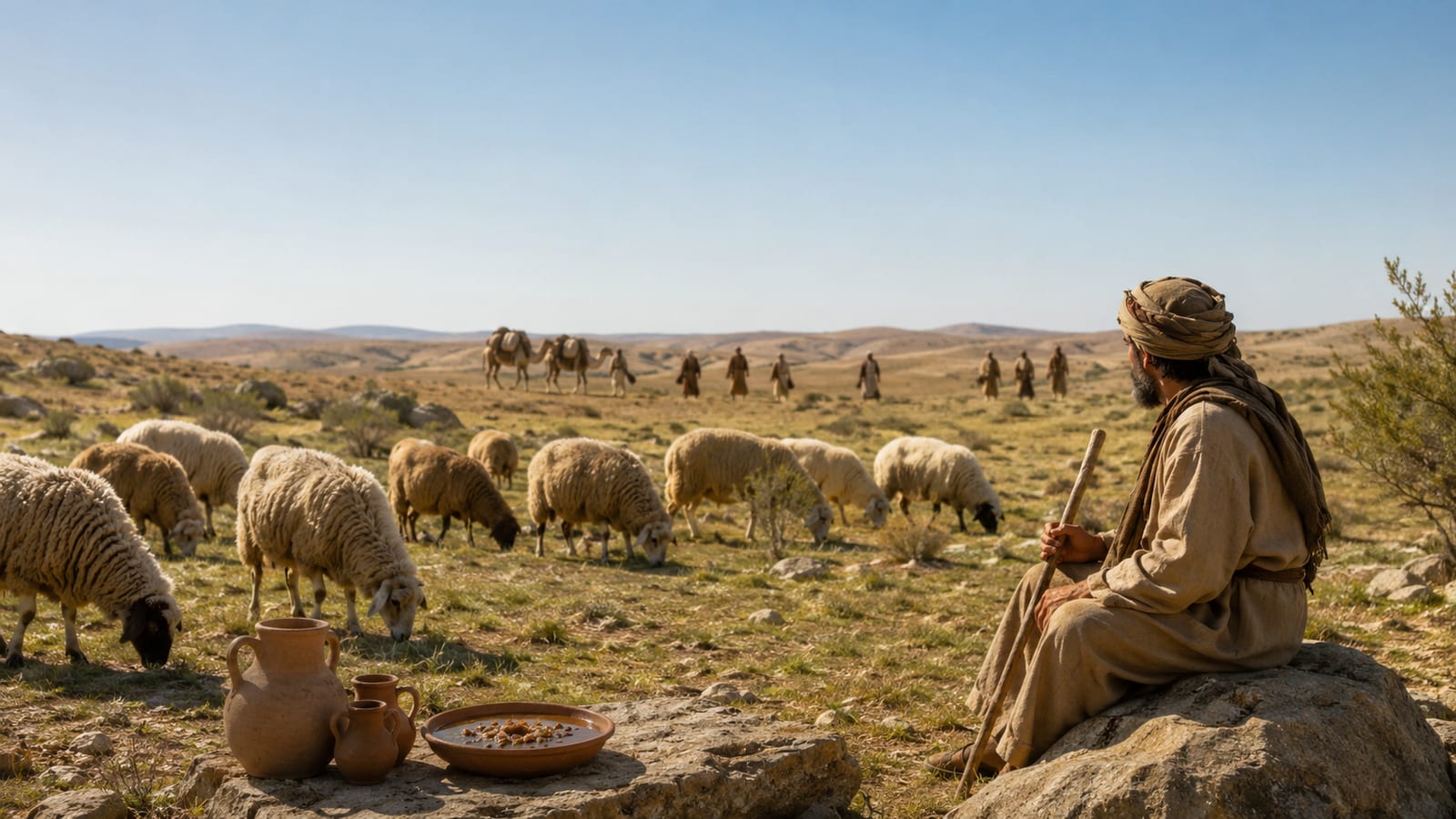
Picture the hills east of Jerusalem in the Judaean Desert: thin grass after the rains, bare limestone, deep gullies, and shepherds moving flocks between them. That is midbar. For example, Moses was tending his father-in-law's flock in the wilderness when God met him at the burning bush near Horeb, according to Exodus 3:1-6. Sheep do not eat sand.
Other passages do mean bone-dry waste. David calls it a dry and thirsty land where no water is in Psalm 63:1. He wrote that while hiding, and the line is about thirst.
Because the geography varies, the mood varies. As a result, a wilderness passage can carry pasture, exile, or death depending on the chapter. The only way to know is to read the chapter.
Why Israel stayed in the wilderness so long
Israel stayed out there because they refused to enter the land. Numbers 14 is blunt about the reason, and it has nothing to do with God needing extra time to shape their character. The people believed the ten spies over God's promise, so God swore that generation would die in the wilderness.
Still, judgment was not the whole story. Deuteronomy 8:4 says their clothes did not wear out and their feet did not swell. God fed rebels while the sentence ran.
Hold both. If you only preach the tender part, Numbers 14 embarrasses you. If you only preach the sentence, you have to explain the manna.
How God tested Israel and what he supplied
The test was simple and repeated: will you take today's provision on God's terms? Exodus 16 gives them bread they had never seen. Instructions came with it about when to gather and when to stop.
Water came the same way. At Rephidim the people quarreled because there was nothing to drink. Moses struck the rock and water came out for the Israelites, according to Exodus 17:1-7. God answered a complaint with a drink, which is worth sitting with for a minute.
Guidance came as a pillar of cloud and fire in Exodus 13:21, moving when God moved. Meanwhile the discipline was real, and Numbers 21:6 records serpents among the people after another round of complaining. For more on how water works as a picture of provision, the pattern holds from Exodus to the Gospels.
Scripture treats the wilderness as a dangerous place
Hunger, thirst, snakes, raiders, heat, and exposure. That is the biblical inventory, and no writer in Scripture calls the desert restful. Hagar set her son under a bush in Genesis 21:15-16 because she expected him to die there.
Elijah asked God to take his life under a broom tree in 1 Kings 19:4. An angel brought him food and made him sleep before anything else happened. God treated exhaustion as exhaustion.
So when someone tells you the wilderness is where the soul finally finds quiet, check it for yourself against these chapters. The quiet in them belongs to people with no options left.
Why did Jesus go into the wilderness?
Because the Spirit drove him there for a fight, and he went where Israel had failed. He spent forty days in the wilderness and was tempted by the devil, according to Matthew 4:1-11, Mark 1:12-13, and Luke 4:1-13.
Notice how he answers. Jesus answered the wilderness temptations by quoting Deuteronomy 8:3, Deuteronomy 6:16, and Deuteronomy 6:13, according to Matthew 4:4, 4:7, and 4:10. Every reply comes from the book about Israel's wilderness years.
He used no new revelation and no private word. He used the text a shepherd boy could have memorized, hungry, with nobody watching.
God does meet people in lonely places
Moses at the bush, Hagar by the spring, Elijah at Horeb, John preaching in the wilderness of Judea in Matthew 3:1, and Jesus withdrawing to lonely places to pray in Luke 5:16. The pattern is real, so do not explain it away.
However, God also spoke in a crowded temple to Isaiah, in a prison to Paul, and at a dinner table to the disciples. Solitude is a setting he uses, not a lever you pull.
Here is where I would mark the boundary. The text says God met these people in remote places. It never promises that going somewhere remote will get you an answer.
Where Scripture ends and "desert season" begins
The Bible does describe spiritual dryness. Psalm 63:1 does it directly, and Hosea 2:14 has God leading his people into the wilderness to speak tenderly to them. Using that language for a hard stretch in your life is fair.
What Scripture never does is tell you that every hard year is a coded assignment. It does not say dryness proves you sinned. It does not say God engineered your layoff as a lesson. That inference is ours, and we should say so out loud rather than dress it in a verse.
Sometimes a hard season is just a hard season. Job's friends were the ones with the tidy explanation, and God corrected them in Job 42:7. Naming how difficulty and growth relate honestly beats claiming every trial has a decoded meaning.
How Adventists read the desert theme
Adventists read Israel's wilderness as history first, then as a warning written down for us, the way Paul reads it in 1 Corinthians 10:11. The lesson is trust and obedience, in that order, with grace first and obedience after.
Revelation 12:6 keeps the theme going. It pictures God's people preserved in the wilderness for a long stretch of time. Adventists have historically read that as God protecting faithful believers through centuries of pressure. It says nothing about your calendar.
Here is the honest seam. The wilderness texts themselves are about Israel and about Christ. The application to a waiting church is a conclusion we draw, and a reasonable one, though it belongs in the second row.
Does the desert teach minimalism?
It teaches that you were never self-sufficient. Owning less does not make you holier, and Scripture never claims it does. Israel ate bread they did not bake and drank water they did not find. That is the point Deuteronomy 8:17-18 presses: do not say my power made me this wealth.
Paul learned contentment in plenty and in hunger, according to Philippians 4:11-12. Both conditions made his list.
So strip what distracts you if it helps. Just do not confuse a smaller grocery bill with a deeper faith, and do not preach your budget as a command.
What to do before next Sabbath
Read Deuteronomy 8 in one sitting, out loud if you can. It is short, and Jesus reached for it when he was hungry.
Then take three steps this week:
- Write down the one place you are currently trusting your own competence.
- Pray Deuteronomy 8:3 back to God in your own words, naming that place.
- Do one concrete obedient thing you have been postponing, before sundown Friday.
You may not feel different. Feeling was never the test, and patience is part of how faith works over a long stretch.
FAQ
Why do some Bibles say "desert" where others say "wilderness"?
Translators are choosing an English word for midbar and its relatives, and neither choice is wrong. Older versions lean on "desert," which modern readers hear as dunes. So if your version says desert, mentally test whether the passage describes pasture, valley, or waste.
Does the Bible ever show the desert changing?
Yes. Isaiah 35:1-2 says the wilderness and the dry land will be glad and the desert will blossom. It describes what God will do to the land itself, and shrinking that promise into advice for a rough month sells it short.
What does the wilderness mean in Revelation?
Revelation 12:6 and 12:14 place the woman, meaning God's faithful people, in the wilderness where she is nourished and kept safe. There the wilderness works as shelter from a hunting dragon rather than as punishment.
Should I plan a solo retreat in a literal desert?
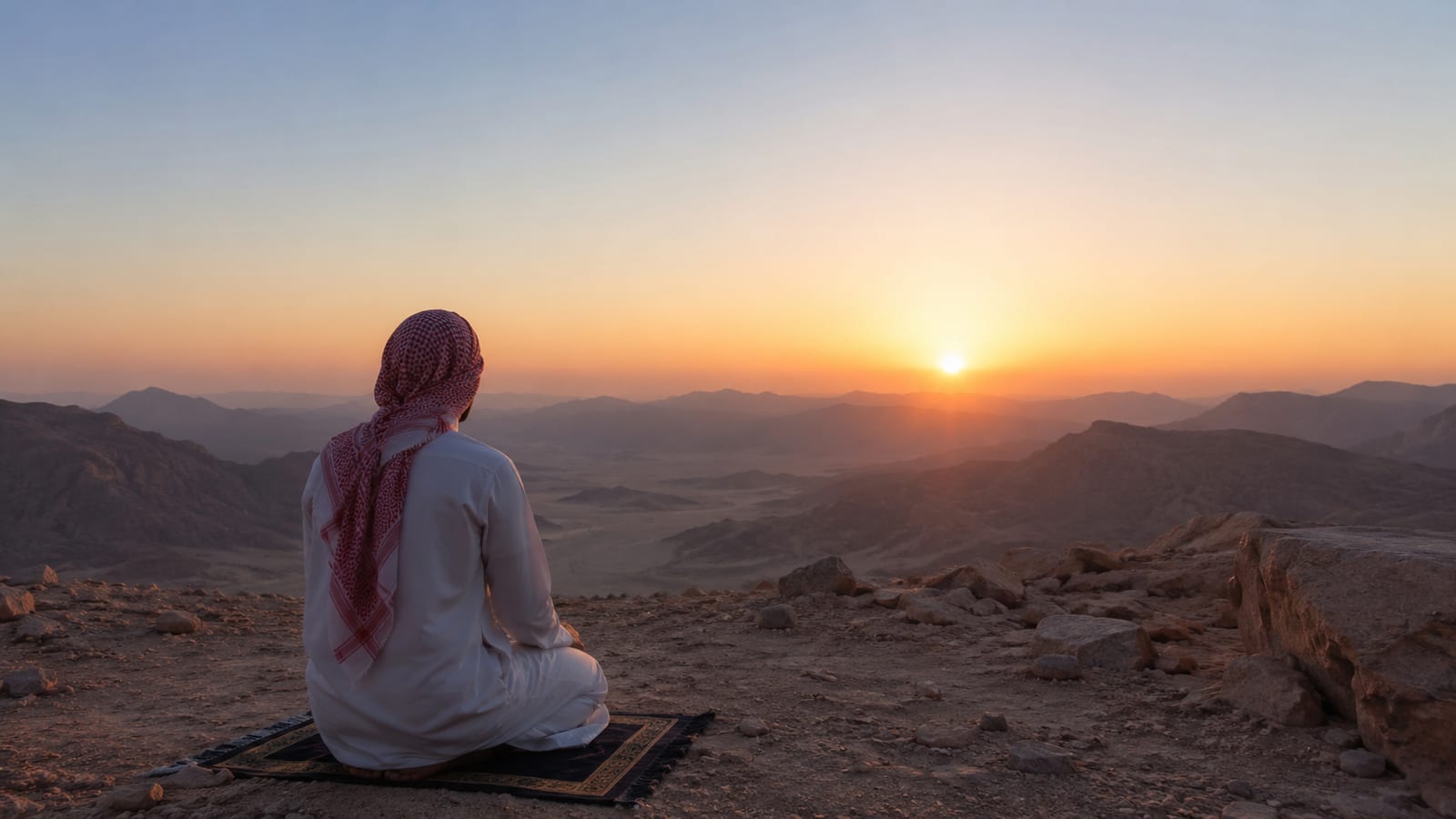
Go if it helps you pray, and take water and a map. Nothing in Scripture makes it required, and nothing in Scripture promises a message in return. An open Bible and an unhurried Sabbath afternoon will do the same work closer to home.