
What Prophecy Says About God’s Law

Ten Commandments in prophecy

Have you ever wondered why Scripture returns to God’s law across ages and visions?

I write to explain what prophecy says about God’s law and why Scripture links future work with moral rule. I state plainly that prophecy points people back to the lord and to obedience.

The full law is given in Exodus 20:2-17 and repeated in Deuteronomy 5:6-21. God speaks as Redeemer first, for He declares He brought Israel out of Egypt before He gives the commands (Exodus 20:2).

In this article I will summarize each command, show Jesus’ teaching on the law, and apply the law to daily choices. My aim is hopeful: God’s word still guides faith and life, and Scripture keeps these truths before us.

Table of Contents

Key Takeaways

  • I define the phrase ten commandments in prophecy as Scripture linking future work with God’s moral law.
  • Prophecy redirects people to the lord god and to faithful obedience.
  • The law appears first in Exodus 20:2-17 and again in Deuteronomy 5:6-21.
  • God presents Himself as Redeemer before giving each command.
  • The article will offer a command-by-command summary, Jesus’ teaching, and practical steps for daily faith.

Why prophecy points to God’s law

Prophecy repeatedly directs attention to the law because the law anchors covenant life and guides faithful conduct. I will show how Scripture sets the law after rescue, repeats the law for a new generation, and links prophecy with obedience.

God speaks after rescue

“I am the Lord your God, who brought you out of the land of Egypt, out of the house of bondage.” (Exodus 20:2)

Exodus places rescue before rule: God delivers Israel, then gives commands. The Sinai scene is dramatic—fire, smoke, and a trembling mountain (Exodus 19:18).

Moses records and repeats the law

Moses sets the commands in Exodus and repeats them in Deuteronomy after the wilderness years. The repetition renews the covenant for a fresh generation and for steady obedience over years.

Prophecy links obedience and love

“I will show steadfast love to those who love me and keep my commandments.” (Exodus 20:6)

  • I note the order: God rescues, then gives the law.
  • Prophecy calls a man back to God’s word to correct drift.
  • The Bible’s call to keep commandments ties faith to action.
A majestic scene of "Lord God" depicted as a radiant, ethereal figure enveloped in a gentle divine light. In the foreground, an open Bible rests on a rustic wooden table, its pages softly illuminated by natural light, symbolizing divine law and wisdom. In the middle ground, the figure of God is portrayed with a serene expression, wearing flowing robes that evoke a sense of peace and authority, surrounded by subtle, golden rays. The background features a tranquil landscape with soft hills and a clear sky, enhancing the atmosphere of calmness and faith. The lighting is warm and inviting, casting soft shadows to evoke a sense of reverence and warmth, inviting contemplation of God's law.

Each command functions as a clear guardrail for worship and daily life. In the next section I will examine those commands and their meaning for worship and neighborly duty.

Ten Commandments in prophecy and what the text says

The Sinai text arranges commands to teach loyalty to the Lord God and care for others. I walk through the rules in the order of Exodus 20:2-17 and state what the text plainly says.

The first commands show love for the Lord God

You shall have no other gods keeps worship from splitting loyalty. This command puts the Lord first.

“You shall make” no idol or carved image

You shall make no carved image. The rule stops image worship and protects true knowledge of God.

“You shall take” no misuse of the name of the Lord God

You shall take no false use of the name Lord God. Speech and vows must honor God and guard public witness.

Remember the sabbath day

Exodus states: six days shall people labor, and the seventh day is a sabbath to the Lord your God.

“For in six days the Lord made heaven and earth, the sea, and all that is in them, and rested the seventh day: wherefore the Lord blessed the sabbath day, and hallowed it.” (Exodus 20:11)

Observe the Sabbath day and freedom

Deuteronomy calls us to observe the day and remember freedom from slavery. The seventh day sabbath ties rest to rescue.

The commands show love for neighbor

Commands that follow protect family, life, marriage, goods, truth, and the heart.

Neighbor duties summarized

  • Honor father mother so days may be long in the land.
  • You shall not kill upholds the value of life.
  • Shall commit adultery is forbidden; marriage is protected.
  • Shall not steal defends a neighbor’s property.
  • Bear false witness forbids lies against your neighbor.
  • Shall covet neighbor and covet neighbor wife are sins of desire.

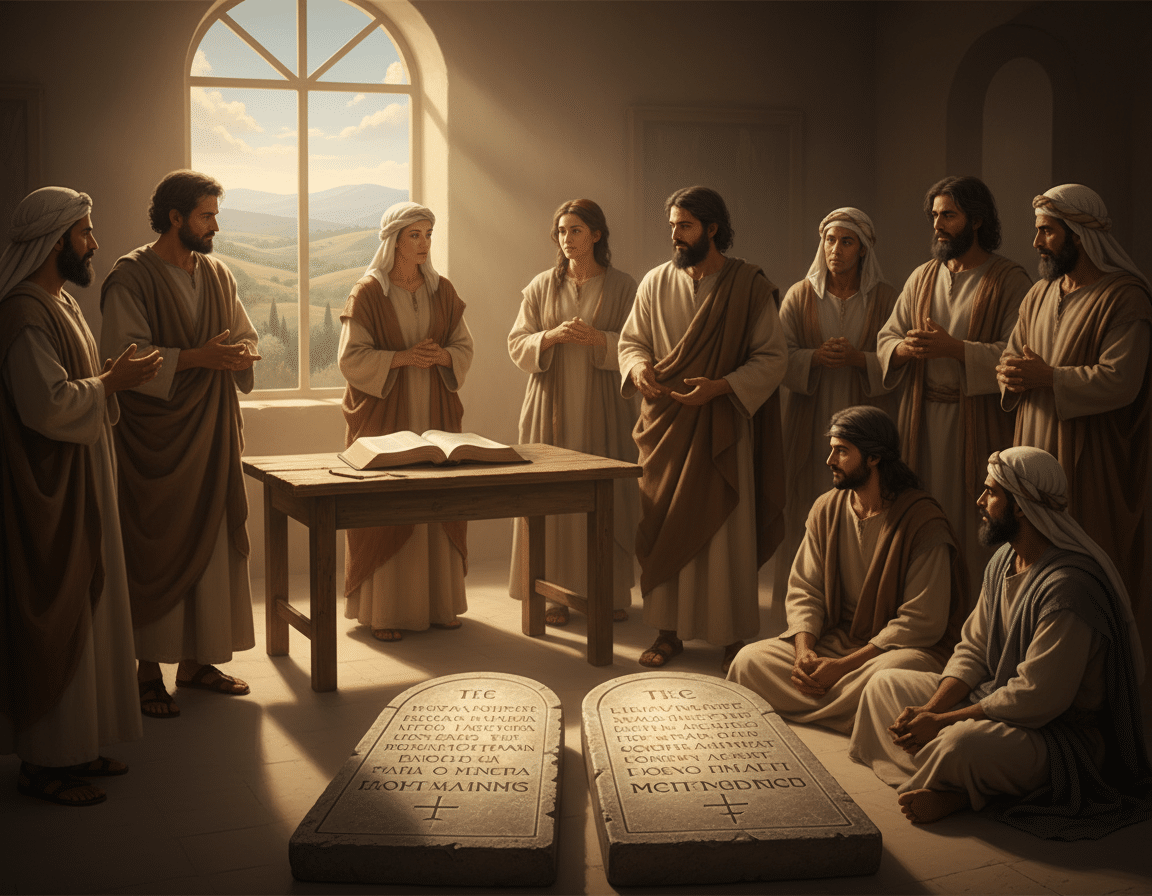
A serene scene depicting the Ten Commandments on two stone tablets, prominently placed in the foreground. The tablets, engraved with ancient Hebrew script, should be illuminated by soft, natural light that creates a warm and inviting atmosphere. In the middle ground, an open Bible rests on a wooden table, its pages slightly fluttering as if a gentle breeze is present, symbolizing divine inspiration. In the background, a tranquil landscape with rolling hills and a clear blue sky enhances the sense of peace. The composition should be shot from a slightly elevated angle, capturing the depth of the scene while evoking feelings of reverence and contemplation. The overall mood is calm and reflective, embodying the essence of faith and the significance of God’s law.

Command GroupMain FocusKey TextPractical Effect
WorshipNo other gods, no idols, honor nameExodus 20:3-7Loyalty, true worship, honest speech
RestRemember Sabbath, six days shall laborExodus 20:8-11; Deut. 5:12-15Rhythm of work and rest; freedom remembered
NeighborHonor parents; prohibit killing, theft, adulteryExodus 20:12-14,15Stable homes, protected life, secure property
Truth & HeartBear false witness; do not covetExodus 20:16-17Public truth, guarded desire

Jesus and the commandments in the New Covenant

Jesus teaches that the law endures and directs a life of love toward God and neighbor. He says He does not come to destroy the Law and the Prophets but to fulfill them. This shows He honors God’s word and calls people to obey by faith.

Jesus does not destroy the Law and the Prophets

“Do not think that I have come to abolish the Law or the Prophets.” (Matthew 5:17-19)

I read this as a firm statement: the law remains a guide for the man who follows Christ.

Keep the commandments to enter life

“If you want to enter into life, keep the commandments.” (Matthew 19:17)

This plain command ties obedience to the promise of life. Jesus links faith and action without contradiction.

Law summed as love for God and neighbor

Jesus sums the rule as love for the Lord God and love for neighbor. That summary unites worship commands and neighbor duties into one ethic.

Paul and Hebrews on the law within

Paul calls the commandment holy, just, and good. He says the law shows God’s truth and mind to the believer. Hebrews adds that God writes His law in hearts and minds under the New Covenant.

I find hope here: Christ grants pardon and power. Obedience shapes daily choices toward God and others. For further reading on how Exodus frames God’s law, see what Exodus teaches about God’s law.

How the commandments guide daily choices today

Daily life tests faith through small acts. I show how God’s law guides common decisions in speech, marriage, work, and rest.

Truth in speech: bear false witness and false witness neighbor

Bearing false witness harms a neighbor quickly. A false work report, a misleading post, or a careless court claim can damage a reputation.

I urge careful speech. Name facts clearly. Correct errors promptly. Protect your neighbor by telling the truth.

Faithfulness in marriage: shall commit adultery and commit adultery

Shall commit adultery forbids betrayal of marriage. Guard time, loyalty, and the home to keep trust intact.

I counsel clear boundaries: honest schedules, open talk, and faithful affection. A Christian honors God and honors a spouse through daily fidelity.

Work and rest: six days shall labor work and remember sabbath day

“Six days you shall labor, and do all your work; but the seventh day is a Sabbath to the Lord your God.” (Exodus 20:9-10)

Plan your week so work and worship balance. The day sabbath lord calls for worship, rest from regular labor, and mercy toward others at home.

Deuteronomy links Sabbath to freedom. Remember sabbath day as a sign of rescue and as a source of steady hope.

I invite you to keep commandments not as duty alone, but as a grateful response to Christ’s love and God’s truth.

Conclusion

Biblical prophecy steers hearts to the Lord and to faithful obedience.

I state the main message plainly: prophecy calls people back to the Lord and to observance of God’s commandments. Exodus and Deuteronomy show the pattern—God rescues first, then teaches how to live.

Remember the Sabbath as a weekly sign of trust, rest, and worship. Jesus places love for God and love for neighbor at the heart of the law (Matthew 22:37–40).

Hebrews assures us that God writes the rule on hearts and minds under the new covenant (Hebrews 8:8–10). God gives power to obey through Scripture and the Holy Spirit.

I invite you to read Exodus 20 and Deuteronomy 5, to pray for obedience, and to walk with Christ in daily choices.


FAQ

What does prophecy say about God’s law?

Prophecy affirms that God’s law reveals His character and moral order. Scripture links the giving of the law to God’s deliverance of Israel from Egypt, showing that the commandments guide a people freed by God to live in covenant faithfulness. I explain this as a call to obedience rooted in God’s love and justice.

Why does prophecy point to God’s law?

Prophetic books often call Israel back to covenant fidelity, and the law stands at the center of that covenant. Prophecy condemns idolatry and social injustice while urging a return to the statutes God gave after bringing Israel out of Egypt. The law functions as the covenant’s moral compass in prophetic warning and hope.

How does Scripture show that God spoke the commandments after rescuing Israel from Egypt?

Exodus records God delivering Israel and then speaking the commandments at Sinai. That historical setting ties the law to God’s act of salvation. The law is given to a redeemed people so they might live distinct, faithful lives in the land God provides.

Where are the commandments recorded and repeated in the Bible?

The commandments are first recorded in Exodus 20 and later restated in Deuteronomy 5. Moses presents the same core commands with pastoral explanation, emphasizing obedience as the response of a grateful people to God’s saving acts.

How do prophecy and obedience connect in the Bible’s message about “keep my commandments”?

Prophets link moral reform and spiritual renewal to wholehearted obedience. Keeping God’s commandments is portrayed as evidence of true faith and trust. Prophecy promises blessing for obedience and warns of consequences for persistent disobedience.

How do the first commands express love for the Lord God?

The opening commands demand exclusive worship of the one true God and forbid idols. They call for reverence for God’s name and a Sabbath that honors Him. Together these duties shape a life centered on love and loyalty to God.

What does “You shall have no other gods” and “you shall make no idol” mean for believers today?

These commands call us to single-hearted devotion and to reject anything that replaces God—whether images, possessions, or ambitions. I teach that genuine worship involves both avoiding false objects of trust and actively honoring God in word and deed.

What is the command about taking the name of the Lord in vain?

The command warns against misusing God’s name through false oaths, flippant speech, or exploiting God for personal gain. Respect for God’s name reflects reverence for His character and truth.

How does “Remember the Sabbath day” relate to the seventh-day Sabbath in Exodus 20?

Exodus 20 establishes the seventh day as a Sabbath set apart to remember God’s creative and redemptive work. Observing the Sabbath is an act of worship and trust, a weekly reminder of God’s sovereign care.

How does Deuteronomy link Sabbath observance to freedom?

Deuteronomy frames the Sabbath as a sign of deliverance—God’s rest after freeing Israel from Egypt. Sabbath observance is therefore both worship and witness: it proclaims that God alone brings true liberation and provision.

How do the commandments show love for neighbor?

Many commands protect relationships and social order: honoring parents, protecting life, safeguarding marriage, respecting property, and insisting on truthful speech. These laws cultivate a community where love and justice flourish.

What does “Honor your father and mother” promise?

The command promises long life in the land as a blessing tied to family stability and societal health. Honoring parents fosters respect across generations and supports the well-being of the community God has given.

How does “You shall not kill” affirm the value of life?

This command protects human life as sacred, reflecting God’s image in every person. It forbids unjust violence and calls believers to preserve and honor life in all relationships.

What does the law say about adultery and marriage?

The command forbidding adultery upholds marriage as a covenant relationship. It protects faithfulness, trust, and family integrity. I teach that sexual faithfulness honors God’s design for marriage and community stability.

What does “You shall not steal” require of us?

This command demands respect for others’ property and work. It calls for honest labor, fair dealing, and concern for those in need—practical expressions of love for neighbor.

Why is bearing false witness forbidden?

False witness undermines justice and damages neighbor relationships. Truthful speech is essential for a just community; the command protects reputation, fair trials, and communal trust.

What does “You shall not covet” address?

The prohibition against coveting targets inner desire, not just outward action. It teaches contentment and guards the heart from envy that leads to theft, adultery, or slander. Renewing the mind and will is how we resist coveting.

How did Jesus relate to the law in the New Covenant?

Jesus declared He did not come to abolish the Law and the Prophets but to fulfill them. He affirmed the law’s moral purpose and deepened its meaning, showing that true obedience springs from transformed hearts.

What did Jesus mean by “If you want to enter into life, keep the commandments”?

Jesus taught that obedience is integral to discipleship and entering eternal life. He linked outward actions to inward motives, urging a faith that produces obedient love rather than mere rule-keeping.

How did Jesus summarize the commandments?

Jesus summed the law as love for God and love for neighbor. He identified these as the heart of the law—faith expressed in relational love that fulfills God’s demands.

How does Paul describe the commandment?

Paul calls the commandment holy, righteous, and good. He shows that the law reveals sin but also guides believers toward God’s standards. In Christ, the law’s moral truths remain vital for shaping Christian conduct.

How does the Holy Spirit write the law on hearts in Hebrews?

Hebrews and other New Testament writers describe the new covenant as one in which God transforms our nature. The Spirit enables inward obedience, moving us from external compliance to heartfelt covenant fidelity.

How do the commandments guide truth in speech today?

The command against bearing false witness calls believers to honesty in all areas—public, legal, and personal. Truthful speech builds trust, protects neighbor, and honors God’s revealed standards.

How do the commandments address faithfulness in marriage?

Commands against adultery emphasize covenant faithfulness, respect, and protection of the marriage bond. They call Christians to guard marriage through fidelity, purity, and sacrificial love.

How do work and rest connect to the law today?

The pattern of six days of labor and a Sabbath rest teaches balance between productive work and worshipful rest. Observing a weekly Sabbath fosters physical renewal, family time, and a clear witness to God’s lordship.

How should I apply these teachings in daily life?

Start by studying Scripture with prayer, asking God to shape motives and choices. Practice truthfulness, protect family bonds, work diligently, and honor Sabbath rest. Small, consistent obedience grows faith and witnesses to God’s transforming power.