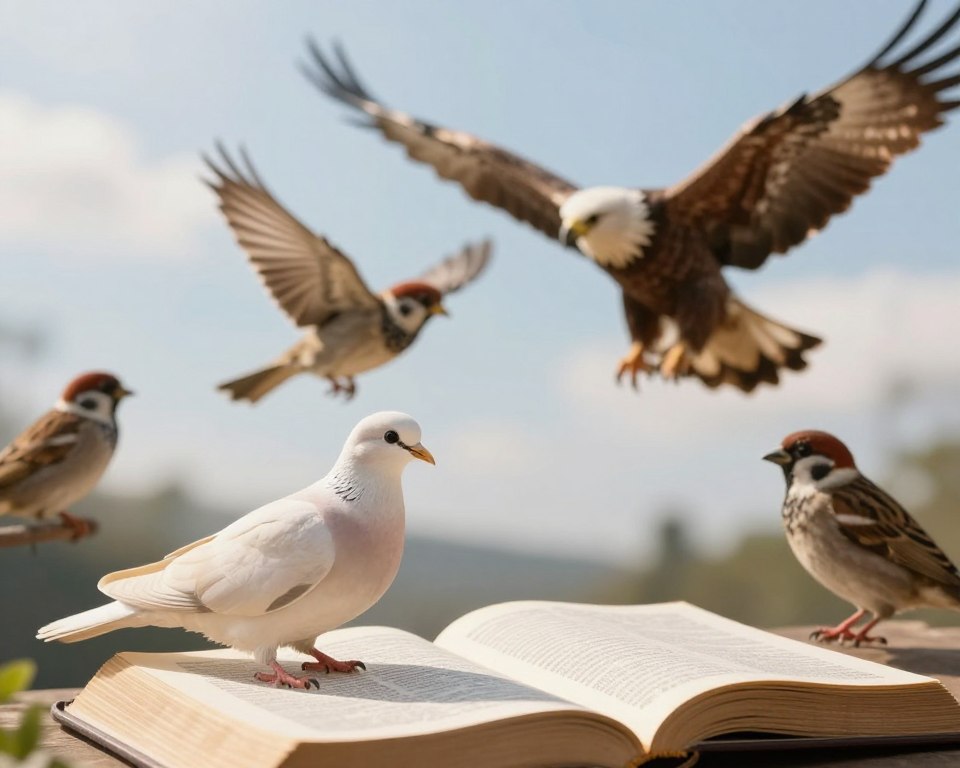
Have you ever listened to the morning chorus of songbirds and felt a sense of peace? From the very beginning, God filled the sky with winged creatures. He crafted them on the fifth day, letting them fly over the earth.
Throughout Scripture, these feathered beings are far more than background detail. They serve as living illustrations. God uses them to teach profound lessons about faith, trust, and His own caring nature.
Nearly 300 verses mention avian life. This shows how important these creatures are for understanding God’s message. The biblical writers, especially in the Old Testament, paid close attention to the natural world.
They saw God’s character reflected in it. From the dove’s promise of peace to the eagle’s soaring strength, each creature points to a deeper truth. These things reveal our Provider’s heart throughout time.
In this guide, we’ll explore specific species and the powerful symbols they carry. We’ll see how God uses His creation to draw us closer. My goal is to strengthen your trust in His faithful provision for your life.
Key Takeaways
- God created avian life on the fifth day, establishing their special place in His world.
- Scripture uses birds repeatedly to teach lessons about faith and God’s nature.
- Nearly 300 biblical verses mention these creatures, highlighting their significance.
- Birds symbolize key concepts like peace, strength, provision, and divine care.
- Understanding these symbols can deepen your personal walk with God.
- The lessons are practical, applying to daily trust and hope.
- Exploring these passages offers a clearer view of God’s promises to His people.
Overview of Biblical Birds and Scripture
On the fifth day of Creation, God filled the skies with winged life. He established their place in His world before humanity walked the earth. This foundational act shows how important these creatures are to understanding His message.
Creation of Birds on Day 5
Genesis 1:21 gives us the clear account. It states that God created “every winged bird after its kind.” This happened alongside creatures of the sea and waters.
He saw that every living thing He made was good. Avian life was part of His original, perfect design. Each species received unique traits and a purpose.

From the start, these creatures could fly, sing, and build nests. They were meant to fill the earth. Their creation points to God’s careful planning and power.
Scripture References to Birds
The Bible mentions birds in nearly 300 verses. This shows how often God uses them to teach truth. The Old Testament contains most of these references.
Writers noted their songs and even their timidity. For example, Psalm 104:12 speaks of singing birds near streams. Hosea 11:11 compares God’s people to doves.
In the New Testament, Paul refers to them only twice. Yet Jesus Himself used birds in His teachings. Their presence spans from Creation accounts to laws and prophecies.
This repeated mention across time demonstrates God’s intent. He uses His creation to reveal deep things about faith and His care for us.
Birds in the Bible: Definitions and Key References
Scripture often speaks of birds using general terms like “fowl” and “bird.” More than 100 verses use these words without naming a specific species. This shows the writers focused on common traits.
Terms and Descriptions
Biblical writers recognized these animals by two clear features. They have wings and feathers. Words like “flying,” “wings,” and “feathers” often point to them.

Historical Sources and Verses
The Bible names over thirty specific bird species. These birds appear in detailed passages. Each verse mentioning a species gives context for God’s message.
Some ancient Hebrew names are hard to translate. Different Bible versions may use different English names. The ones we can identify clearly help us understand the lessons.
| Bird Species | Key Characteristic | Example Verse |
|---|---|---|
| Dove | Symbol of peace and purity | Genesis 8:11 |
| Eagle | Strength and renewal | Isaiah 40:31 |
| Sparrow | God’s care for small things | Matthew 10:29 |
| Raven | God’s provision in need | 1 Kings 17:6 |
| Quail | God’s provision in wilderness | Exodus 16:13 |
Recognizing these specific species helps us appreciate the accuracy of biblical accounts.
Biblical Symbolism of Doves and Eagles
Two avian symbols stand out powerfully in Scripture: the gentle dove and the mighty eagle. These creatures represent core aspects of God’s character and His relationship with His people.
Dove as a Symbol of Peace
The dove was the favorite bird of ancient Israel. Rock doves were abundant and showed remarkable fidelity to their mates.
This made them a natural symbol for peace, purity, and faithfulness. Noah’s dove brought an olive leaf, signaling new beginnings.
At Jesus’ baptism, the Holy Spirit descended like a dove. Poor people could offer doves for sacrifice, as Mary and Joseph did.
Eagle as a Symbol of Strength
The eagle represents divine strength and protective care. In Exodus 19:4, God said He carried Israel on eagles’ wings.
Psalm 91:4 promises we can trust under His feathers. Deuteronomy 32 describes how an eagle stirs up her nest and bears her young.
This was the way God led His people through the wilderness. The hosts of Israel saw eagles daily, understanding this powerful imagery.
| Symbol | Key Verse | Primary Meaning |
|---|---|---|
| Dove | Genesis 8:11 | Peace, Purity, New Beginnings |
| Eagle | Isaiah 40:31 | Divine Strength, Renewal, Protection |
Together, these symbols teach us about God’s gentle peace and His powerful deliverance. They offer hope for our faith journey today.
Dietary Laws and Bird Sacrifice
The permission to consume animal flesh, including birds, marked a significant shift after a global catastrophe. In Eden, God gave plants and fruits for food. Death entered creation through sin.
Clean vs Unclean Birds
After the Flood, God told Noah every moving thing could be food. He also placed fear of man into creatures of the sky and ground.
Later, the Mosaic law divided avian life into clean and unclean classes. This was a key part of Israel’s dietary code. Clean birds could be eaten and offered in sacrifice.
Unclean birds were forbidden as food. This list included carnivores and scavengers like eagles, ravens, and vultures. These creatures often consume blood, which God’s law prohibited.
For poor people, doves or pigeons were acceptable sacrifices. When offered, these birds were not divided into pieces. This detail shows God’s thoughtful provision.
His law even protected bird populations. It forbade taking a mother and her young together. This command taught care for creation and promised blessing for obedience.
We learn that what we consume matters to God. These rules trained His people in reverence. They point us to a God who cares about every part of life.
Lessons from Sparrows, Quails, and Other Birds
Jesus pointed to common sparrows to reveal a profound truth about God’s intimate care. These small creatures teach us about trust and divine provision in our daily lives.
Trust in God’s Provision
In His time, sparrows had so little value. People could buy two for a single farthing. Yet Jesus said the Father notices when even one falls.
Matthew 10:29-31 records this precious lesson. God knows the number of hairs on our head. We are worth far more than many sparrows to Him.
Practical Insights from Biblical Verses
God provided quails for Israel in the wilderness. Psalm 78:27 describes them falling like dust across the camp. He used their migration pattern but controlled the timing and place.
Ravens, unclean and hungry birds, brought food to Elijah. This shows God can use any means for His purpose. Job 38:41 confirms He even provides for ravens.
These stories encourage our faith. They remind us to rest in God’s care and trust His provision. He is our ultimate provider.
Natural and Lessons from Birds
Observing a bird build its nest teaches us about finding security in God’s presence. These creatures display God’s wisdom through their daily routines.
Birds as Examples in Nature
Avian life builds nests in many places. Some choose high branches in a tree. Others find holes in a cliff or a spot on the ground.
Psalm 84:3 shows swallows making a nest for their young ones at God’s altars. They felt safe in His temple courts. We can find our true resting place with Him too.
Jesus pointed to these animals as living examples. They do not sow or reap. Yet our heavenly Father feeds them each day.
Matthew 6:26 asks if we are not more valuable than they are. This truth encourages our trust in His daily provision.
Birds of prey have exceptional eyesight. Job 28:7 mentions the falcon’s keen eye. These hunters spot living prey from great heights.
Their focused vision reminds us to pursue God’s truth with determination. Hosea 11:11 describes people coming to God trembling like birds.
This shows humble reverence. Ancient snares trapped wild ones, but Psalm 124:7 celebrates escape from such traps.
Our souls can break free from sin’s snare. Wings represent freedom and God’s protective cover. Every trait points back to our Creator’s faithful design.
Conclusion
From their creation alongside sea creatures to their consistent presence in Scripture, avian life serves as a profound testament to God’s design. These creatures appear hundreds of times, revealing key things about His character.
We’ve seen doves symbolize peace and eagles represent divine strength. Sparrows teach us about personal care, and quails demonstrate faithful provision. Each part of their world points to our Creator’s wisdom.
As you go about daily life, may you notice these winged teachers. Let them remind you to trust. God promises to shelter you under His wings.
I pray this truth encourages you in the house of your heart at all times. May your faith be strengthened by seeing His hand in all creation.