

Contentment is learned trust, not settling for less or pretending need does not hurt. The clearest Bible lessons about contentment and avoiding comparison point you to Christ’s presence, God’s provision, and a refusal to let another person’s life set your desires. Philippians 4:11-13 gives the strongest answer, while Matthew 6:25-34 tells you where to aim your attention: seek God’s kingdom first.
What are the Bible lessons about contentment and avoiding comparison?
The strongest lesson is Philippians 4:11-13. Paul says he learned contentment in every circumstance, including abundance and need, because Christ strengthened him.
Jesus gives the second half of the answer in Matthew 6:25-34. He tells you to stop building your life around anxious concern for food, clothing, and tomorrow. Then he gives the order: seek first God’s kingdom and his righteousness.
Contentment doesn’t mean you stop working, planning, or asking for help. It means your peace no longer depends on having what someone else has.
That distinction matters. A person can have a modest home, a difficult job, or a real financial need and still trust God. Another person can have plenty and remain restless because comparison keeps moving the finish line.
What does the Bible mean by contentment?
Biblical contentment is settled trust in God while you face changing circumstances. It isn’t passive resignation, self-satisfaction, or indifference to legitimate needs.
Here is the verse. In Philippians 4:11, Paul says he learned to be content in whatever situation he was in. He doesn’t claim that every situation felt good. He says his inner footing no longer depended on the situation.
Paul had known both abundance and need, as Philippians 4:12 makes clear. He had learned how to live with plenty and how to live with hunger. The lesson took place across real changes, not in a quiet room where nobody had asked anything of him.
Contentment also leaves room for honest prayer. Jesus taught us to ask for daily bread in Matthew 6:11. Asking God for what you need is faith. Resenting God because someone else received more is where comparison begins to poison the prayer.
You can bring the unpaid bill, the lonely house, and the missed opportunity to God. You don’t need to call them blessings before you tell the truth about them.
How did Paul learn contentment in abundance and need?
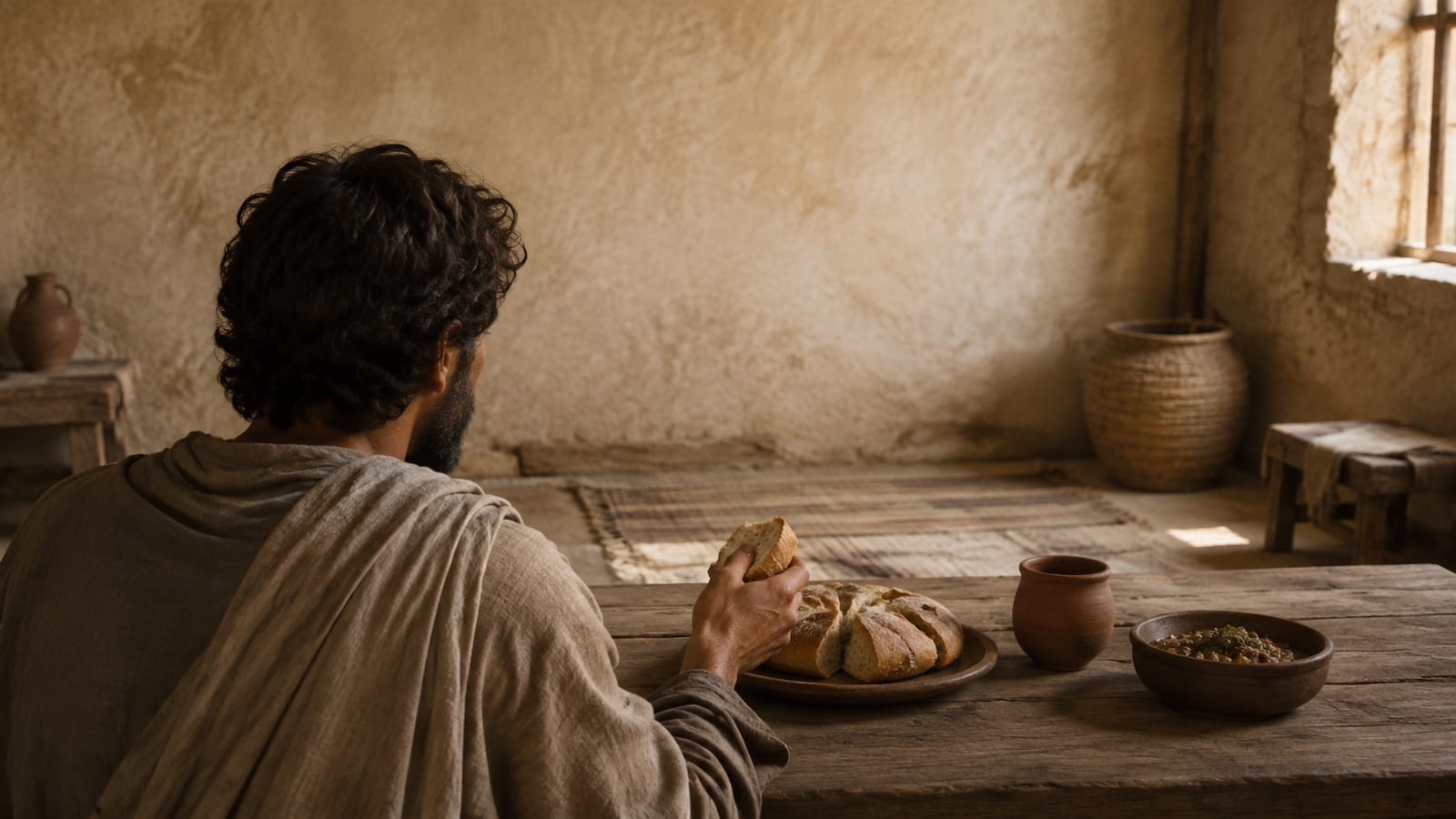
Paul’s contentment came through changing conditions, not favorable conditions. Philippians 4:10-13 shows that he received help from the believers, faced need, and still found his strength in Christ.
The famous line in Philippians 4:13 is often used as a promise of unlimited achievement. In context, Paul is not saying Christ will help him win every contest or secure every promotion. He is saying Christ gives him strength to endure both plenty and need.
That is a harder promise and a better one.
Paul was the named biblical example who wrote that he had learned contentment in every circumstance. The wording matters. Contentment was learned. It grew through practice, disappointment, service, and dependence on Christ.
So don’t measure your faith by whether you feel calm every morning. Bring the comparison to Christ again. Give thanks for what God has given, ask plainly for what you need, and refuse to make another person’s portion the ruler of your joy.
What did Jesus teach about worry, comparison, and daily needs?
Jesus addresses anxious desire in Matthew 6:25-34 by pointing to the Father’s care. He speaks about food, drink, clothing, birds, flowers, and tomorrow because worry usually hides inside ordinary things.
The passage doesn’t tell you to ignore work or planning. Jesus’ listeners still had fields, families, and daily responsibilities. He tells them not to live as though the Father is absent.
Read the verses on either side of Matthew 6:25. Jesus has already warned against storing up treasure on earth and trying to serve both God and money. Worry about possessions and comparison with possessions belong to the same household.
You see someone else’s house, clothes, marriage, ministry, or income. Then your own life looks smaller in the same light. Jesus cuts through that habit by turning your eyes toward the Father’s care and God’s kingdom.
The Father knows what you need, Jesus says in Matthew 6:32. That doesn’t promise identical outcomes. It promises that your needs are seen by Someone wiser than your appetite.
Why must believers seek God’s kingdom first?

Jesus’ command in Matthew 6:33 puts your desires in the right order. Seek God’s kingdom and his righteousness first, and let work, money, possessions, and future concerns take their proper place beneath that priority.
This doesn’t mean you quit your job or refuse a budget. It means you stop asking possessions to give you the security only God can give.
Kingdom-first living changes a workweek. You tell the truth on the timesheet because Colossians 3:23 says your work is offered to the Lord. You use money as a steward, not as proof that your life matters. You rest on the seventh day because God’s care doesn’t depend on your output from sundown to sundown.
Here is the practical test. If getting more requires neglecting prayer, family, worship, honesty, or mercy, the desire has already become too expensive.
God’s kingdom is not one more item competing for your attention. It is the order that judges every other item.
How does Scripture expose covetousness and endless dissatisfaction?
Jesus exposes covetousness in Luke 12:13-34. Covetousness is the craving to possess what God has not given you, especially when another person’s share makes your own feel unacceptable.
A man asks Jesus to settle an inheritance dispute. Jesus refuses to become the family accountant and warns, “Take care, and be on your guard against all covetousness,” in Luke 12:15.
Then he tells the story of the rich fool. The man has so much that he plans larger barns, but he never asks what his wealth is for. He speaks to his possessions as though they can secure his soul. God calls his life that very night.
The problem wasn’t that he owned things. The problem was that his things owned his imagination.
Jesus ends the passage by telling his disciples to seek God’s kingdom, sell possessions when needed, give to the poor, and store treasure in heaven. The instruction is generous and direct. Wealth can be held, but it must not become your master.
Read our guide to avoiding covetousness through the Tenth Commandment if comparison keeps turning into resentment.
Paul gives the same warning in 1 Timothy 6:6-10. Godliness with contentment is great gain, while the desire to be rich leads people into temptation and many harmful cravings.
Notice the careful wording. Money itself is not called the root of all evil. The love of money is. The danger begins when wealth becomes the thing you cannot imagine living without.
What does God’s promised presence have to do with contentment?
Hebrews 13:5-6 grounds contentment in God’s promise: keep your life free from the love of money and be content with what you have because God has said he will never leave or forsake you.
The promise comes before the command’s comfort. You don’t become content by staring harder at your possessions. You become content by remembering who has promised to stay.
Hebrews then draws the conclusion in verse 6: the Lord is your helper, so you don’t need to fear. God’s presence doesn’t erase every threat. It means fear no longer gets the final word.
That is why comparison is so exhausting. You keep checking your life against people who were given different duties, limits, families, bodies, and histories. God doesn’t ask you to manage their portion. He asks you to follow him with yours.
The Bible’s teaching about money and wealth helps apply this passage to giving, saving, debt, and daily choices without turning money into either a god or a taboo subject.
Where does the biblical text end and an Adventist application begin?
The text plainly commands contentment, warns against covetousness, rejects anxious living, calls you to seek God’s kingdom, and rests confidence on God’s presence. Philippians 4:11-13, Matthew 6:25-34, Luke 12:13-34, 1 Timothy 6:6-10, and Hebrews 13:5-6 all say those things directly.
Here is how Adventists apply those commands. We connect contentment with stewardship, which means managing time, money, health, work, and possessions as gifts entrusted by God. We also connect it with Sabbath trust, because the fourth commandment teaches that your value doesn’t come from producing without pause.
The Bible doesn’t use the modern phrase “consumer culture.” That phrase names our setting, not a biblical quotation. Still, the principle is plain. A culture that trains you to want more every week needs to be tested against Luke 12 and Matthew 6.
The Seventh-day Adventist understanding of the Sabbath applies the command to rest and worship from sundown to sundown. The passage itself gives the command. Our application asks what that trust looks like in your home, budget, shopping, and workweek.
Grace comes first, obedience after. Contentment is a gift of trust, not a wage you earn by owning less. Still, you may need to change what you buy, what you watch, and what you praise if those habits keep feeding dissatisfaction.
Which Bible lesson is the clearest answer to comparison?
Philippians 4:11-13 is the clearest lesson because it names contentment directly and covers both abundance and need. Paul doesn’t wait for circumstances to improve before he learns peace.
Matthew 6:25-34 is the strongest direct correction from Jesus. He tells you to stop living like the nations who chase possessions and to seek the Father’s kingdom instead.
The other passages support those two lessons:
| Passage | Main lesson | Verdict |
|---|---|---|
| Philippians 4:11-13 | Contentment is learned through Christ in both plenty and need. | Strongest overall lesson |
| Matthew 6:25-34 | The Father knows your needs, so seek the kingdom instead of living in anxiety. | Best answer to daily worry |
| 1 Timothy 6:6-10 | Godliness with contentment is true wealth; craving riches becomes a trap. | Best warning about money |
| Hebrews 13:5-6 | God’s promise to stay with you gives freedom from greed and fear. | Best foundation for trust |
| Luke 12:13-34 | Possessions cannot secure life; be rich toward God. | Best exposure of covetousness |
John 21 adds one more lesson about comparison. Peter asks about the future of the disciple Jesus loved, and the word spread that the disciple would not die. Jesus does not give Peter a chart for comparing callings.
He tells Peter, “You must follow me” in John 21:22. That is the answer when another person’s path starts taking over your attention.
The disciple whom Jesus loved had a different story. Peter had a different story. You have a different assignment. Check the passage for yourself, read the verses on either side, and let Jesus’ command stand without decoration.
How should you respond when comparison feels justified?
Start by naming the desire before God. “I want their income,” “I want her marriage,” or “I want his ministry” is more useful than a foggy prayer about feeling unsettled.
Then ask whether the desire is a legitimate need or a demand for another person’s portion. Scripture doesn’t condemn every wish to improve your work, home, or health. It does condemn the belief that you cannot be at peace unless you possess what someone else has.
Use these questions with an open Bible:
- What does Philippians 4:11-13 say about my present circumstance?
- What need am I asking a possession or person to meet?
- What does Matthew 6:33 place first?
- What would generosity or restraint look like this week?
- Can I thank God without pretending the loss or need is small?
Peter’s comparison in John 21 shows how quickly a faithful disciple can leave his own calling to inspect someone else’s. Jesus brings him back with one command: follow me.
That command still reaches the kitchen table, the bank account, and the phone screen. You don’t need to solve another person’s life before obeying Christ in your own.
What is the one thing to do before next Sabbath?
Name one comparison-driven desire in prayer before next Sabbath. Tell God exactly what you want, why you want it, and what you fear will happen if you don’t get it.
Then thank him for one provision you already have. Finally, either share something useful with someone else or withhold one unnecessary purchase that comparison was pushing you toward.
This isn’t a payment for contentment. Ephesians 2:8-9 says salvation is by grace through faith, a gift, not a wage. The action simply gives your trust somewhere to walk.
Write the desire on paper if that helps. Put it beside your Bible, pray over it, and leave it there until sundown Friday. The goal isn’t to pretend you no longer care. The goal is to stop letting the desire give orders.
FAQ
Does biblical contentment mean I should never want more?
No. Proverbs can praise diligence, and Scripture allows you to seek honest improvement. Contentment means you pursue good work without treating greater income, status, or comfort as the condition for peace.
Is comparing yourself with others always sinful?
Not every observation is sinful. You may learn from another person’s faithfulness or wisdom. Comparison becomes dangerous when it turns into envy, contempt, pride, or a demand that God give you their life.
How can I practice contentment when my needs are real?
Bring the need to God, seek wise help, and take the next honest step. Matthew 6:32 says your Father knows what you need, so asking for help doesn’t prove spiritual failure.
What should I do if gratitude feels forced?
Don’t pretend. Start with one true sentence from Hebrews 13:5-6: God has not abandoned you. Honest gratitude can begin with his presence before it reaches your circumstances.
Can contentment and ambition exist together?
Yes, if ambition serves a faithful purpose rather than feeding your identity. Work diligently, plan carefully, and hold the outcome under Matthew 6:33. If success requires disobedience or makes you unable to give thanks, the desire needs correction.