

The biblical definition of a prophecy is a message given by God and delivered through a human messenger. It may reveal future events, but prediction is only one part of prophecy. Scripture also uses prophecy to expose sin, explain God’s will, strengthen faith, and call people back to obedience.
What is the biblical definition of a prophecy?
The Bible presents prophecy as divine communication through a human messenger. God gives the message, and the prophet speaks or writes it for other people to hear.
Second Peter 1:20-21 says prophecy did not come from a prophet’s own will. Men spoke from God as they were moved by the Holy Spirit. That is the foundation of the definition of a prophecy. The messenger is human, but the source is God.
The message may address the past, the present, or the future. Nathan’s message to David in 2 Samuel 12:1-12 exposed David’s sin after his abuse of Bathsheba and Uriah. It did not predict a distant event. It brought God’s judgment into a king’s bedroom.
Prophecy, then, is more than seeing tomorrow. It is God speaking to people who need truth today.
Does prophecy always predict future events?
No. Biblical prophecy can predict future events, but it often deals with present faithfulness and present sin.
Isaiah 1:10-20 is prophecy, yet much of the passage calls Judah to stop exploiting the weak and to seek justice. Amos 5:21-24 does the same. God was not giving Israel a calendar. He was telling them that worship songs cannot cover dishonest work and neglected neighbors.
Prophecy can serve several purposes:
- It can reveal God’s will, as Nathan’s message did in 2 Samuel 12.
- It can warn of judgment, as Jonah warned Nineveh in Jonah 3:4.
- It can call people back to obedience, as Isaiah did in Isaiah 1:16-20.
- It can encourage faithfulness, as Haggai did in Haggai 2:4-5.
- It can reveal future events, as Daniel’s visions do in Daniel 2 and Daniel 7.
- It can point people to Christ, as Isaiah 7:14 and Isaiah 53 do.
Prediction matters. Scripture contains real predictions, and their fulfillment supports confidence in God’s word. You can read more about that in how biblical prophecies connect to history.
Still, a person who treats every prophecy as a prediction has missed much of the Bible. A warning from God is not less prophetic because it concerns the way you treat a co-worker this week.
How is prophecy different from ordinary divine revelation?
Divine revelation is the broader term. It means God makes truth known that people could not discover by human effort alone.
God revealed himself through creation, dreams, visions, mighty acts, the words of prophets, and the life of Jesus Christ. Hebrews 1:1-2 says God spoke in many ways through the prophets and has spoken finally through his Son.
Prophecy is one form of that revelation. It is a message communicated through a chosen human messenger to other people.
The difference looks like this:
| Term | Meaning | Example |
|---|---|---|
| Divine revelation | God making truth known | God revealing himself through Jesus in Hebrews 1:1-2 |
| Prophecy | A message from God delivered through a human messenger | Nathan confronting David in 2 Samuel 12 |
| Scripture | The written record God gave through inspired writers | Paul’s teaching in 2 Timothy 3:16 |
These categories overlap, but they are not identical. Scripture is divine revelation, and much of Scripture came through prophecy. Yet the word prophecy does not mean every way God has revealed himself.
The Bible is also the written standard by which every claimed message must be tested. Second Timothy 3:16-17 says Scripture equips the believer for every good work. A voice that claims God’s authority does not get to revise the book that already carries it.
What is the difference between foretelling and divine revelation?
Foretelling is the predictive part of prophecy. It means announcing something God says will happen in the future.
Divine revelation is the source and authority behind the whole message. It may include foretelling, but it also includes correction, instruction, warning, and comfort.
Daniel’s visions contain foretelling. Daniel 2 describes kingdoms that would rise and fall. Revelation 13 describes powers that would act against God’s people. Those passages concern future events from the viewpoint of the people who first received them.
John the Baptist gives a different example. In Matthew 3:1-12, he announced that God’s kingdom was near and called people to repentance. He also identified Jesus as the coming One in John 1:29-34. His message included the future, but its immediate work was to prepare people to meet Christ.
That is why the definition of a prophecy cannot be reduced to “a prediction.” The prediction is one part of the message. Revelation is the larger category.
What is the difference between prophecy and prophesy?
Prophecy is the noun. It means the message, the gift, or the activity of speaking for God.
Prophesy is the verb. It means to speak or proclaim a message prophetically.
Here are the forms in ordinary sentences:
- The prophet delivered a prophecy.
- The prophet was called to prophesy.
- The prophecy warned the people.
- The prophet continued to prophesy despite opposition.
The spelling causes trouble because the words sound alike in many forms of English. The meaning comes from how the word works in the sentence.
Revelation 19:10 connects the testimony of Jesus with the spirit of prophecy. First Corinthians 14:3 explains the public purpose of prophetic speech: strengthening, encouragement, and consolation. That purpose does not make every pleasant religious statement a prophecy. The message still must be tested.
Who were the prophets, and what was their role?
Prophets were called messengers who spoke under God’s authority. They were not religious entertainers, private fortune-tellers, or people with a special license to say whatever sounded impressive.
Moses spoke for God before Pharaoh in Exodus 7:1-2. Samuel called Israel back to obedience in 1 Samuel 15:22-23. Nathan confronted a powerful king in 2 Samuel 12. Elijah challenged Baal worship in 1 Kings 18. Their settings differed, but their work had the same center: they brought God’s word to people who needed to hear it.
A prophet might:
- Remind God’s people of the covenant.
- Expose sin in public or private life.
- Warn that rebellion would bring judgment.
- Offer hope after repentance.
- Explain what God was doing.
- Announce a future event.
- Point forward to the Messiah.
The prophet did not outrank God’s earlier word. Isaiah 8:20 says to test teaching by the law and the testimony. A prophet’s authority was real, but it was never independent.
The strongest objection is fair: if prophets were human, could they not be mistaken? Yes, the messenger’s humanity is why Scripture gives tests. The Bible never asks you to accept a claim because the speaker sounds calm, sincere, educated, or certain.
What are clear examples of prophecy in the Bible?
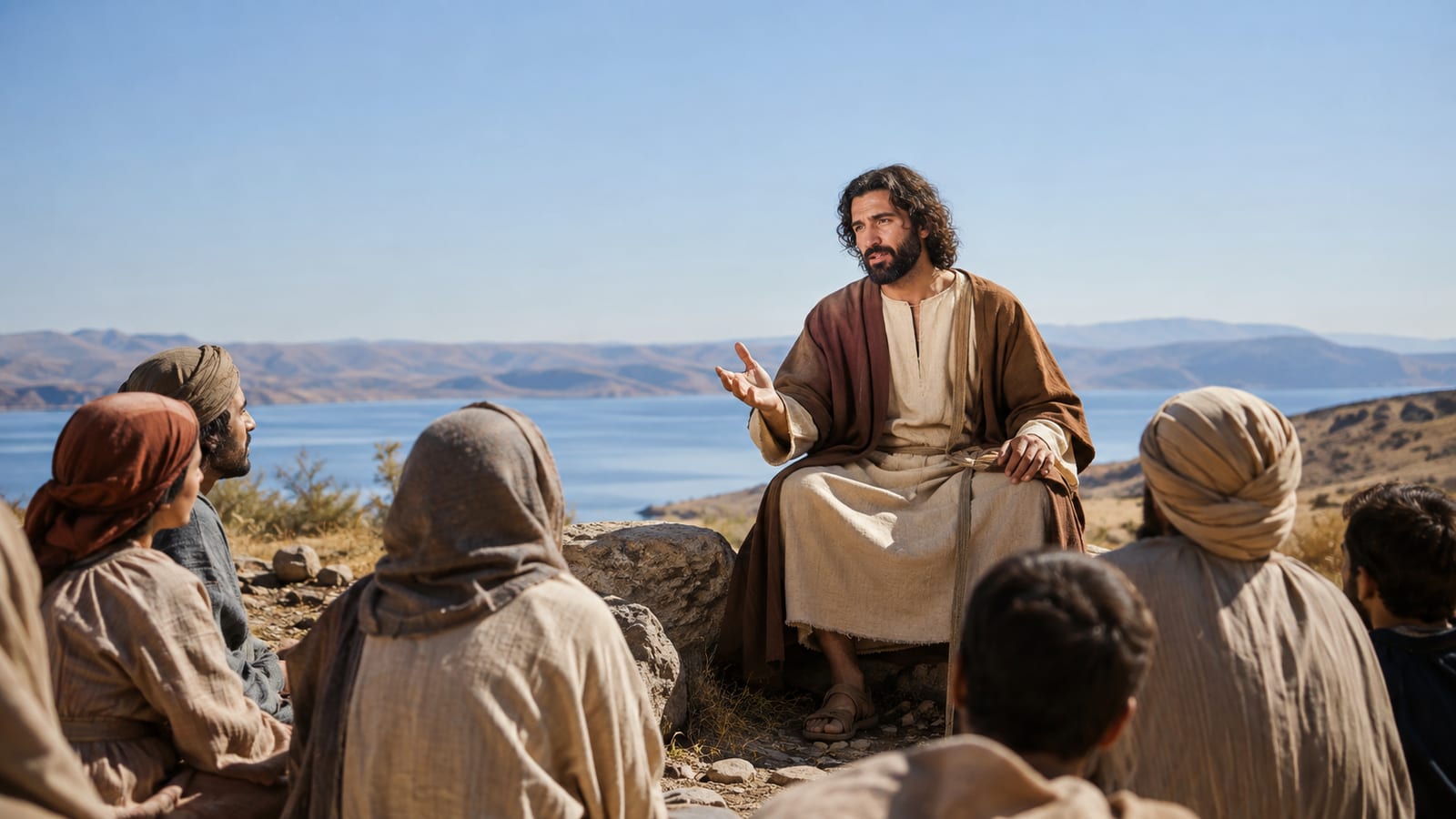
The Bible gives many forms of prophecy. These examples keep the definition from shrinking into one narrow idea.
Nathan’s message to David
In 2 Samuel 12:1-12, Nathan told David a story about a rich man who stole a poor man’s lamb. David condemned the thief, then Nathan said, “You are the man.”
This was prophecy because God exposed David’s sin through a human messenger. The message addressed the present and announced consequences for the future.
Isaiah’s messianic prophecies
Isaiah spoke about the coming Messiah in passages such as Isaiah 9:6-7, Isaiah 11:1-5, and Isaiah 53. These prophecies gave Israel hope and showed what kind of King God would send.
Matthew 8:17 applies Isaiah 53:4 to Jesus’ ministry. Acts 8:30-35 shows Philip explaining Isaiah 53 as a passage about Christ. You can read a fuller study of messianic prophecies in the Old Testament.
Daniel’s visions
Daniel 2 and Daniel 7 describe kingdoms and their succession. The visions use a statue and beasts, but the message is not random symbolism. Daniel 2:31-45 gives the meaning of the statue, and Daniel 7 repeats the broad sequence with another picture.
The safe order is clear. Let the plain chapter explain the strange one. Do not build a prophecy chart first and then force the chapter to fit it.
John the Baptist’s proclamation
John the Baptist was a prophet who called people to repentance and announced the arrival of Christ. Matthew 3:1-12 records his message. John 1:29-34 shows him identifying Jesus as the Lamb of God.
His prophecy was not a date-setting exercise. It prepared people to recognize Jesus and change their lives.
Revelation
The book of Revelation is prophecy because Revelation 1:3 calls it “the words of this prophecy.” It uses symbols, visions, warnings, promises, and future events.
Revelation 14:6-12 presents the three angels’ messages. They call the world to worship the Creator, reject false worship, and remain faithful to Jesus. The future matters in Revelation, but the book keeps asking what you worship and how you live now.
What does Scripture say about testing a true prophet?

Scripture gives several tests. No single test should be used alone, because a false messenger can make one correct statement and still lead people away from God.
Does the message agree with God’s revealed word?
Deuteronomy 13:1-4 says a sign or wonder does not excuse a prophet who leads people after other gods. Isaiah 8:20 gives the same rule in another form: test the message by God’s law and testimony.
A claimed message that contradicts Scripture fails before you study its dramatic details.
Does a prediction come true?
Deuteronomy 18:21-22 says that when a prophet speaks in the Lord’s name and the word does not happen, that word was not from the Lord.
This test applies when the prophet makes a clear prediction. It does not mean every warning must unfold exactly as announced. Jonah’s warning to Nineveh in Jonah 3:4-10 led to repentance, and God showed mercy. The response changed the outcome. That was not a failed prophecy. It was the point of the warning.
Still, repeated failed predictions deserve no special defense. Date setting is not faith. Matthew 24:36 says no one knows the day or hour of Christ’s return. Anyone selling a timetable is asking you to trust a claim Jesus did not make.
What kind of fruit does the message produce?
Jesus said in Matthew 7:15-20 that you recognize a tree by its fruit. First John 4:1 also says to test the spirits.
Look at the result. Does the message lead people toward Christ, truth, repentance, humility, and obedience? Or does it produce fear, secrecy, pride, dependency, and pressure to follow one personality?
A loud claim is still only a claim. Put it beside an open Bible and give it time.
Is a self-fulfilling prophecy the same as biblical prophecy?
No. A self-fulfilling prophecy is a modern phrase for a prediction that helps cause the predicted result through human expectation or behavior.
For example, a person may expect rejection, act distrustful, and then damage the relationship. The expectation helped produce the outcome. That is a useful idea in ordinary psychology, but it is not the biblical definition of a prophecy.
Biblical prophecy rests on God’s message and authority. Its truth does not depend on people imagining it strongly enough. Daniel 2:28 says God reveals what will happen, and 2 Peter 1:21 says prophecy came through the Holy Spirit.
The two ideas may sound alike because both use the word prophecy. They do not carry the same source, purpose, or test.
Where does the biblical text end and the Adventist reading begin?
Scripture establishes prophecy’s definition, authority, purpose, and tests. The Adventist reading applies those principles to the continuing gift of prophecy and identifies Ellen G. White as a prophetic messenger.
The Bible teaches that spiritual gifts continue to serve the church. First Corinthians 12:28 includes prophets among the gifts God gives, and Ephesians 4:11 names prophets among those who serve the body of Christ. Joel 2:28-29, quoted in Acts 2:17-18, also points to prophetic gifts among God’s people.
Here is the boundary. Scripture is the final authority and the only standard for doctrine. Ellen White’s writings do not become another Bible, and they do not add new books to Scripture. They must be tested by Scripture, as every claimed prophetic message must be.
The Ellen G. White Estate describes her role and writings. You should check the claim for yourself, then read the biblical tests in Deuteronomy 13, Isaiah 8, Matthew 7, and 1 Thessalonians 5.
That is the Adventist conclusion from the text, not a verse that names her. We should say so plainly. Scripture gives the rule. The denomination applies the rule to a claimed continuing gift.
What should you do about prophecy before next Sabbath?

Read 1 Thessalonians 5:19-21 before you accept or reject a claimed message. Paul gives both warnings: do not despise prophecies, and do not believe everything without testing it.
Then read one prophetic passage in context. Daniel 7, Isaiah 53, or Revelation 14 will do. Read the verses on either side of the passage, write down what the text actually says, and test every claim by Scripture.
Do not accept a message because the speaker has a warm voice. Do not reject it because the message makes you uncomfortable. Test the teaching, the prediction where one is made, and the fruit it grows.
The definition of a prophecy is not a license for spiritual guesswork. It is God’s message, delivered through a human messenger, and judged by God’s written word.
FAQ
Can a person be a prophet without predicting the future?
Yes. Nathan, John the Baptist, and many Old Testament prophets delivered messages that confronted present sin or announced God’s will. Prediction is one work of prophecy, not the whole meaning.
Are all dreams and visions prophetic?
No. Scripture records dreams and visions that came from God, but it also warns against false claims. A dream becomes a prophetic message only when it passes the biblical tests and agrees with God’s revealed word.
Can prophecy contain conditions?
Yes. Some prophetic warnings include an implied or stated condition. Jeremiah 18:7-10 explains that God may announce judgment, then relent when a nation turns from evil. Jonah’s message to Nineveh shows that repentance can change the announced result.
Why does God use human prophets instead of speaking directly every time?
The Bible does not give one complete explanation for every case. It does show God using human messengers so his people can hear a clear word, share it publicly, and respond together. Hebrews 1:1-2 also shows that God’s fullest revelation is Jesus Christ.
Should a prophetic message be comforting?
Not always. Prophecy may comfort the faithful, but it may also rebuke sin and warn of judgment. Second Timothy 3:16 says Scripture corrects and trains, so a message that never confronts anything is not automatically a faithful one.