
Have you ever wondered about the reliability of Scripture when it comes to historical events? This question matters deeply for anyone seeking to understand the foundation of their faith. Exploring the evidence behind the Bible can strengthen your trust in God’s word and provide clarity on its truth.
In this article, we’ll examine findings from archaeology, ancient manuscripts, and scholarly research. We’ll look at both the Old and New Testament contexts, showing how faith and factual inquiry can work together. Join me as we uncover the rich history that supports the Bible’s message of hope and truth.
Introduction to the Bible as a Historical Source
Why do scholars turn to the Bible for historical insights? Its pages contain accounts of ancient events, cultures, and figures that have shaped civilizations. For many, it’s not just a book of faith but a window into the past.

Understanding the Bible’s role in history helps us see its value beyond spiritual teachings. It provides evidence of events that align with archaeological discoveries. This connection strengthens confidence in its message.
Why does this matter? For believers, knowing the Bible’s reliability builds faith. It also equips them to share its truth with others. According to recent data, 31% of Americans believe in its literal accuracy, showing both trust and skepticism in modern times.
Archaeology plays a key role here. Discoveries like ancient cities and artifacts often confirm biblical accounts. These findings not only validate Scripture but also inspire deeper trust in God’s word. Whether you’re exploring the Bible for the first time or seeking to strengthen your faith, its historical foundation offers a solid starting point.
The Historical Context of the Bible
What evidence links biblical figures to real-world events? The Bible spans centuries, detailing the lives of kings, prophets, and everyday people. Its accounts often align with discoveries from archaeology and ancient records.
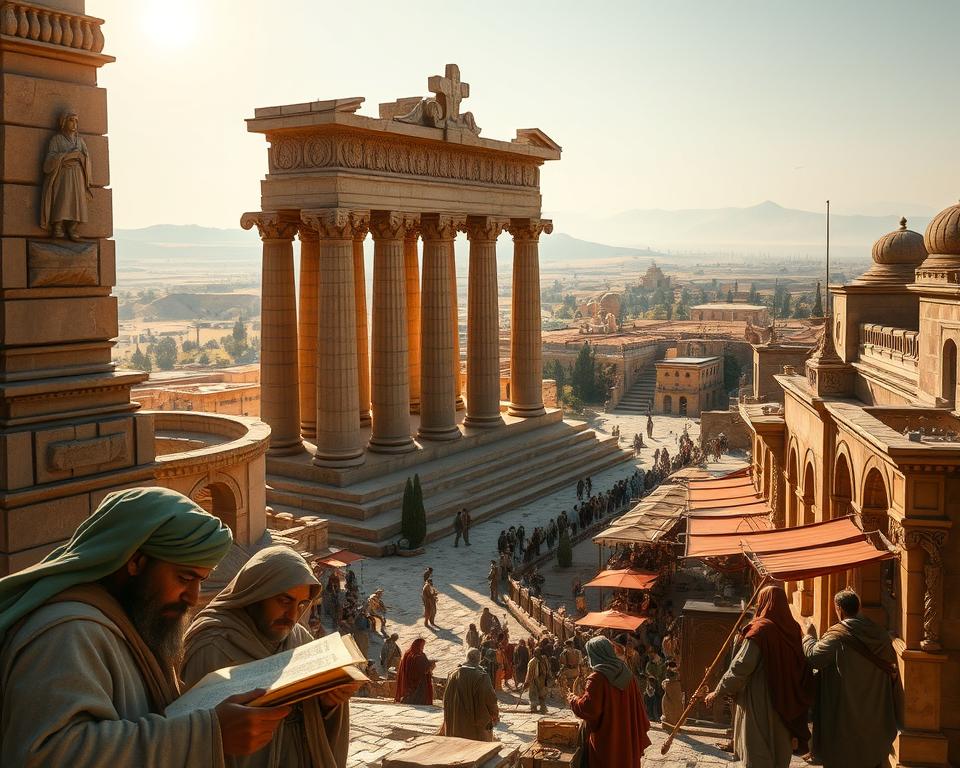
From the rise of kingdoms to pivotal moments like the crucifixion of Jesus, the Bible provides a framework for understanding the past. Let’s explore the time periods and key figures that bridge Scripture and history.
The Time Periods Covered in the Bible
The Bible covers a vast timeline, from the creation story to the early Christian church. It includes the era of the patriarchs, the Exodus, the kingdoms of Israel and Judah, and the Roman Empire. Each period offers insights into the cultures and events of its time.
Key Events and Figures in Biblical History
Many biblical figures and events have been confirmed through external sources. Here are a few examples:
- Hezekiah: His reign is supported by the House of David inscription.
- Pontius Pilate: Roman records confirm his role in Jesus’ crucifixion.
- Gedaliah and Pashur: Bullae seals validate their existence as officials mentioned in Jeremiah 38.
- Mesha Stele: This artifact mentions the name of King Mesha, aligning with biblical accounts.
These discoveries not only validate Scripture but also deepen our understanding of its historical context. They remind us that the Bible is more than a book of faith—it’s a record of real events and people.
Archaeological Evidence Supporting the Bible
What discoveries from the ancient world confirm the Bible’s accounts? Over the years, archaeology has uncovered artifacts and texts that align with Scripture. These findings provide tangible evidence of events and people mentioned in God’s word.
Discoveries from the Ancient World
Archaeologists have unearthed cities, inscriptions, and artifacts that match biblical descriptions. For example, the discovery of the House of David inscription validates the existence of King David. Such findings strengthen confidence in the Bible’s accounts.
The Role of the Dead Sea Scrolls
The Dead Sea Scrolls, dating from 250 BCE to 68 CE, are among the most significant discoveries. These ancient manuscripts preserved Old Testament texts, offering a glimpse into their original form. Scholars have noted minimal textual variations, highlighting the careful transmission of Scripture.
One of the most remarkable scrolls is the Isaiah scroll. It contains the entire book of Isaiah, nearly identical to modern versions. This discovery underscores the reliability of biblical texts over centuries.
These findings also connect to New Testament manuscript reliability. The consistency in preserving ancient texts demonstrates the Bible’s enduring truth. As you explore these discoveries, you’ll find renewed faith in God’s word.
The Old Testament and Ancient History
What connections exist between biblical accounts and ancient history? The Old Testament provides a rich tapestry of events and people that intersect with the ancient world. Exploring these links helps us see how Scripture aligns with external records.
Comparing Biblical Accounts with Ancient Records
Many biblical events find parallels in ancient records. For example, the Ipuwer Papyrus describes plagues and social upheaval, echoing the Exodus story. This text, though debated, offers intriguing connections to Scripture.
Excavations at Avaris reveal Semitic settlements in Egypt, supporting the idea of Israelite presence. While direct pharaonic records of the Exodus are absent, these findings provide indirect evidence.
The Merneptah Stele, dating to 1208 BCE, mentions Israel as a people group. This artifact aligns with biblical accounts of Israel’s early history. Such discoveries bridge the gap between faith and historical inquiry.
The Exodus and Ancient Egyptian History
The Exodus remains a focal point for scholars studying biblical and ancient Egyptian history. Thirteenth-century BCE Egyptian maps match the route described in Numbers 33, suggesting a historical basis for the journey.
Dating controversies persist, but archaeological findings like Semitic settlements and cultural shifts in Egypt support the Exodus narrative. These discoveries invite us to explore the Bible’s claims with both faith and curiosity.
- The Ipuwer Papyrus parallels plagues described in Exodus.
- Avaris excavations reveal Semitic settlements in Egypt.
- The Merneptah Stele confirms Israel’s existence as a people group.
- Thirteenth-century BCE maps align with the Numbers 33 route.
These findings remind us that the Bible is not just a book of faith but a record of real events. They strengthen our trust in God’s word and inspire deeper exploration of its truth.
The New Testament and Historical Records
How does the New Testament align with historical records from its time? This question is vital for understanding the context of Jesus’ life and the early Christian movement. By examining external sources, we can see how Scripture intersects with the ancient world.
From Roman writings to archaeological findings, evidence supports the New Testament’s accounts. These discoveries not only validate Scripture but also deepen our appreciation for its message of hope and truth.
Jesus in Historical Context
What do ancient records reveal about Jesus? Roman historian Tacitus mentions His crucifixion under Pontius Pilate. Jewish historian Josephus also references Jesus, confirming His existence and impact.
Pliny the Younger’s letters describe early Christian worship practices. He notes their gatherings and devotion to Christ, aligning with New Testament accounts. These external sources provide a fuller picture of Jesus’ life and the way His followers lived.
Early Christian Communities and Their Impact
How did early Christians shape their world? Inscriptions and artifacts reveal their presence in key cities like Ephesus and Corinth. The Artemis Temple in Ephesus, for example, highlights the cultural clash between Christianity and pagan worship.
Roman persecution of Christians is well-documented. Records show how believers faced trials for their faith. Yet, their resilience led to the spread of Christianity across the Roman Empire.
- Corinthian church inscriptions confirm Paul’s ministry there.
- Catacomb art reflects early Christian beliefs and practices.
- The Codex Sinaiticus preserves one of the oldest New Testament manuscripts.
These findings remind us that the New Testament is not just a book of faith but a record of real events and people. They inspire us to trust in God’s word and its enduring truth.
Scholarly Perspectives on Biblical Accuracy
How do experts interpret the Bible’s alignment with ancient events? Scholars have long debated its reliability, offering two main perspectives: minimalist and maximalist views. These approaches shape how we understand Scripture’s connection to history.
Views from Biblical Minimalists
Biblical minimalists often question the extent of Scripture’s historical accuracy. They argue that many accounts are later constructions rather than factual records. For example, William Dever’s work, “What Did the Biblical Writers Know?” challenges traditional interpretations.
Minimalists rely heavily on archaeology to assess the Bible’s claims. They point to gaps in evidence for certain events, like the Exodus. This approach encourages a cautious reading of Scripture, focusing on what can be verified.
Support from Biblical Maximalists
On the other hand, maximalists argue for a high degree of historical reliability. They highlight discoveries like Hezekiah’s Tunnel, which showcases advanced engineering from biblical times. Such findings align with Scripture’s accounts.
Maximalists also reference Kenneth Kitchen’s studies, which affirm the Bible’s consistency with ancient records. They emphasize the evidence supporting key figures and events, such as Jerusalem’s expansion during the monarchy period.
Conservative scholarship methods further bolster this view. By carefully analyzing texts and artifacts, maximalists build a case for the Bible’s trustworthiness. Their work invites us to explore Scripture with confidence in its factual basis.
Both perspectives offer valuable insights. Whether you lean toward minimalism or maximalism, engaging with these views deepens your understanding of the Bible’s place in history. It’s a journey that strengthens faith and invites thoughtful exploration.
The Role of Manuscripts in Understanding the Bible
How do ancient manuscripts help us understand the Bible’s message? These texts are vital for interpreting Scripture and confirming its reliability. By studying them, we gain insight into how God’s word has been preserved over time.
Manuscripts like the Codex Vaticanus and the Leningrad Codex provide a window into the past. They show how carefully writers copied and preserved biblical texts. This meticulous process ensures that the Bible we read today remains true to its original account.
Textual Criticism and Its Importance
Textual criticism is a key tool for understanding ancient manuscripts. Scholars use it to compare different versions of the same text. This helps identify minor scribal variations and ensures the accuracy of Scripture.
For example, the New Testament has a 99.5% accuracy rate when compared to early manuscripts. This high level of consistency strengthens our confidence in its message. Textual criticism bridges the gap between the ancient world and modern readers.
Comparing Ancient Manuscripts
Several manuscripts stand out for their reliability and significance:
- Codex Vaticanus: One of the oldest complete Bibles, dating to the 4th century.
- Septuagint: A Greek translation of the Old Testament, consistent with Hebrew texts.
- Masoretic Text: Preserved by Jewish scribes, it’s the basis for most Old Testament translations.
- Leningrad Codex: The oldest complete Hebrew Bible, dating to 1008 CE.
These manuscripts remind us of the Bible’s enduring truth. They invite us to explore Scripture with faith and confidence in its message.
Historical Accuracy of Biblical Cities and Places
Have you ever considered how the Bible’s descriptions of cities and places align with real-world locations? The Scriptures provide detailed accounts of regions, towns, and landmarks that have been explored by archaeologists and historians. These findings not only validate the Bible’s accounts but also deepen our understanding of its truth.
Archaeological Confirmation of Biblical Sites
Archaeology has uncovered numerous sites mentioned in Scripture. For example, the Negev desert’s water sources, described in Genesis, have been found to align with ancient wells and cisterns. These discoveries show how people in biblical days managed to thrive in harsh environments.
Jesus’ Galilean ministry locations, such as Capernaum and Bethsaida, have also been identified. Excavations reveal synagogues and homes that match New Testament descriptions. These findings provide a tangible connection to the world Jesus walked in.
Geographical Accuracy in the Bible
The Bible’s geographical details are remarkably precise. Jerusalem’s topography, with its hills and valleys, matches modern maps. The Jordan River’s crossing points, mentioned in Joshua, align with archaeological evidence of ancient fords.
Paul’s travel routes, detailed in Acts, follow known Roman roads and sea paths. Egyptian maps even verify the route described in Numbers 33, showing the Israelites’ journey through the wilderness. These details highlight the Bible’s careful attention to place and context.
- Negev desert water sources confirm Genesis accounts.
- Galilean ministry locations match New Testament descriptions.
- Jerusalem’s topography aligns with modern maps.
- Jordan River crossing points are supported by archaeological evidence.
- Paul’s travel routes follow Roman roads and sea paths.
These discoveries remind us that the Bible is not just a book of faith but a record of real locations and events. They invite us to explore Scripture with confidence in its way of presenting truth.
The Bible and Ancient Laws
How do ancient laws compare to those found in Scripture? The Bible’s legal practices offer a unique perspective on justice, morality, and community life. By examining these laws alongside other ancient codes, we can see how God’s word stands apart.
Legal Practices Reflected in the Bible
The Bible’s laws focus on restorative justice, aiming to heal relationships and communities. For example, the concept of sanctuary cities provided refuge for those accused of unintentional crimes. This approach contrasts with the retributive justice seen in codes like Hammurabi’s, which often demanded “an eye for an eye.”
Blasphemy laws in Scripture also differ from those in ancient Egyptian or Assyrian cultures. While others punished blasphemy with death, the Bible emphasizes the sanctity of God’s name and the need for reverence.
Comparisons with Ancient Legal Codes
When comparing the Bible’s laws to the Code of Hammurabi or Middle Assyrian Laws, key differences emerge. The Mosaic Law includes moral commandments that go beyond civil regulations. For instance, the Ten Commandments address heart attitudes, not just outward actions.
Here are some notable contrasts:
- Retributive vs Restorative Justice: Hammurabi’s code focuses on punishment, while the Bible seeks restoration.
- Sanctuary Cities: Unique to Hebrew law, these cities offered protection and fairness.
- Blasphemy Laws: Biblical laws emphasize reverence, while others focused on punishment.
- Moral Law: The Bible’s commandments address inner motives, setting it apart from other codes.
These distinctions highlight the Bible’s focus on truth and righteousness. They remind us that God’s laws are not just rules but a reflection of His character and love for humanity.
Historical Figures Mentioned in the Bible
What do we know about the individuals who shaped the events recorded in Scripture? The Bible introduces us to kings, rulers, and prophets whose lives intersect with the broader ancient world. These figures played pivotal roles in the story of God’s people, and their existence is often supported by external evidence.
Kings and Rulers in Biblical Accounts
Many kings and rulers mentioned in the Bible have been confirmed through archaeological discoveries. For example, Isaiah’s seal was found in Jerusalem, linking the prophet to King Hezekiah’s time. This artifact not only validates Isaiah’s role but also provides insight into the period he lived in.
Elisha’s Spring, a water source near Jericho, showcases advanced engineering from biblical times. Its design aligns with descriptions in 2 Kings, highlighting the ingenuity of that era. These findings remind us that the Bible’s accounts are rooted in real events and people.
Prophets and Their Historical Context
Prophets like Amos and Daniel also have connections to historical records. Amos’ writings reflect the socioeconomic challenges of his time, offering a glimpse into the struggles of ancient Israel. The Mari tablets, discovered in modern-day Syria, contain prophecies that parallel those in the Bible, showing a shared cultural context.
Daniel’s life in Babylon is another example. His experiences align with Babylonian records, confirming the setting of his ministry. The Lachish letters further support Jeremiah’s timeline, providing external evidence for his prophetic work.
- Isaiah’s seal validates his connection to King Hezekiah.
- Elisha’s Spring demonstrates advanced biblical engineering.
- Amos’ writings reflect the socioeconomic struggles of his time.
- The Mari tablets show parallels to biblical prophecies.
- Daniel’s Babylonian setting is confirmed by external records.
These discoveries strengthen our trust in Scripture. They remind us that the Bible’s figures were real individuals who lived in specific times and places. As you explore their stories, you’ll find deeper meaning in God’s word.
The Bible’s Influence on Ancient Cultures
How did the Bible shape the cultures of the ancient world? Its teachings didn’t just impact Israel and Judah but also reached far beyond their borders. From laws to philosophy, Scripture left a lasting mark on civilizations across the ancient world.
Impact on Ancient Israel and Judah
The Bible played a central role in shaping the identity of Israel and Judah. Its laws, like the Sabbath and dietary restrictions, set them apart from others. These practices weren’t just religious but also cultural, influencing daily life and community values.
For example, the Cyrus Cylinder reflects Isaiah’s prophecies about Cyrus the Great. This artifact shows how Scripture influenced even foreign rulers. It’s a reminder that God’s word transcends borders and time.
Influence on Surrounding Civilizations
The Bible’s reach extended to neighboring cultures. Persian tolerance policies, for instance, aligned with biblical principles of justice and mercy. This approach allowed exiled Jews to return to their homeland, fulfilling prophecies.
Greek philosophy also interacted with biblical thought. Scholars like Philo of Alexandria attempted to synthesize Greek ideas with Scripture. His work shows how the Bible influenced intellectual discourse in the ancient world.
Roman legal concepts, such as justice and equality, echo biblical teachings. Even the conversion of the Ethiopian eunuch in Acts highlights the Bible’s impact on diverse cultures. These examples demonstrate how Scripture shaped the place of faith in ancient societies.
Challenges to the Bible’s Historical Accuracy
What challenges do scholars face when examining the Bible’s alignment with ancient events? While Scripture provides a rich story of faith and history, some critics question its portrayal of the past. Let’s explore common objections and how they are addressed.
Common Criticisms and Counterarguments
Critics often point to specific details that seem out of place in their historical time. For example, the mention of camels in Genesis has been questioned. However, discoveries in Timna, dating to the 10th-century BCE, confirm camel domestication during that period.
Here are other key criticisms and their counterarguments:
- Philistine Term Usage: Some argue the term “Philistine” was anachronistic. Yet, evidence shows early interactions between Israelites and Philistines, supporting its use.
- Chaldean References: Critics claim Chaldean mentions in Genesis are too early. However, Babylonian records confirm their presence in the region.
- Persian Period Edits: Some suggest later edits during the Persian era. While minor updates occurred, the core message remains unchanged.
- Long Lifespans in Genesis: Skeptics question the ages of biblical figures. These lifespans may reflect symbolic or cultural significance rather than literal years.
- Late Hebrew Linguistic Features: Certain linguistic elements appear late. This could result from updates in language over time, not inaccuracies.
Addressing Anachronisms in the Bible
Anachronisms, or details seemingly out of their historical context, are a common concern. For instance, the mention of camels in Genesis has been debated. Yet, archaeological findings in Timna validate their presence in the 10th-century BCE.
Similarly, terms like “Philistine” and “Chaldean” align with external records when examined closely. These discoveries remind us that Scripture’s accounts are rooted in real events, even if some details require deeper understanding.
By addressing these challenges, we can appreciate the Bible’s truth and its connection to history. It’s a journey that strengthens faith and invites thoughtful exploration.
The Bible’s Unique Place in Historical Literature
What makes the Bible distinct among ancient writings? Unlike other texts, it’s a collection of 66 books written by over 40 authors across centuries. Yet, it maintains a unified message of hope and redemption. This consistency sets it apart as a remarkable work of faith and truth.
When compared to other ancient texts, the Bible’s depth and breadth are unparalleled. Its accounts of events, people, and cultures are supported by archaeology and external records. This alignment with history strengthens its credibility and invites deeper exploration.
Comparing the Bible with Other Ancient Texts
Many ancient writings focus on myths or single events. The Bible, however, weaves a cohesive narrative from creation to the early church. Its messianic theme, foretold in the Old Testament and fulfilled in the New, is unmatched. This prophetic fulfillment is one of its most compelling features.
Eyewitness accounts in the New Testament add another layer of reliability. Writers like Luke and John recorded events they personally witnessed. Their testimonies provide a firsthand perspective that’s rare in ancient literature.
Why the Bible Stands Out
The Bible’s transformative power has shaped cultures and individuals for millennia. Here’s what makes it unique:
- Unified Messianic Theme: From Genesis to Revelation, the Bible points to Jesus as the promised Savior.
- Eyewitness Accounts: New Testament writers recorded events they saw, adding credibility.
- Prophetic Fulfillment: Over 300 prophecies about Jesus were fulfilled, confirming Scripture’s truth.
- Manuscript Abundance: Thousands of ancient manuscripts ensure the Bible’s preservation and accuracy.
- Cultural Impact: Its teachings have influenced laws, ethics, and societies worldwide.
These features highlight the Bible’s enduring relevance. They remind us that it’s not just a book of the past but a guide for today and tomorrow.
Modern Archaeology and the Bible
How does modern archaeology continue to uncover the Bible’s rich history? Over the years, advancements in technology and methodology have opened new doors to understanding Scripture. From hidden cities to ancient artifacts, these discoveries provide tangible evidence of the events and people described in God’s word.
Today, scholars use tools like LIDAR mapping to reveal sites buried for centuries. These findings not only validate biblical accounts but also deepen our appreciation for the time and place of these events. Let’s explore how modern archaeology is shaping our understanding of the Bible.
Recent Discoveries and Their Implications
Recent archaeological findings have shed light on biblical narratives. For example, underwater excavations have uncovered ancient ports and shipwrecks, offering insights into trade routes mentioned in Scripture. DNA studies on ancient populations are also revealing connections to biblical figures.
Digital manuscript analysis is another breakthrough. By scanning and comparing ancient texts, researchers can trace the Bible’s transmission with greater precision. These discoveries remind us that God’s word is rooted in real events and people.
The Future of Biblical Archaeology
What lies ahead for biblical archaeology? Climate change poses challenges, as rising sea levels threaten coastal sites. Preservation efforts are crucial to protect these treasures for future generations.
New technologies, like 3D imaging and AI, promise to revolutionize the field. These tools will help us uncover even more about the Bible’s history. As we continue to explore, we’ll find deeper meaning in Scripture and strengthen our faith in its truth.
Why the Historical Accuracy of the Bible Matters Today
Why does the Bible’s connection to history still matter in our modern world? For believers, it’s more than just a record of the past—it’s a foundation for faith. Understanding how Scripture aligns with historical events strengthens trust in God’s word and provides clarity for our way of living.
Relevance for Faith and Scholarship
The Bible’s historical accounts offer valuable insights for both faith and scholarship. For people of faith, it builds confidence in the reliability of Scripture. Scholars, too, find its narratives a rich resource for understanding ancient cultures and events.
Micah 6:8 reminds us of God’s enduring ethical standard: “To act justly, love mercy, and walk humbly with your God.” This verse reflects timeless principles that continue to guide life today. By studying the Bible’s history, we see how these values have shaped societies across generations.
Lessons from Biblical History
Biblical history is filled with lessons that remain relevant. Here are a few key takeaways:
- Covenant Faithfulness: God’s promises to His people remind us of His unchanging nature.
- Justice and Mercy: Stories like the Good Samaritan teach us to care for others with compassion.
- Leadership Successes and Failures: Leaders like David and Solomon show the impact of obedience and humility.
- Wisdom Literature Insights: Proverbs and Ecclesiastes offer practical guidance for daily life.
- Christ-Centered Continuity: The Old Testament points to Jesus, fulfilling God’s plan for redemption.
These lessons remind us that the Bible is not just a book of the past but a guide for today. Its history continues to inspire and shape our faith, offering hope and direction for the future.
Final Thoughts on the Bible’s Historical Reliability
The Bible’s alignment with ancient events strengthens its credibility and relevance. Discoveries from archaeology, manuscripts, and external records provide evidence of its reliability. These findings invite us to explore Scripture with confidence.
Scholars continue to uncover new insights, deepening our understanding of its truth. This ongoing work reminds us that the Bible is a living document, rooted in real events and people.
I encourage you to study Scripture personally. Its message of hope and redemption transcends time, offering guidance for your faith journey. The Bible’s transformative power continues to shape lives today, just as it did in the past.