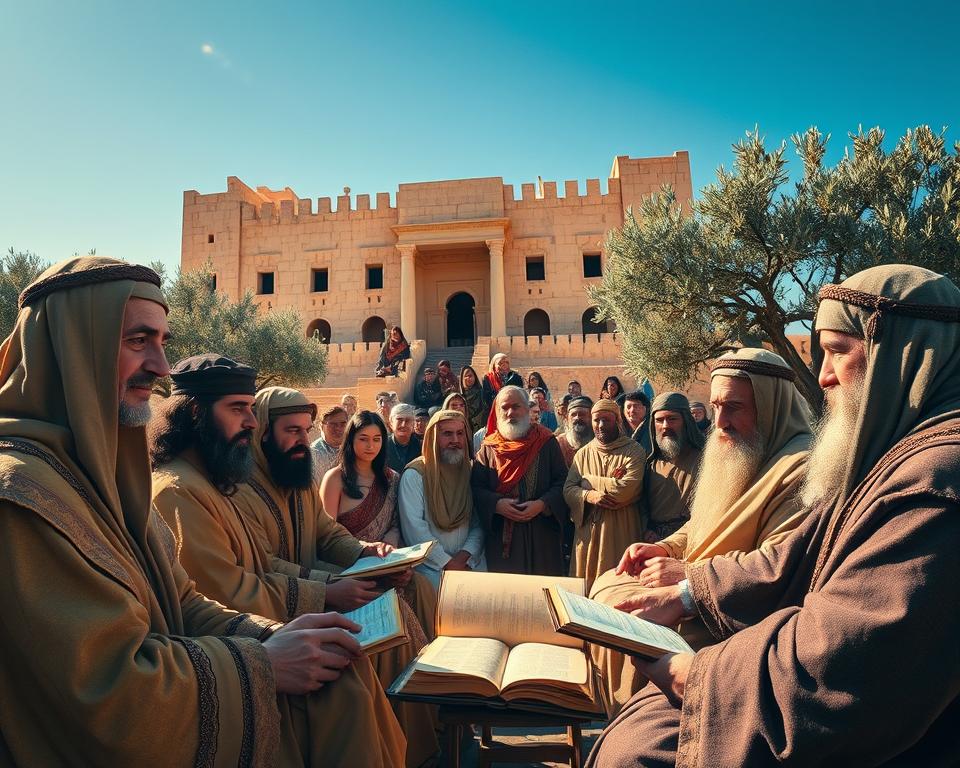

Psalms as prayers give us ready words when our hearts feel unsure and our language fails.
I speak to you as a guide who has walked these pages and learned to pray with Scripture. The book gave God’s people honest lines for praise, grief, thanks, and need. Jesus and His followers used these songs the night before the cross, and the early congregation sang them with instruments and voice.
My aim is simple: I will help you use these sacred lines today so your life rests on God’s word. I will show plain steps to read, speak, sing, and repeat a psalm in private or with the church. These habits steady the heart and give hope when your own words feel weak.
Key Takeaways
- Purpose: The psalms supply words for praise, lament, and trust.
- Promise: God gave these words so people can pray with confidence.
- Practice: Read, speak, sing, and repeat short lines from a psalm.
- Pattern: Follow Christ’s example—sing and pray these songs.
- Access: Use one psalm today in private devotion or gathered worship.
Psalms as prayers: a simple guide to pray God’s word today
Take one short psalm and make its words your own in simple steps.
I teach a clear way to pray Scripture today. Read a psalm slowly and note its purpose. Decide if it is praise, thanks, lament, or a plea for deliverance.

- I start small: pick one psalm and read it aloud in a steady voice.
- I name the purpose: mark whether it is praise, thanks, lament, or help.
- I speak in first person: turn each line into “I” and “my” language so the words fit my life.
- I insert my name into key lines so the text meets my need.
- I choose one main line as my praying psalm refrain for the day.
- I use one version that reads easily so my speech flows in prayer.
| Step | Action | Purpose |
|---|---|---|
| Pick | Read one psalm aloud | Begin with focus |
| Name | Mark its tone (praise, lament, etc.) | Match your need |
| Make it yours | Insert your name and speak in first person | Engage the heart |
| Repeat | Use the same way each day | Build a steady habit |
Practice this way daily. Use these words and God’s word to frame your prayer. Return to the same method tonight and note one line to pray tomorrow.
Why the book of Psalms fits prayer for every season of life
The book of Psalms meets us in every season with clear words that fit our joy and grief. This collection acts like a hymnbook and a handbook. It gives songs and short lines the whole church can use.

Psalms as songs, hymns, and prayers for God’s people
The book psalms is a compiled set of hymns and songs made for God people across ages. Israel used instruments, public feasts, and private devotion to sing these lines.
Jesus and the congregation sang psalms before the cross
Jesus and His disciples sang a psalm on the night before His death. That moment shows how a short psalm can steady faith in hard times.
- Breadth: Clear words fit praise, lament, confession, and hope.
- Reach: The psalm calls all the earth to worship and joy.
- Care: Many declare God’s protection and love for people who seek Him.
- Memory: Repeatable lines help us remember God and keep His word in the heart.
- Church: The congregation gains one voice when we sing the same psalm together.
“Sing a psalm and let its words shape your praise and hope.”
Match your need to a psalm: praise, trust, lament, and protection
I map my needs to particular psalms so I can pray with clear intention and faith. This quick guide pairs common needs with short passages you can use today.
For praise and worship
Psalm 30:1-5 and Psalm 103:1-2 lift words of thanks so my life sings blessing to the Lord.
For trust and guidance
Psalm 37:1-5 helps me keep my way when evildoers prosper; I trust God to act even though I cannot see it yet.
For deliverance and help
Psalm 40:1-4 gives a new song when I wait in a pit and ask God to set my feet on solid rock.
For burdens and anxiety
Psalm 55:18-23 teaches me to cast burdens on the Lord and find renewed strength.
For protection and rest
Psalm 46:7-11 and Psalm 91 act as refuge texts to stand and be still under God’s rule over the earth.
“Write a short list of needs and match each one to a psalm; return to the map when days feel heavy.”
- I use this map to pray psalms with focus and faithfulness.
- When I need praise, protection, or help, I open Scripture and speak its words.
Core ways to pray psalms with clarity and heart
I will show a handful of ways to make a psalm a living part of your day. Use these steps in short, repeatable habits that keep your focus on God’s word and steady your faith.
Read the psalm slowly and note its purpose
I read aloud and underline key verbs and nouns. This shows whether the passage calls for praise, trust, lament, or thanks.
Insert your name and requests into the verses
I write my name into one or two verses so the lines address me directly. This small step turns a general song into a personal psalm prayer.
Paraphrase the words into your own language
I rewrite hard phrases in plain sentences. Simple paraphrase brings meaning to my heart and keeps the words easy to speak.
Repeat a key line through the day
I choose one short line and set a timer to repeat it each hour. This steady refrain fixes the words and calms the mind.
Sing or speak it aloud, even without music
Singing helps memory, but a steady spoken voice works too. I speak the psalm slowly and with attention, then add a brief personal sentence.
| Practice | Action | Result |
|---|---|---|
| Read slowly | Underline verbs and nouns | Clarifies purpose |
| Insert name | Write your name into verses | Makes it personal |
| Paraphrase | Turn lines into simple words | Helps the heart grasp meaning |
| Repeat | Choose one short line and use a timer | Builds habit through the day |
“Keep the practice small and steady: the same short line repeated often will settle into your heart.”
Try one method each week. Note which way helps you engage with the psalm and hold to that rhythm. This simple set of ways will help you pray a psalm each day with peace and focus.
Simple prompts and templates to pray a psalm
These short templates make Scripture easy to use in busy moments. Each line fits memory and can be spoken aloud or read quietly. Use one for praise and one for burden, then return to the full text when you have time.
Template for praise
“Bless the Lord, O my soul; thank You for Your love today.”
Then add one short request or one line of thanks that names a blessing. Keep this under three lines so you can recall it easily.
Template for burden
“I cast my burden on You; sustain me.” Name the burden in one simple line: work, health, or fear.
Repeat this at noon and again in the evening. Store both templates on a card for quick use.
- Link the prompt to the full text when you can — see a short guide on how the psalms offer guidance.
- Teach these to family so you share one steady way to speak Scripture.
Examples to pray from the sources: short, clear, and ready to use
I give compact, easy-to-say verses that match praise, burden, and trust.
Remember God’s goodness
Psalm 145: “I will praise You every day because You are good; let my praises rise in all the world.”
Lay down burdens
Psalm 55: “I cast my burden on You; sustain my heart and give me strength to stand.”
Find shelter
Psalm 91: “You are my refuge and my fortress; cover me with Your protection today.”
Lift thanks after sorrow
Psalm 30 & 116: “You heard me and brought me up; restore joy and set a song on my lips.”
Stand firm in trouble
Psalm 37 & 46: “I will trust You; be my fortress and show Your faithfulness in trouble.”
Delight in the word
Psalm 119: “Fix my eyes on Your commandments; write Your verses on my heart.”
Know you are known
Psalm 139: “You formed me; steady my soul and search my thoughts with mercy.”
“I add one request to each example so the psalm prayer fits my present need.”
- I repeat one short line through the day when the world feels loud.
- I close with one sentence of thanks to mark God’s faithfulness before rest.
Build a daily rhythm: ways to pray psalms morning, noon, and night
Make a small schedule that places God’s words at key points in your day. I name clear actions so the rhythm is easy to keep. Choose a simple plan and follow it for thirty days.
Use a trusted schedule
I start mornings with one reading from the Book of Common Prayer or a similar book cycle. This sets my heart on Scripture before work.
Short noon practices
I take one brief line at noon. Speak it aloud or share it with a small church group if you gather. Keep the words short so you can return to work focused.
Night: rest in God’s care
I close with a psalm of rest like Psalm 4 or Psalm 91. This places my life under God’s care and helps my mind settle for sleep.
- I carry a pocket list of five go-to psalms for busy days.
- I choose one fixed way for 30 days so the habit forms.
- My family and congregation use the same psalm once a week to share one voice.
- I mark one line from each psalm and write it on a card to carry.
- I track simple wins: “Prayed one psalm today” keeps momentum without pressure.
| Time | Action | Benefit |
|---|---|---|
| Morning | One reading from Book of Common Prayer | Starts the day with God’s words |
| Noon | Single short line | Quick refocus at work or with others |
| Night | Psalm of rest (e.g., Psalm 91) | Places life under God’s care for sleep |
“Rotate through the book psalms in order over two months to gain range and depth.”
Choose a Bible version that helps you pray with ease
A good version reads like speech; it helps the verses stick in memory and guide your day.
I pick a single version for the book psalms so the cadence of the lines becomes familiar to my heart. Read one psalm aloud in two translations and notice which words flow without stumbling.
Test key verses at noon. See which edition you recall without notes. If a line stays with you, that version will help you pray psalms through the day.
- Pick a version you can read aloud with smooth flow.
- Compare two editions on one psalm and choose the one your heart grasps first.
- Keep the same edition for a season so God’s word and cadence settle in memory.
- Choose a version your people use in church so we can speak the same words together.
Tip: Underline verbs in the psalm to let the text direct your requests. Print a small booklet of select psalms in your chosen edition and note two lines each week to learn by heart.
“A single, readable version helps the psalm move from text to habit.”
Use psalms in church and with people you love
Gather the congregation and read one psalm in unison to give voice to our praise. I open worship this way so the church lifts one steady line together. This simple act echoes Israel’s use of songs with instruments and the moment Jesus sang with His disciples before the cross.
Read a psalm together in the congregation or small group
I keep cues plain and short. Read the psalm aloud. Add a short refrain between prayers so the congregation stays engaged.
- I choose a single readable version so words match and no one feels lost.
- I use simple tunes for psalm songs or read them as hymns when instruments are absent.
- I invite people by name to speak one line and share one sentence of thanks or need.
- I plan a monthly rotation so the church hears a range of themes and joy grows.
- I post the psalm on the screen with clear line breaks and send families home with the same text.
“One shared psalm unites worship and sends people home singing hope.”
Conclusion
Conclusion
Carry one verse in your pocket and let it guide your way through the week.
I rest my life on a short psalm because the book gives steady words for praise, trust, and protection. Choose one psalm and one line for the next three days.
Make a simple plan: read it each morning, repeat it at noon, and close the day with that line. This small habit builds faithfulness and strength when the world feels heavy.
Share a verse with a friend and bring one psalm into church this week. Bless the Lord, O my soul; keep His ways, and let His words dwell in your heart.
FAQ
How do the songs of Scripture serve as prayers for all times?
What is a simple way to pray God’s word today?
Why does the book of songs fit prayer for every season of life?
How were these songs used in worship by Jesus and early believers?
How do I match a passage to my need—praise, trust, lament, or protection?
Which passages help with praise and worship?
Which passage is good for trust and guidance when evil seems strong?
What should I pray when hope feels low and I need deliverance?
How can I bring burdens and anxiety before God using these songs?
Which passages offer protection and rest?
What passages help with gratitude and remembering answered prayer?
How can I grow a love for God’s word through these verses?
Which passages remind me of my identity and worth in God’s care?
What are core ways to pray these songs with clarity and heart?
How do I insert my name and requests into a verse?
Can I paraphrase these verses when I pray?
How can repeating a line help throughout the day?
Is it acceptable to sing a passage without music?
Are there simple templates to begin a prayer of praise or burden?
Can you give ready-to-use short prayers from these sources?
How do I build a daily rhythm to pray these songs morning, noon, and night?
Are there recommended schedules for reading these songs?
How do I choose a Bible version that helps me pray with ease?
How can I use these passages in church and with loved ones?
Related: How Music Enhances Christian Worship
Related: What Is Wisdom Literature in the Bible?
Related: Why Prayer Is Essential in End-Time Preparation
Related: Why Prayer Is Key to Spiritual Growth
Related: How Faith Helps You Find Inner Peace
Related: 10 Bible Verses About Health and Wellness
Related: Growing Spiritually by Trusting God in Transitions
Related: How Adventists Approach Music and Worship
Related: How Worship Enhances Spiritual Growth
Related: 10 Bible Verses to Inspire Spiritual Renewal
Related: How to Act on Faith Even in Fearful Times
Related: 7 Bible Principles for Reducing Stress
Related: Morning Devotions the Adventist Way
Related: How to Remain Watchful in the Last Days
Related: Biblical Keys to a Clear Mind
Related: Discovering Messianic Prophecies in the Psalms
Related: 5 Evening Prayers for Restful Nights
Related: 7 Daily Habits to Deepen Your Christian Faith
Related: How to Practice Thankfulness Through Prayer
Related: 5 Powerful Prayers for Strength and Guidance