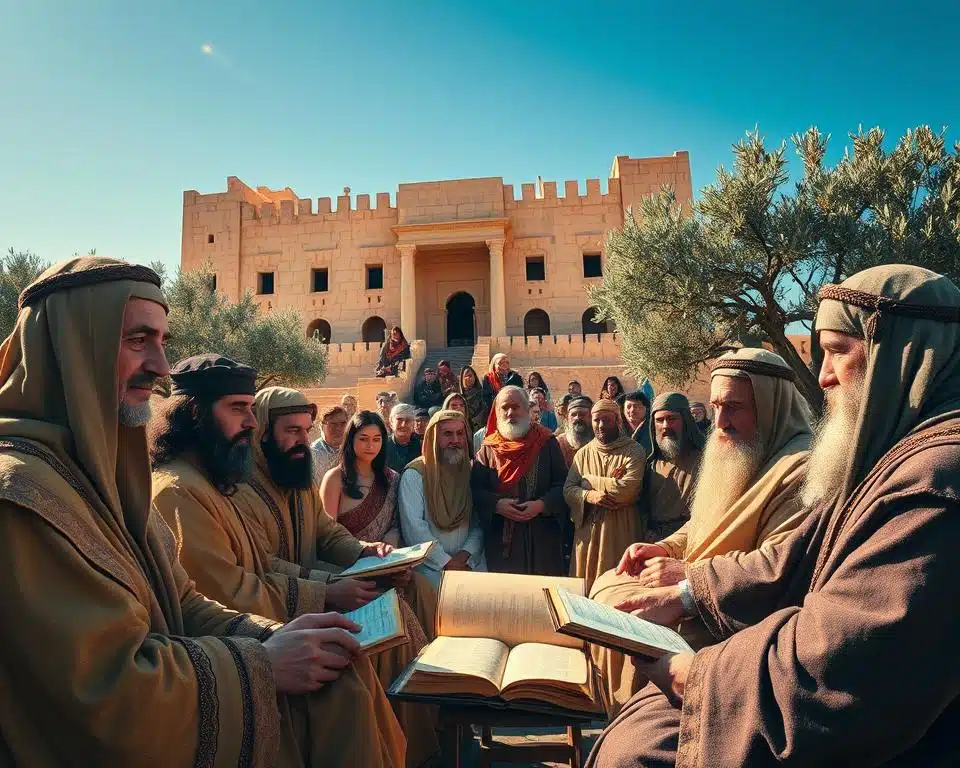
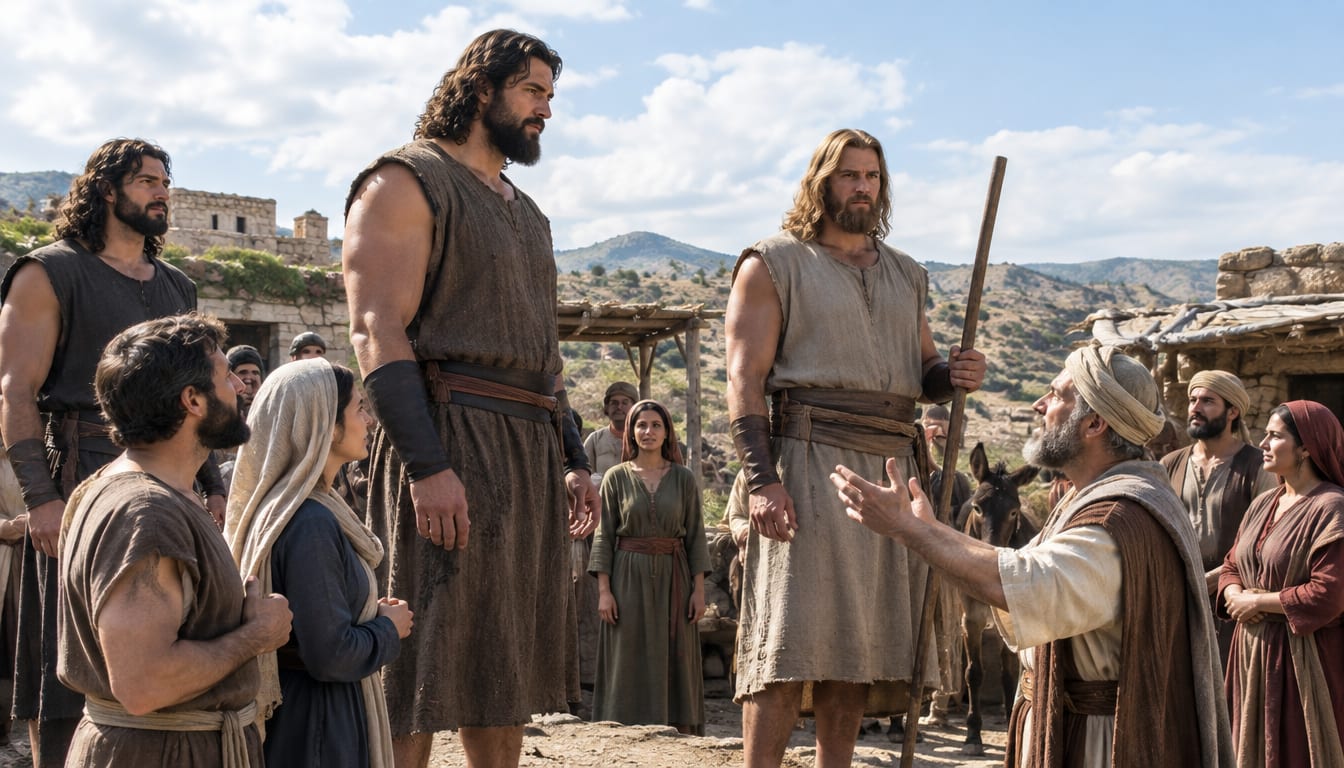
The Nephilim in the Bible were real, formidable people, and Scripture spends far less ink on them than the internet does. Genesis 6:4 calls them "the mighty men who were of old, the men of renown." Numbers 13:33 uses the name again for a clan in Canaan. Nowhere does the text say they were half angel.
Here is how Adventists read it. The "sons of God" in Genesis 6 were the faithful descendants of Seth, and the "daughters of man" came from the ungodly line of Cain. When those two families blended, faithfulness drained out of the world, and the Flood followed.
So the story is a warning, and it points at us. Before next Sabbath, read Genesis 6:1-13 in one sitting. Then let it ask how your own walk with God is holding up.
Who were the Nephilim in the Bible?
The plain reading is short. The Nephilim were people living before the Flood whom Genesis 6:4 calls mighty men and men of renown. The Bible never measures them, never describes their bodies, and never says angels fathered them.
Here is the verse in the English Standard Version: "The Nephilim were on the earth in those days, and also afterward, when the sons of God came in to the daughters of man and they bore children to them. These were the mighty men who were of old, the men of renown."
Now read the verses on either side of it. In Genesis 6:3, God puts a limit on his patience with humans. Then Genesis 6:5 says "the LORD saw that the wickedness of man was great in the earth, and that every intention of the thoughts of his heart was only evil continually."
The passage is aimed at human sin. As a result, any reading that turns it into a monster story has to work against Genesis 6:5 to get there.
Every place the Nephilim appear
Search the ESV for the word and you get just two Bible results: Genesis 6:4 and Numbers 13:33. That's the whole list. Everything else you've heard comes from outside those two passages.
Genesis 6: the narrator speaks
In Genesis 6, the narrator is talking. He's the one telling you what happened, so his words carry the full weight of the text. He names the Nephilim, calls them famous, and moves straight on to the corruption that brought the Flood.
Numbers 13: frightened men speak
Numbers 13 is different, because the people talking are scared. God tells Moses to send men to spy out the land of Canaan, a man from each tribe, "every one a chief among them." Moses sends them out from the wilderness of Paran.
Most of them come back with a bad report about the land, and it makes the whole congregation grumble against Moses. In Numbers 13:32-33 they say the land "devours its inhabitants." Then they add, "there we saw the Nephilim (the sons of Anak, who come from the Nephilim), and we seemed to ourselves like grasshoppers."
Notice who's talking. Scripture itself labels this report bad, so you shouldn't build a doctrine on it. Numbers 14:38 records that, of those spies, only Joshua son of Nun and Caleb son of Jephunneh remained alive.
What does Nephilim mean in Hebrew?
Nobody knows for certain. Most scholars connect it to the Hebrew verb naphal, which means "to fall." That could give you "fallen ones." It could also mean "those who fall upon others," the way raiders fall on a village.
Other suggestions exist, and the debate isn't settled. So be careful with anyone who hangs a whole theory on the root of this word.
A word's root tells you where it came from. Its use tells you what it means. A pineapple is neither pine nor apple, and "fallen ones" proves fallen angels about as well as "raiders" proves they carried swords.
So let the context define the word. Genesis 6:4 defines it for you: mighty men, men of renown.
Giants, mighty men, or both
They were mighty men for certain, and probably big. The Hebrew phrase behind "mighty men" is gibborim, which means warriors with a reputation. For example, Genesis 10:8 says Nimrod "was the first on earth to be a mighty man."
Size enters through Numbers. The spies say the people of Canaan are "of great height." Likewise, Deuteronomy 2:10-11 describes a people called the Emim as "tall as the Anakim." Tall clans really did live in Canaan, and the Bible mentions them the way you'd mention a family of tall brothers down the street.
What the Bible never supplies is a measurement for the Nephilim or a word about strange biology. Strong, famous, and violent describes them well enough. Their fame in Genesis 6:4 rests on what they did, and the passage describes them in human terms throughout.
Who were the sons of God and the daughters of men?
Read Genesis 4 and 5 first, because Genesis 6 is where those two chapters meet. Genesis 4 follows Cain's family. It ends with Lamech, who brags to his wives in Genesis 4:23 that he has "killed a man for wounding me."
Genesis 5 follows Seth's family instead. Genesis 4:26 says that in Seth's day "people began to call upon the name of the LORD," and Genesis 5:24 says Enoch "walked with God." Two families are heading in two directions.
Then Genesis 6:2 says "the sons of God saw that the daughters of man were attractive. And they took as their wives any they chose." The most natural reading keeps those two families in view. The worshiping line looked at the other line and wanted what it saw.
Listen to the verbs, too. "Saw" and "took" are the same verbs that describe Eve at the tree in Genesis 3:6. Genesis is telling you this is another fall, only bigger.
Does Scripture call ordinary people sons of God? Yes. Deuteronomy 14:1 tells Israel, "You are the sons of the LORD your God," and Luke 3:38 calls Adam "the son of God." The phrase fits God's people without strain.
Why the fallen-angel reading goes beyond the text
The other major view says the sons of God were fallen angels who took human wives and fathered the Nephilim. It's old, it's popular, and many serious Christians hold it. However, it asks the text to say more than it says.
Its strongest support deserves a straight answer. In Job 1:6, Job 2:1, and Job 38:7, "sons of God" clearly means angels. Supporters also point to Jude 6 and 2 Peter 2:4, which speak of angels who sinned and are kept in chains.
Here is the reply. A phrase takes its meaning from its setting. Job opens in a heavenly council, while Genesis 6 is set on earth among families. Meanwhile, Jude and Peter speak of angels held for judgment, but neither one mentions marriage, children, or Genesis 6.
Then there's Jesus. In Matthew 22:30 he says the resurrected "neither marry nor are given in marriage, but are like angels in heaven." Supporters reply that he meant angels in heaven, which is fair. Still, the verse points away from angels raising human families.
Finally, look at who gets judged. In Genesis 6:3 and Genesis 6:5-7, God's grief and judgment fall on humans. If rebel angels started it, the passage never mentions punishing them.
The main readings side by side
| View | Who the sons of God are | What it leans on | Where it struggles |
|---|---|---|---|
| Sethite (the Adventist view) | Faithful descendants of Seth | Genesis 4 and 5; "sons of God" used for God's people | Genesis 6:2 never names Cain's line |
| Fallen angels | Angels who left their place | Job 1:6, Jude 6, later Jewish writings | Matthew 22:30; Genesis 6 judges only humans |
| Rulers or kings | Powerful men claiming divine status | Ancient royal titles | Genesis gives no hint that kings are meant |
The Sethite and Cainite reading in context
Adventists read Genesis 6 as compromise inside the family of faith. The sons of God were Seth's descendants, the line that called on the LORD. The daughters of men came from Cain's line, which had walked away from God.
Ellen White takes this reading in Patriarchs and Prophets, and it has long been the common Adventist view. Augustine argued for it long before her, too.
It fits the shape of Genesis. Chapters 4 and 5 set up the two lines on purpose, and chapter 6 shows what happens when the worshiping line stops caring whom it marries. Scripture repeats the warning later, in Deuteronomy 7:3-4 and in 2 Corinthians 6:14: "Do not be unequally yoked with unbelievers."
The strongest objection is the children. If these were ordinary marriages, why would the offspring be mighty? Look at Genesis 6:4 again: "The Nephilim were on the earth in those days, and also afterward." The verse may simply place the Nephilim in that era alongside these marriages, without saying the marriages produced them.
This reading has a soft spot too. Genesis 6:2 never uses Cain's name. The Sethite view draws that link from the chapters before, which is the right way to read, but it's still a conclusion from context.
Where the Bible ends and the Adventist reading begins
Keep two piles on the table. One holds what the text says. The other holds what we conclude from it, and mixing the two is how good people end up fighting over things God never said.
The text says:
- The Nephilim were on the earth before the Flood (Genesis 6:4).
- They were mighty men and men of renown (Genesis 6:4).
- The sons of God took wives from the daughters of man (Genesis 6:2).
- Wickedness and violence filled the earth, and God sent the Flood (Genesis 6:5-13).
- Frightened spies later used the name for the sons of Anak (Numbers 13:33).
Here is how Adventists read it. The sons of God were Seth's line, the daughters of man were Cain's line, and the Nephilim were violent, celebrated men of that corrupt world. That reading is careful and well supported, yet it remains an interpretation.
So no doctrine rests on it. Your salvation, the Sabbath, and the hope of Christ's return stand on clear passages. If a teacher makes Genesis 6:4 the key to everything, he has built a house on a single brick.
Second Temple traditions are not Scripture
Most of the dramatic Nephilim material comes from books written long after Genesis. The Second Temple period means the centuries after the Jews came home from Babylon and rebuilt the temple, up until Rome destroyed it. Jewish writers in that era produced many religious books, and some retold Genesis 6 with great imagination.
The best known is the book of Enoch. It tells of angels called Watchers who came down, married women, taught forbidden arts, and fathered giants. Fragments of it turned up among the Dead Sea Scrolls, so we know Jews were reading it before Jesus was born.
That is a fair question to raise: doesn't Jude 14-15 quote Enoch? It does. But quoting a line isn't the same as approving a book. Paul quotes Greek poets in Acts 17:28 and Titus 1:12, and nobody adds those poets to the Bible.
Isaiah 8:20 in the King James Version gives the test: "To the law and to the testimony: if they speak not according to this word, it is because there is no light in them." These stories show how some ancient Jews read Genesis, which is useful history. Adventists, like most Christians, don't count them as Scripture.
Did the Nephilim survive the Flood?
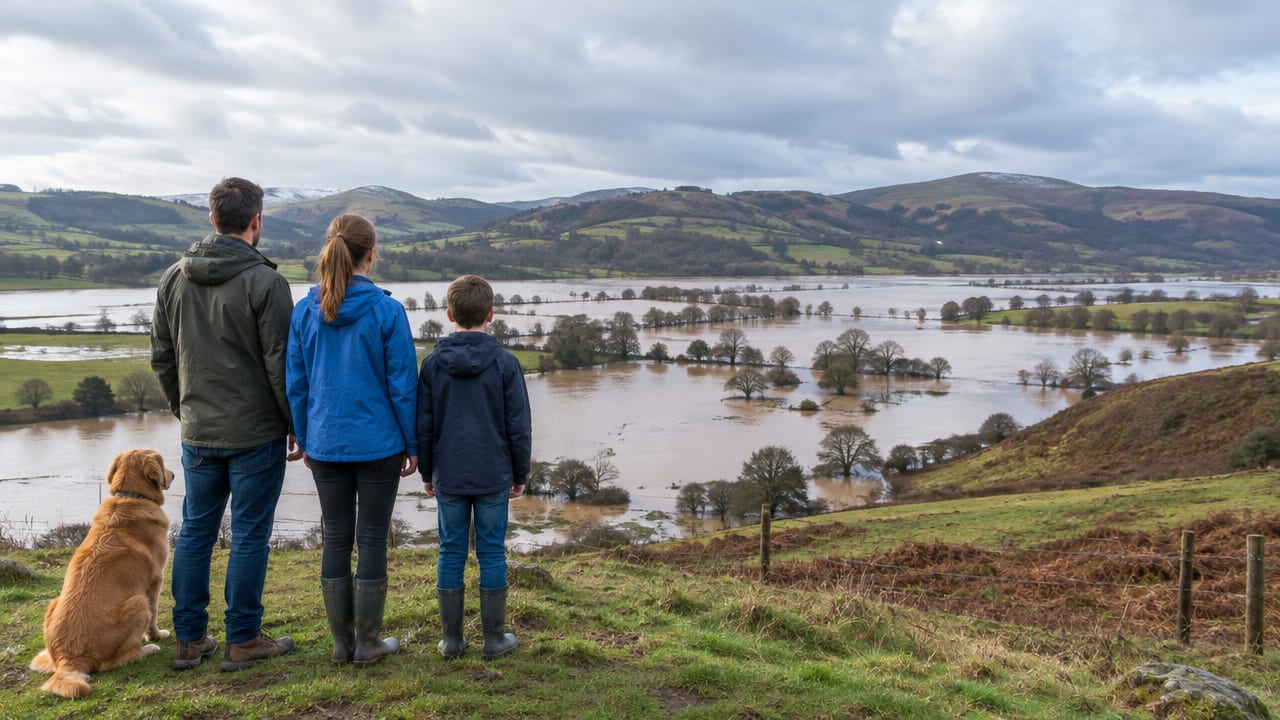
No. Genesis 7:23 says God blotted out every living thing on the ground, and "only Noah was left, and those who were with him in the ark." The Flood left no back door for a clan of giants.
So why do the Nephilim show up in Numbers 13? Remember who's talking. The spies had seen tall, powerful people in Canaan, and they reached for the scariest name in their memory.
People still do it. A coach calls the biggest kid on the other team Goliath, and nobody thinks the boy is from Gath.
What about "and also afterward" in Genesis 6:4? Some read it as after the Flood. More likely it means the Nephilim kept appearing during that earlier era, or it's the narrator noting that people like them existed later. I do not know which is right, but neither one overturns Genesis 7:23.
The real lesson of Numbers 13 isn't about giants. It's about Israel shrinking in its own eyes until God looked small. Caleb saw the same people and said in Numbers 13:30, "We are well able to overcome it."
The Nephilim story is really a warning about compromise
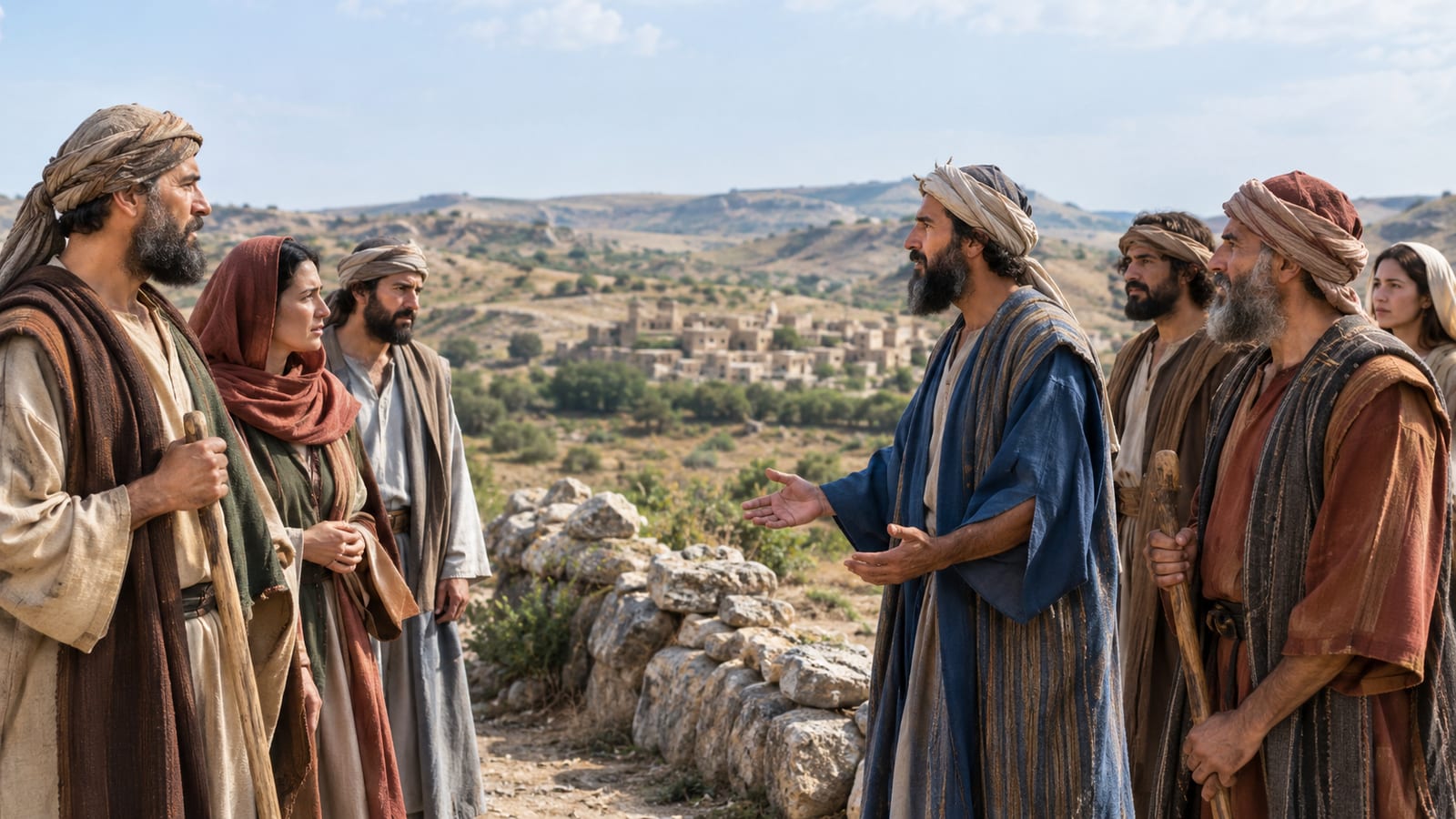
Strip away the speculation and Genesis 6 says something uncomfortable. The people who called on the LORD stopped guarding their hearts. They married into a world that didn't want God, and soon "the earth was filled with violence" (Genesis 6:11).
Jesus picked up this exact story. In Matthew 24:38 he describes the days before the Flood as "eating and drinking, marrying and giving in marriage." Every one of those is a normal, good thing. What made them deadly was that God had been left out of all of them.
God was patient, though. The Common English Bible renders Genesis 6:3, "They will live one hundred twenty years." Some read that as a shorter lifespan, while others read it as the time left before the Flood. Either way, judgment came with warning.
And grace came first. "Noah found favor in the eyes of the LORD" in Genesis 6:8, before Genesis 6:9 tells you he was righteous. Grace first, obedience after.
Noah walked with God in a world that had stopped walking with him. The story of Samson's strength and downfall traces the same slide in a single life. It starts with a marriage his parents begged him not to make in Judges 14:3.
Read Genesis 6 before next Sabbath
Here's what this changes about your week. Compromise in Genesis 6 arrived looking ordinary: attraction, convenience, and "any they chose." Yours will likely look the same. It might be a friendship that pulls you from worship, a habit that eats your evenings, or a deal you'd rather God didn't see.
Before next Sabbath, do this:
- Read Genesis 4:16-26 and Genesis 5 to meet the two families.
- Read Genesis 6:1-13 in one sitting, out loud if you can.
- Mark every time God "saw" something, and every time people "saw" and "took."
- Write down one place where you take what you see without asking God first.
- Bring one question you can't answer to your Sabbath School class.
Slow reading like this pays off all through the first book of the Bible, and the lessons for today from the book of Genesis keep showing up once you look. Acts 17:11 praises the Bereans for checking what they were taught against the Scriptures. Check this article the same way.
FAQ
Are there Nephilim alive today?
Scripture gives no reason to think so. Joshua 11:22 says the Anakim were cut off from Israel's land except in Gaza, Gath, and Ashdod, and the Bible never calls their survivors Nephilim. Claims about giant skeletons or hidden hybrid bloodlines have no support in the text. Fear and sensation are poor fruit (Matthew 7:16).
Was Goliath one of the Nephilim?
The Bible never calls him that. He came from Gath, one of the towns where some Anakim remained, so he may have descended from Canaan's tall clans. Still, the word Nephilim never appears anywhere in his story in 1 Samuel 17.
Why does the King James Version call them giants?
The KJV renders the word "giants" in both passages. Its translators followed the Septuagint, the ancient Greek translation of the Old Testament, which used the Greek word gigantes. The Hebrew itself simply keeps the name Nephilim.
Can Christians disagree about the Nephilim and still worship together?
Yes. Believers who share faith in Christ, the Sabbath, and the Second Coming can hold different views on Genesis 6 and still sit in the same pew. Hold your view humbly, and keep your speculation smaller than your obedience.